IP67 vs. IP69K Safety Light Curtains: What Food & Beverage Factories Need
Content updated:
Selection answer: IP67 immersion and IP69K hot high-pressure jet tests address different exposures. Compare safety light curtain environmental options against the actual rinse pressure, temperature, chemicals and connector arrangement. DQR is presented in the current product range as IP68; this article does not establish DQR IP69K certification, 316L material or food-contact approval.
Consider an illustrative food-line cleaning scenario: the sensor may encounter hot-pressure rinsing and foaming detergent after production. Record actual pressure, temperature, nozzle distance, chemical concentration and duration. CE marking is not a food-hygiene cleaning standard, and a generic reference to FDA does not prescribe this wash procedure.
If the machine trips or will not restart after cleaning, inspect it under the safe maintenance procedure. Ingress is one possible cause alongside contamination, alignment or wiring damage; the timing of the fault does not establish its cause.
The purchasing manager is confused. “But we bought an IP67-rated sensor! It's supposed to be waterproof!” This is one of the most expensive and common misunderstandings in the industrial automation world. Let's break down why IP67 alone is insufficient evidence for a high-pressure cleaning exposure, and which additional test and material evidence to request.
The Big Misunderstanding: What IP67 Actually Means
The Ingress Protection (IP) rating system is often misunderstood. When engineers see “IP67,” they assume it means “100% waterproof in all conditions.” That is simply not true.
IP67 combines dust-tight enclosure protection with a specified temporary-immersion test under IEC 60529. Use the exact test conditions and installed connector arrangement; the designation does not establish operation at every depth or resistance to hot-pressure jets and cleaning chemicals.
Here is the limitation: Temporary immersion evidence does not establish hot-pressure jet resistance. A failed seal or connection can affect the protective function; diagnose the exact device and do not bypass its outputs. The IP code alone does not specify the gasket material or failure mechanism.
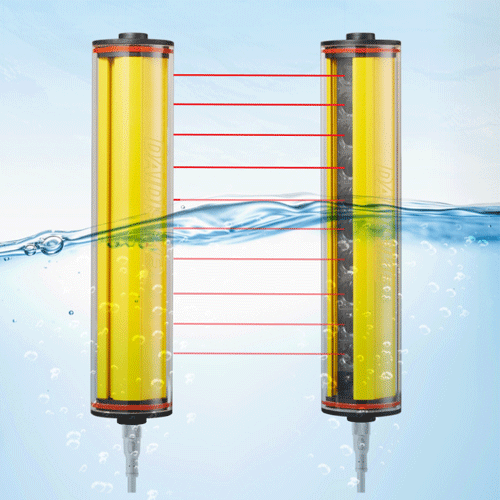
Enter IP69K: The Heavyweight Champion of Washdowns
For direct hot-pressure washdown, request relevant jet-test evidence as well as cleaning compatibility. ISO 20653 is a road-vehicle enclosure standard whose IP69K designation is used in industrial specifications; the actual report and installed configuration matter more than a marketing claim.
To achieve an IP69K rating, a sensor must survive a brutal testing process:
- Extreme Pressure: Water is sprayed at the device at 8 to 10 MPa (1160 to 1450 PSI).
- High Temperature: The water temperature is heated to a scalding 80 °C (176 °F).
- Close Proximity & Angles: The nozzle is held just 10 to 15 cm away from the sensor, hitting it from four different angles (0°, 30°, 60°, and 90°) while the device sits on a rotating turntable.
A passed test establishes protection under the specified test conditions and acceptance criteria. It does not authorize every nozzle distance, detergent, temperature, repeated cleaning cycle or steam exposure.
The Hidden Enemy: Chemical Corrosion and Bacteria
High-pressure water is only half the battle. Food processing plants use harsh chemical cleaning agents — alkaline foams to break down fats and acidic sanitizers to eliminate bacteria.
Assess the exact housing alloy, surface finish, optical window, seal compound and connector against the approved cleaning programme. Some cleaners can damage coatings, plastics or seals. Crevices and inaccessible surfaces can retain contamination; no housing shape or generic stainless-steel label alone establishes hygienic cleanability.
How to Future-Proof Your Washdown Lines
Compare installed lifetime cost through documented suitability, inspection and replacement requirements. No universal failure interval, downtime duration or savings figure is assumed here.
When selecting machine guarding for meat processing, dairy bottling, or pharmaceutical lines, you must look for three specific features:
- Evidence for every actual water exposure, including hot-pressure jets where present and immersion where separately required.
- A cleanable, drainable installation validated for the cleaning method; no housing shape alone prevents contamination.
- A qualified installed connection — confirm the exact cable, mating connector, seal, torque and test conditions. An IP69K-marked component alone does not qualify the complete assembly.
At DAIDISIKE, we manufacture specialized waterproof safety light curtains with model-specific environmental limits. Share the actual cleaning method, concentration, temperature, exposure duration and mounting drawing so the correct device and compatible connectors can be assessed.
For the distinct ingress tests, see the manufacturer's IP-code technical explanation. Keep IEC 60529 IP69 and ISO 20653 IPX9K terminology tied to the actual test report; neither is a hygienic-design or chemical-resistance certificate.