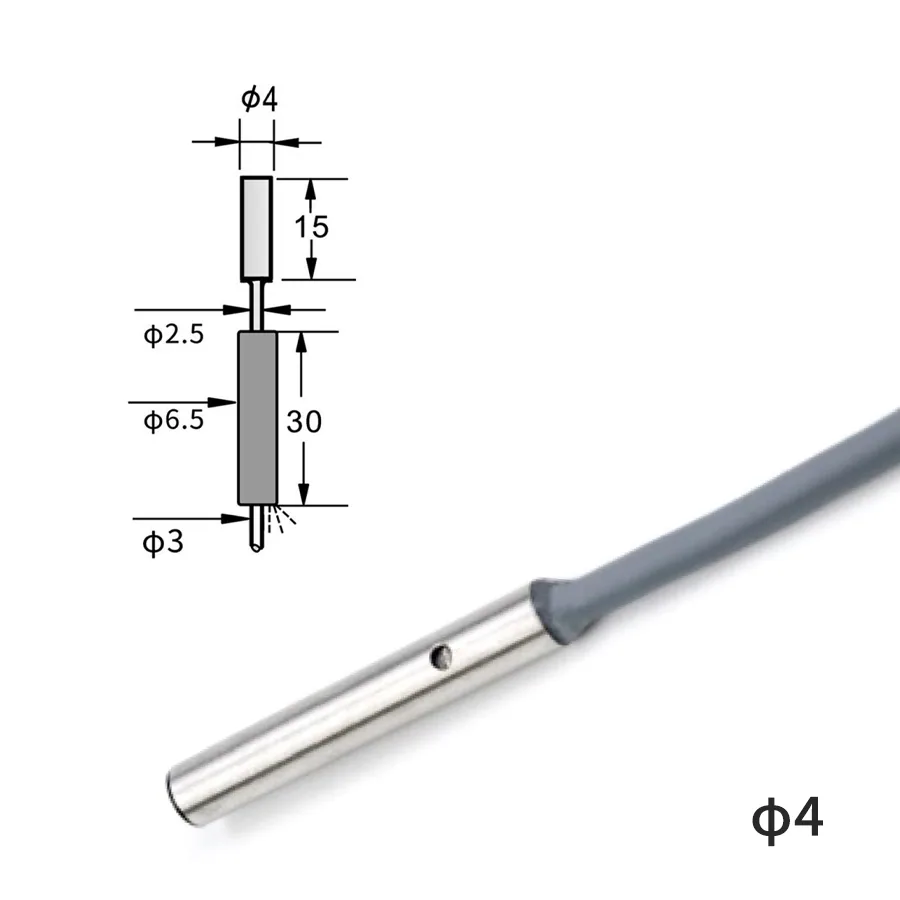
M3M4 Ultra-Small Inductive Proximity Sensor

Inductive proximity switches do one thing extremely well: detect the presence of metal at short range without contact wear. Switching speed, ingress protection and compatibility with coolant or washdown depend on the exact model; an IP rating alone does not establish chemical resistance. DAIDISIKE supplies the cylindrical-body lineup from M3 / M4 ultra-small heads (for robot grippers and micro-assembly fixtures) through M8 / M12 / M18 / M30 workhorse bodies (for conveyors, machine tools, and indexers), in both DC three-wire (PNP/NPN) and two-wire (DC and AC) variants. Confirm the supply and output for each ordering code; AC and DC models are not interchangeable. A matching thread size or IEC product-standard reference does not prove compatibility with every PLC input.
Inside the sensor face is a copper coil driven by a high-frequency oscillator. The coil radiates an electromagnetic field a few millimeters out from the face. When a piece of metal enters the field, eddy currents flow in the metal — and those eddy currents extract energy from the oscillator,damping its amplitude. A simple trigger circuit detects the damping and switches the output transistor. That's the whole story.
Inductive sensing does not depend on an optical beam or target colour. However, metal chips, mounting metal, welding fields and environmental damage can affect detection or reliability. For difficult materials and welding environments, compare Factor 1 range behaviour and separately specified weld immunity; these are not universal properties of the DAIDISIKE range. The Wenglor and Contrinex standard-versus-specialty comparison applies this distinction when an installed sensor also requires a special interface or housing.
Body size influences the available coil and range, but it does not determine them alone. Compare the actual flush/non-flush variant, target and assured operating distance instead of applying a fixed 30% margin. The M8 versus M12 selection guide explains that trade-off.
For an installed Balluff or Turck sensor, the Balluff and Turck replacement checks carry the original mounting class, target material and electrical interface into the candidate comparison.
| Body Size | Sensing Range (Sn) | Mounting | Typical Applications |
|---|---|---|---|
| M3 / M4 | 0.6 – 1.0 mm | Embedded (flush) | Robot grippers, micro-assembly, indexing pins |
| M5 / M6 | 1.0 – 1.5 mm | Embedded | Compact machine tools, electronics fixtures |
| D6.5 | 1.5 mm | Check smooth-barrel mounting | Tight-pitch indexer position confirmation |
| M8 | 1.5 – 2.0 mm | Embedded / non-embedded | Pneumatic cylinder end-position, small conveyor |
| M12 | 2.0 – 4.0 mm | Embedded / non-embedded | General conveyor, packaging, machine tool home position |
| M18 | 5.0 – 8.0 mm | Embedded / non-embedded | Heavier conveyors, wide-pitch indexers, AGV target |
| M30 | 10 – 15 mm | Embedded / non-embedded | Robust factory I/O, presence/absence at larger gaps |
| DC 2-wire | Model-specific | Check available body sizes | Retrofit jobs where cable cores matter |
| AC 2-wire | Model-specific | Check available body sizes | Compatible AC load circuits within the specified ratings |
These are category range examples, not a replacement for the ordered sensor datasheet. Standard-target sensing distances and metal reduction factors vary by model. For the definitions, see rated and assured operating distance.
An inductive sensor can detect a suitable external metal target or bracket at a cylinder position. It is not a direct substitute for a cylinder reed sensor through a metal body; verify the actual target and mounting.
M12 above the conveyor counts each metal part as it passes. On indexing tables, M8 at each station confirms target arrived before the next operation cycle.
M12 / M18 sensors can provide process position feedback on CNC axes or turret targets. Verify coolant resistance, range and control requirements; do not substitute an ordinary sensor for a safety-rated travel limit.
A suitably mounted M3 / M4 sensor can confirm a metal part near a gripper finger. Verify target size, mechanical clearance and cable flex rating for the actual robot cycle.
M18 on each bolt-tightening station verifies the workpiece is present before the runtool fires. Same sensor confirms head position after the operation completes.
M18 or M30 sensors can give a discrete docking-position signal from a suitable metal target. Validate switching repeatability and mounting tolerances; this is not continuous distance measurement or personnel-protective obstacle detection.
The main grid below covers cylindrical inductive products. Two additional existing branches serve different selection tasks: square-body inductive switches for metal targets and capacitive switches for suitable non-metal and level-detection targets. Neither branch is a personnel-safety device; select its exact output, sensing conditions and installation separately.
For an Omron replacement, the Omron cylindrical and rectangular replacement checks separate barrel-size matching from rectangular footprint, mounting-hole and sensing-face checks.
M3M4 Ultra-Small Inductive Proximity Sensor
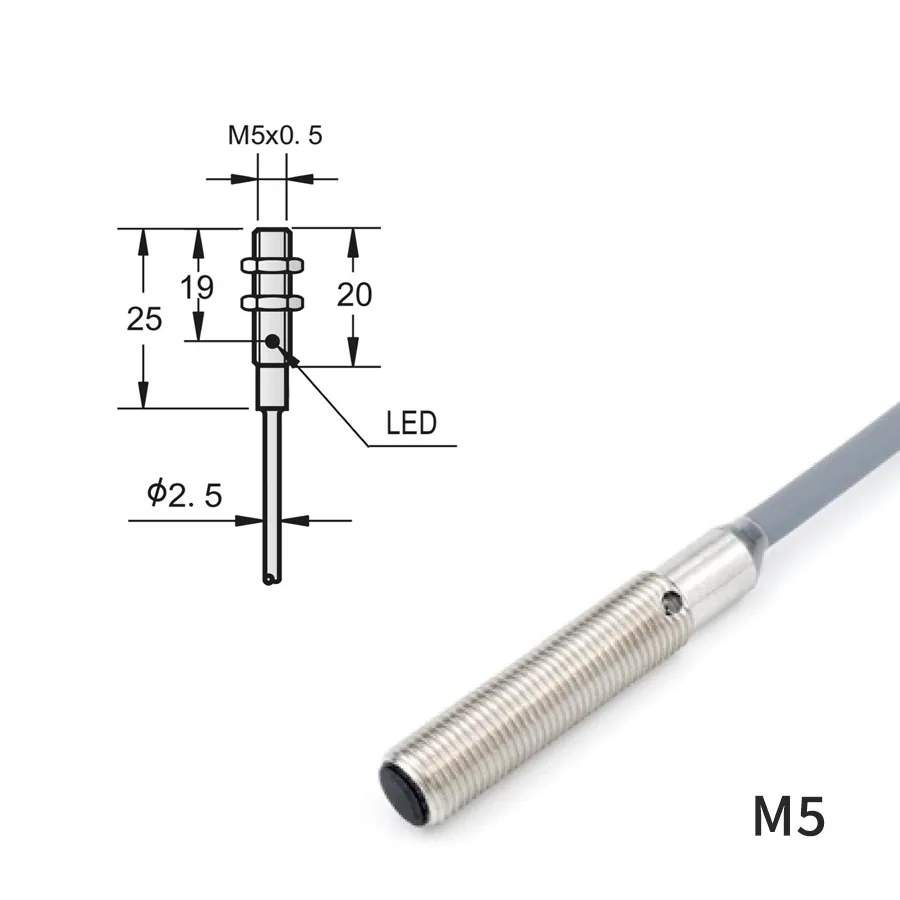
M5 / M6 Inductive Proximity Switch — High-Precision Metal Detection
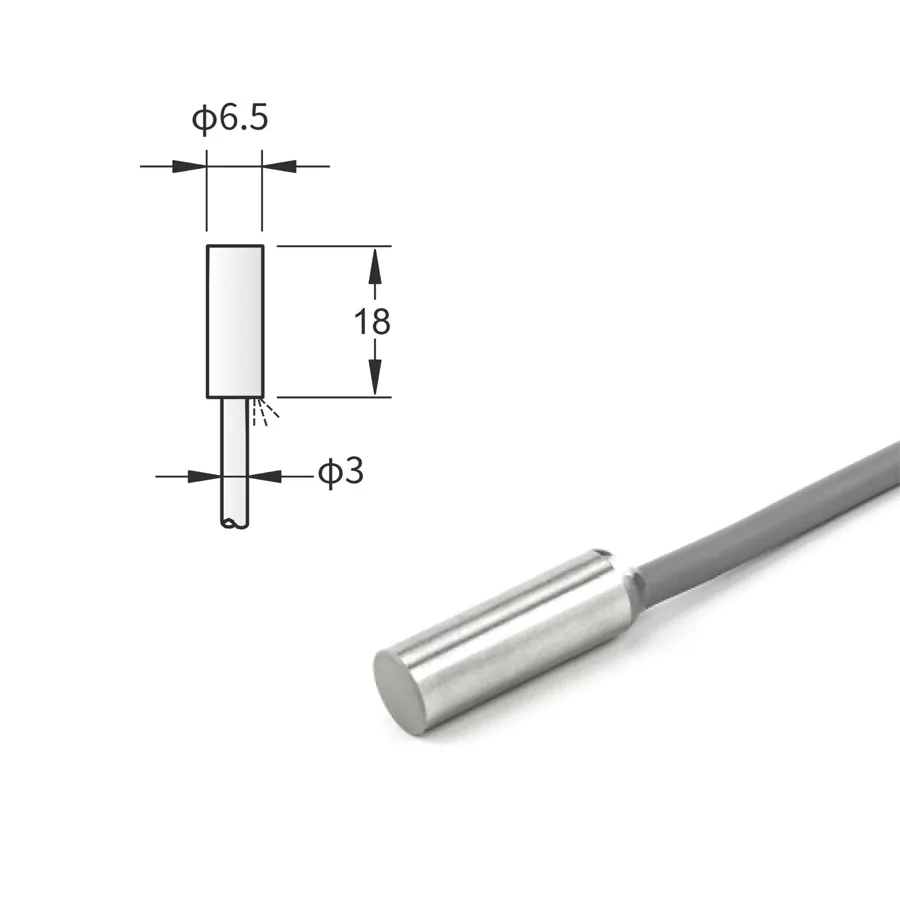
D6.5 Inductive Proximity Switch
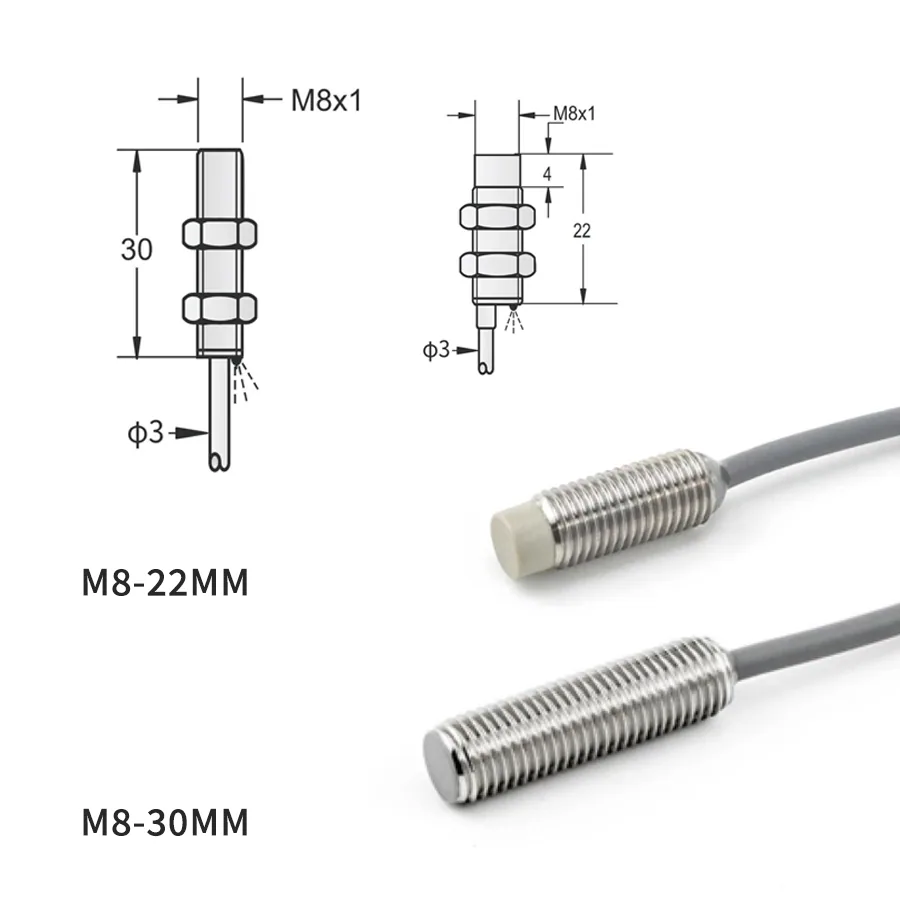
M8 Inductive Proximity Switch
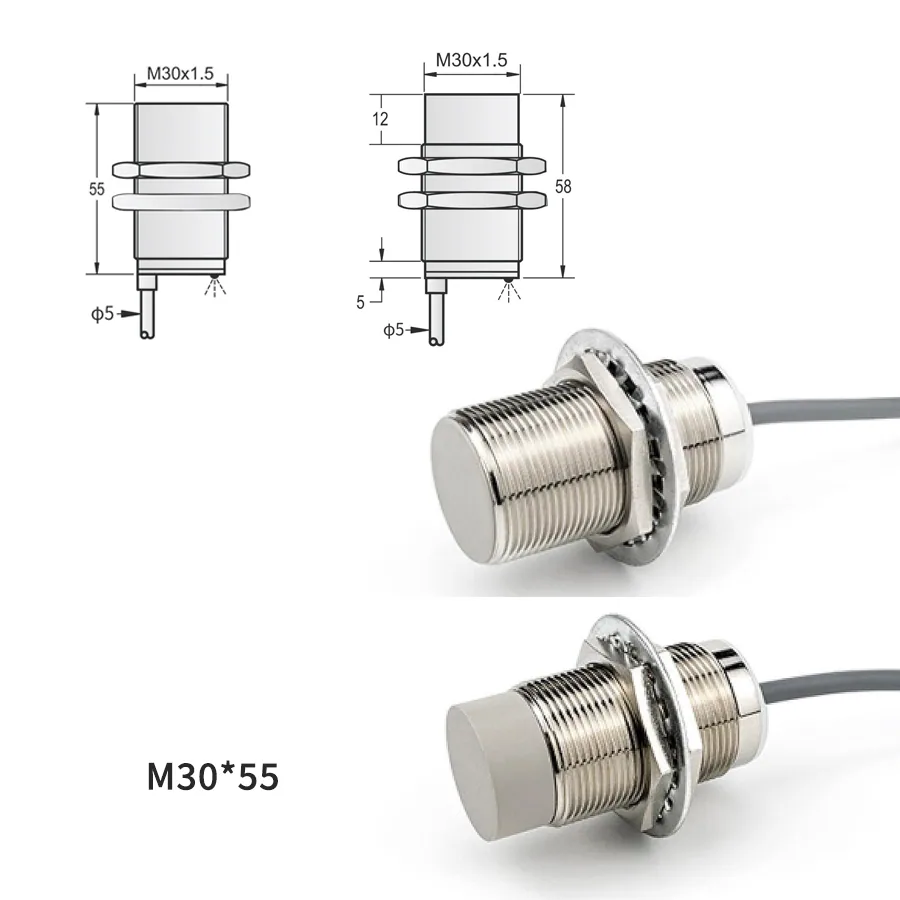
M18 / M30 Metal Sensing Proximity Switches — Three-Wire Type
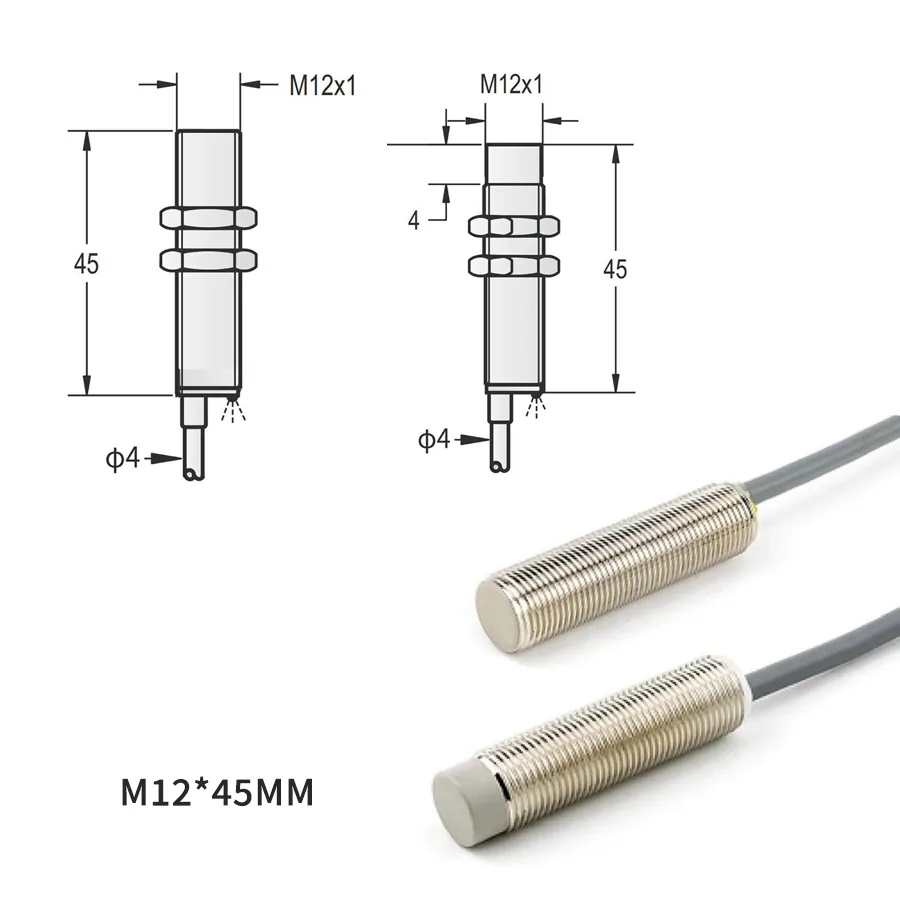
M12 Series Metal Inductive Proximity Switch
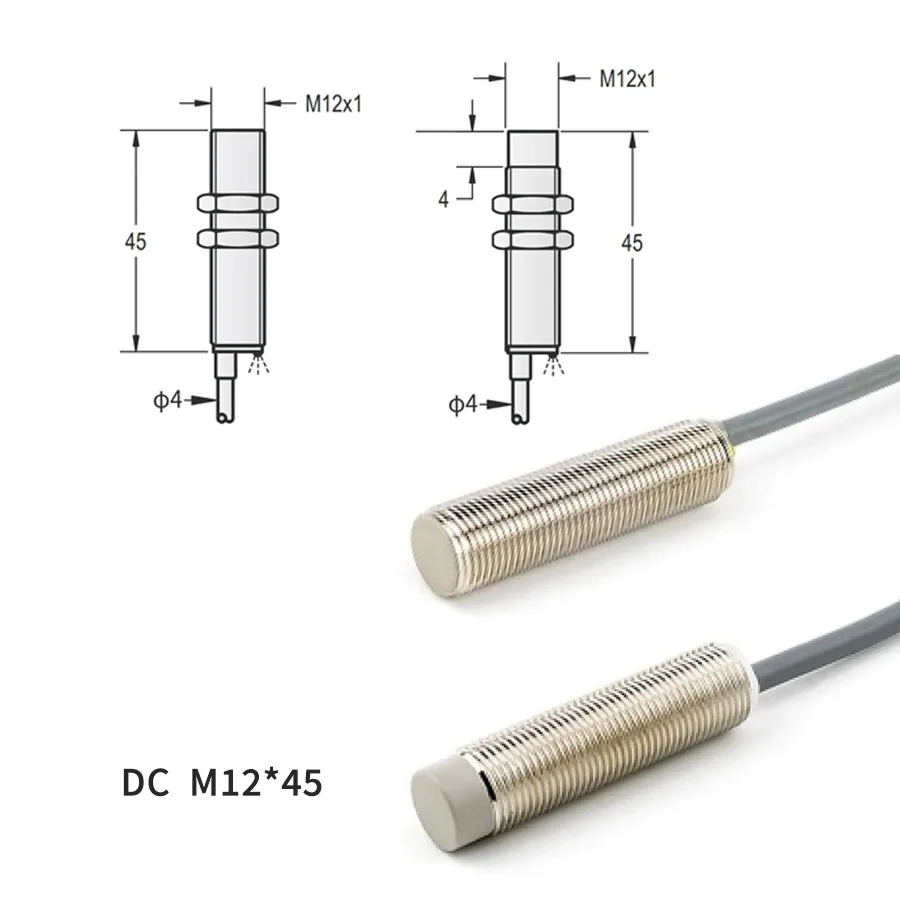
DC Two-Wire — M8 / M12 / M18 / M30 Models
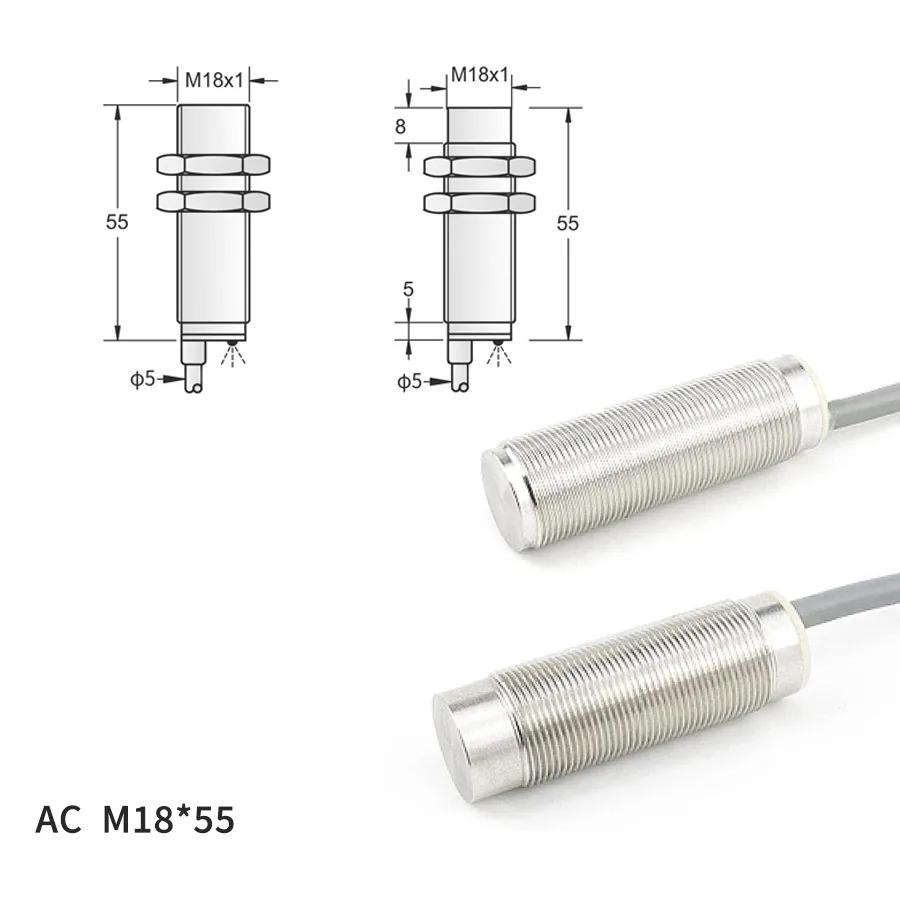
AC Two-Wire Inductive Proximity Sensors
For installation, follow the PNP/NPN and three-wire versus four-wire wiring guide. The Omron technical explanation describes why two-wire leakage and residual voltage must be matched to the load. The exact DAIDISIKE manual remains the product-specific authority.
Content updated: 2026-09-06. Ordinary process sensors are not personnel-safety devices.
A proximity switch detects a target without physical contact and changes an electrical output. An inductive proximity switch detects metal using a high-frequency coil: the metal changes the electromagnetic field and the sensing circuit switches the output. DAIDISIKE lists cylindrical M3/M4/M5/M6/D6.5/M8/M12/M18/M30 products, with model-dependent sensing ranges and flush or non-flush mounting. Select the exact NPN/PNP, DC three-wire, DC two-wire or AC two-wire variant and its specified supply rather than assuming all options apply to every model.
An oscillator drives the sensing coil. A nearby metal target induces eddy currents that change the oscillator behaviour, and the sensing circuit switches the output. Target material, size, mounting and temperature affect the operating distance. The rated range for a standard target is not an exact position measurement or a guaranteed gap for every metal.
Match the sensor output to the exact PLC input module and common-terminal wiring. A PNP output sources current to a sinking input; an NPN output sinks current from a sourcing input. Supply, current limits and signal thresholds must also match. Do not select by PLC brand or country: a manufacturer's range may include different input types.
NO is normally inactive without the specified target and active on detection; NC reverses that output logic. Some models offer complementary outputs, but confirm the ordering code. NC operation alone does not make a sensor fail-safe: short circuits and internal failures can produce an unsafe signal. Ordinary proximity switches on this page are for process detection, not personnel-protective safety functions.
Three-wire sensors have separate supply and signal connections. Two-wire sensors are installed in series with a compatible load and require checks for off-state leakage, on-state voltage drop and minimum load current. Those values are model-specific, not a universal 1–2 mA. Distinguish AC and DC versions; do not connect a low-voltage PLC input to an AC two-wire circuit.
Use inductive sensing for suitable metal targets within the specified range. Capacitive sensing can detect selected non-metallic materials but must be tested for the actual target and surroundings. Photoelectric sensing offers different optical arrangements for longer distances or non-metal targets; reflectivity, transparency and background matter. Laser sensors are an optical option for a specified spot size and range, not guaranteed detection of every feature at every distance.
Service life depends on the exact device, temperature, vibration, supply, cable flexing, chemicals and impacts. There is no universal ten-year or cycle-life guarantee for this category. Diagnose the cable, mounting, power and signal before replacing parts. Select jacket and housing materials against the actual chemical compatibility data rather than assuming PVC or PUR is always preferable.
Use the exact model's rated and assured operating distances and the specified target conditions. Account for target material, size, temperature, mounting metal and hysteresis. Reduction factors are not identical across sensor families; Factor 1 devices require their own data. Set a working gap within the applicable assured range with allowance for mechanical movement, then test the actual target.