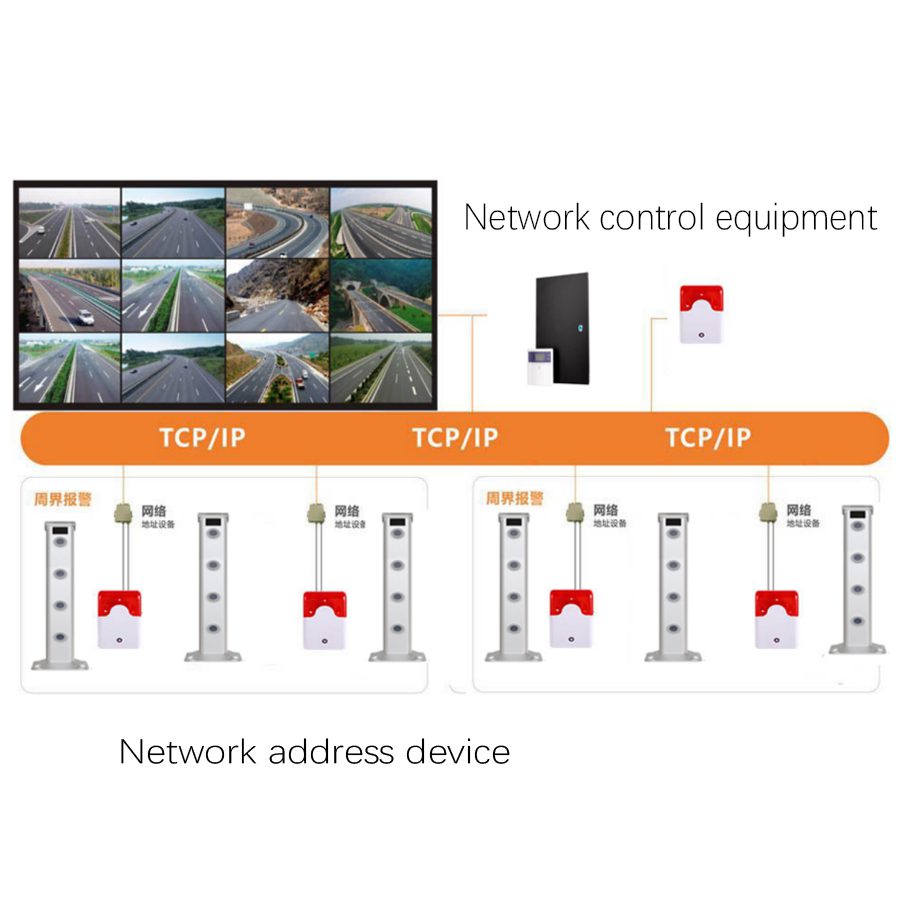
DDSK-J Series Outdoor Laser Long-Distance Alarm & Protection Infrared Sensor

DAIDISIKE outdoor beam detectors monitor a line between an emitter and receiver for perimeter intrusion alarms; the beam is not a physical fence or a personnel-protective machine safeguard. The DDSK-J range includes long-distance laser detection up to 500 m, while AKT, JHW, JNS and ABF offer different infrared, power and communication arrangements. Select the exact span, beam count, column height, supply and output rather than assuming every family has the same IP rating, dual-beam logic or wireless interface.
This page compares detector technology and model-selection fields. For the matching receiver, alarm zones, backup supply and commissioning plan, continue to perimeter alarm system configuration and acceptance checks.
Compare the optical principle first, then the power arrangement and installation requirements:
Compare the DDSK-J detector specification for long-span optics and alarm contacts, or the AKT beam-count and column-height matrix for multi-beam mounting. Check the exact supply voltage and receiver or panel input before ordering a pair.
| Power Type | Series | Maintenance | Power / Interface Check | Best Fit |
|---|---|---|---|---|
| Wired supply | JNS series | Inspect supply, cable and alignment | Check voltage at the detector and the panel input | Sites with suitable power and ducting |
| Non-rechargeable lithium battery | ABF series | Published life about 3 years; replace as specified | Check alarm activity, temperature and reserve capacity | Locations where power cabling is difficult |
| Solar + battery | JHW series | Inspect panel, battery and charging performance | Assess shading, low-sun reserve and radio path | Off-grid sites with suitable solar exposure |
| Long-range laser, wired supply | DDSK-J series | Maintain alignment, optics and supply | Verify alarm contacts and receiving input | Long line-of-sight perimeter spans |
JHW solar detectors can monitor a suitable orchard boundary without power cabling to every pole. Survey shading, vegetation, receiver coverage and the response plan before choosing the layout.
ABF battery-powered detectors can suit temporary boundaries. Confirm the projected battery service interval and radio receiver coverage; test and realign the system after each relocation.
Assess JHW for suitable pond-perimeter spans, with mounting clear of spray, flooding and moving vegetation. An IP rating alone does not establish corrosion resistance or year-round performance.
Compare JNS wired detection at entries with DDSK-J for longer boundary spans. Define separate zones and verify how a detector event reaches the alarm panel and verification system.
AKT multi-beam columns can monitor selected fence sections; they do not prevent climbing or guarantee detection on every route. Assess column height, beam gaps, sunlight and blind approaches.
A DDSK-J pair may suit a long, unobstructed approach within its documented span. Survey mounting stability, weather exposure and the alarm response route rather than assuming lower lifetime cost.
DDSK-J Series Outdoor Laser Long-Distance Alarm & Protection Infrared Sensor
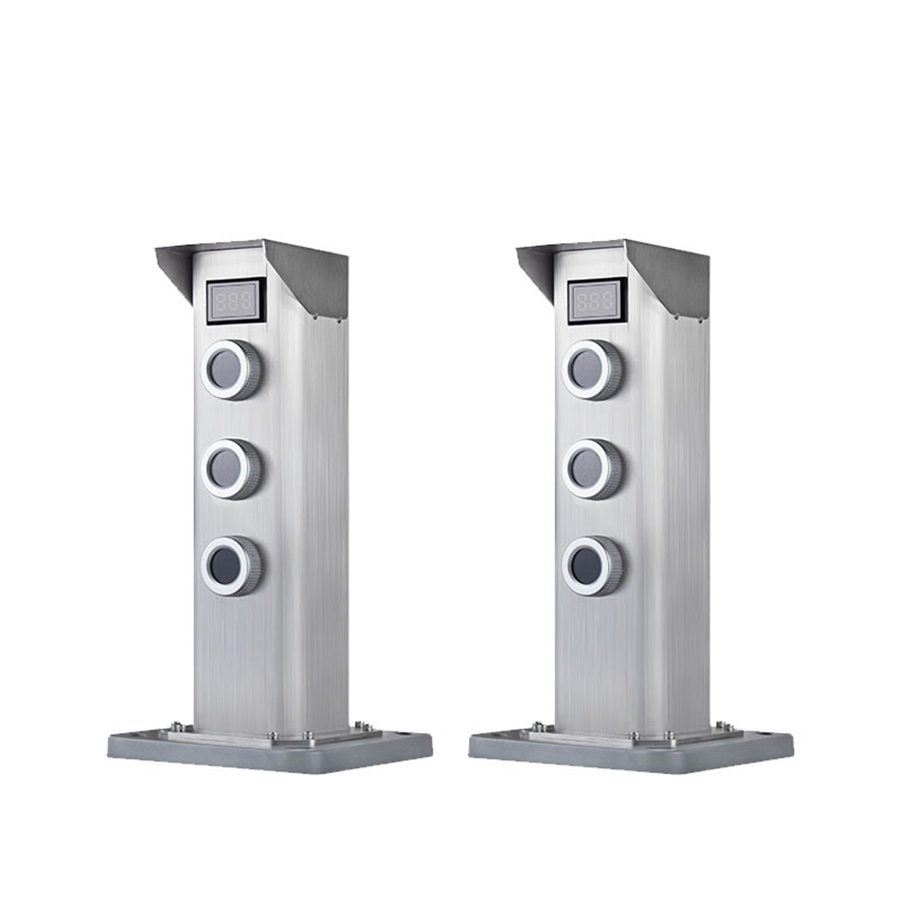
DDSK-J Series Outdoor Laser Beam Sensor — 500 Meters
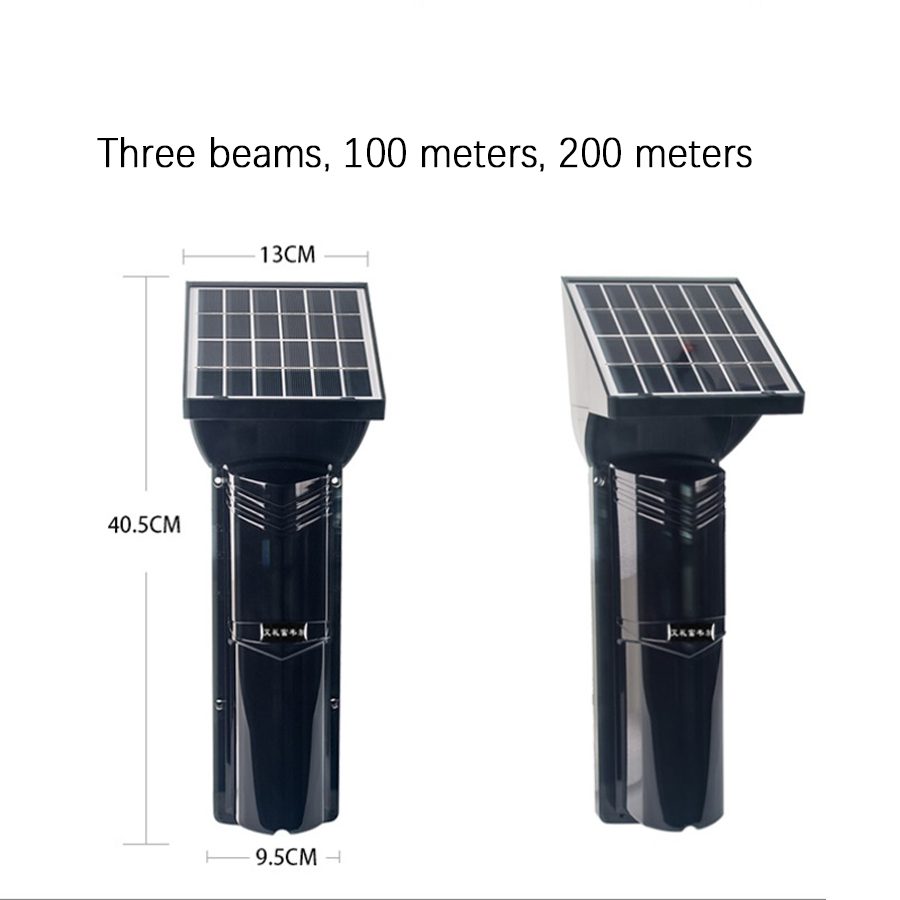
JHW Solar Wireless Infrared Anti-Tamper Detector for Perimeter Walls
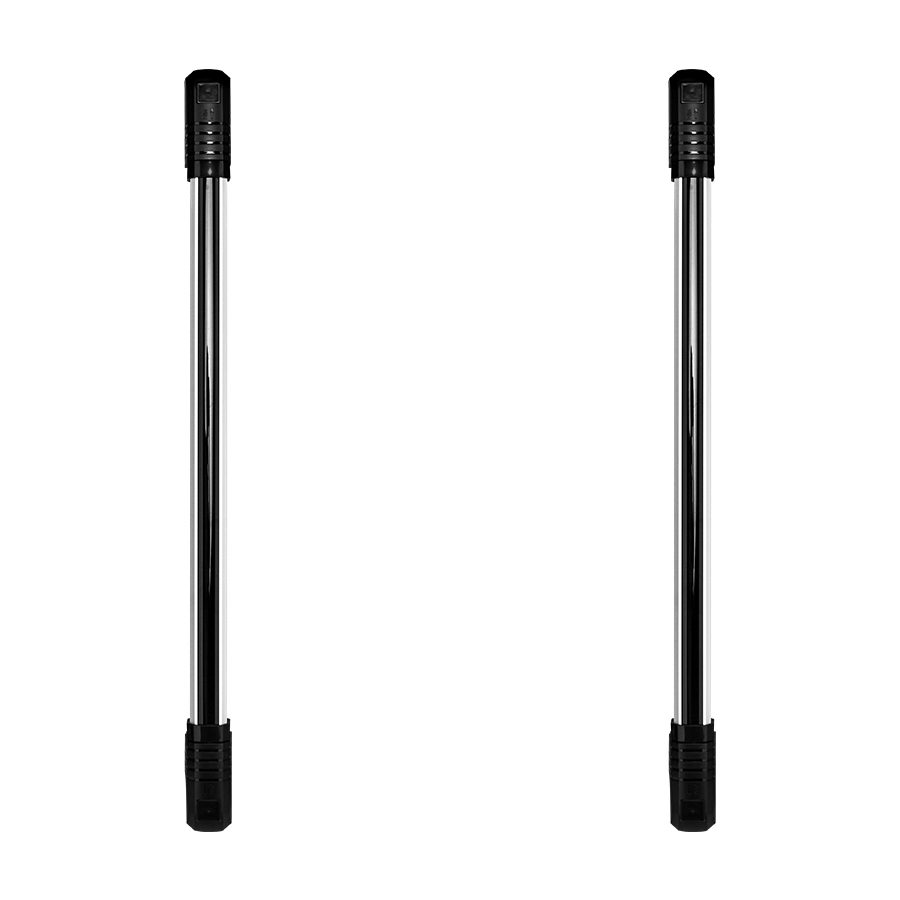
AKT Outdoor Waterproof Infrared Beam Grating Detector — Perimeter Railing
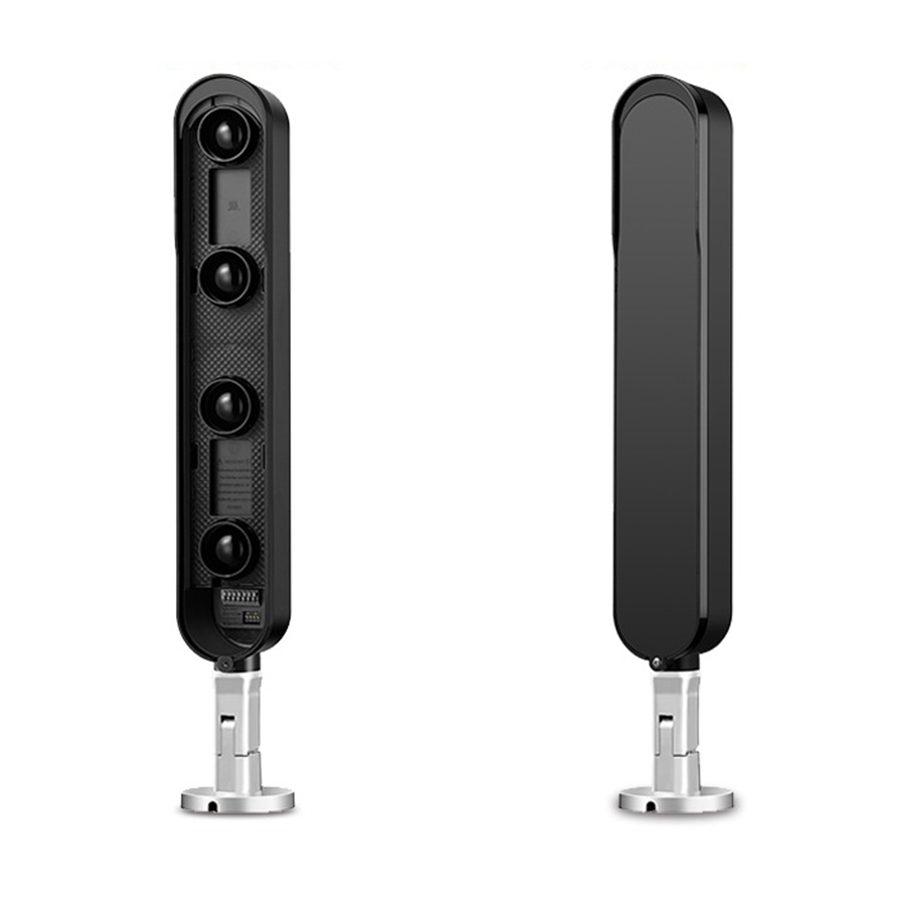
JNS Series Wired Infrared Detector — Anti-Sunlight, Anti-Theft
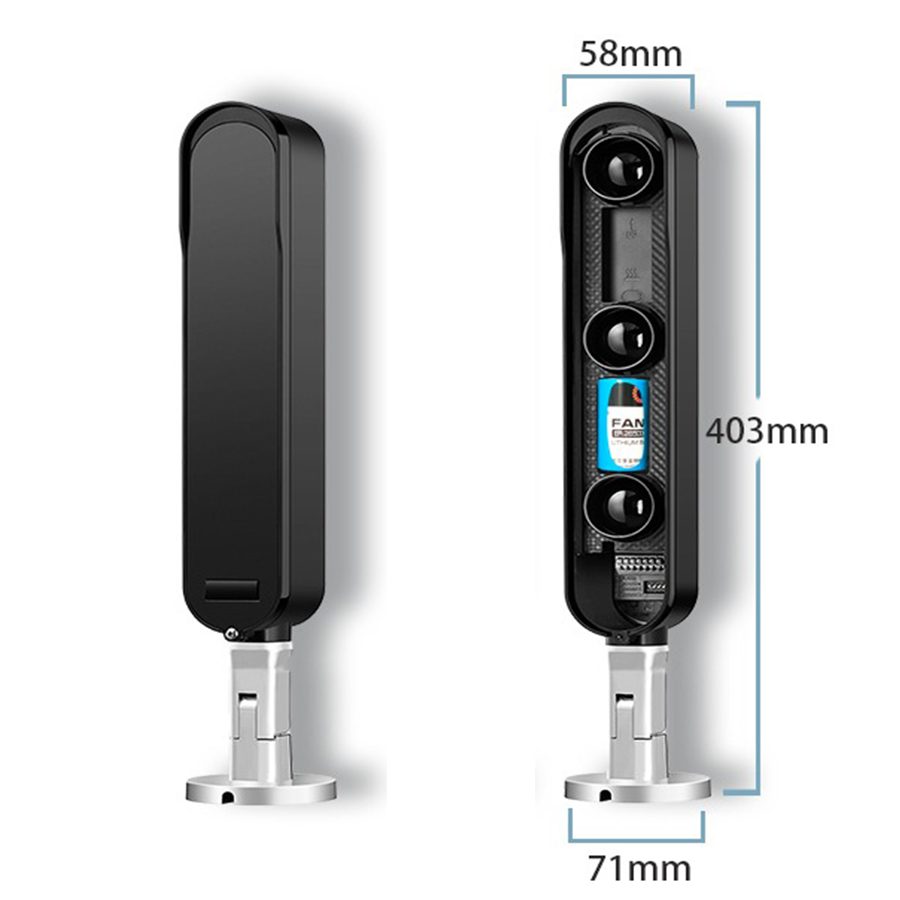
ABF Series Battery-Backed Infrared Duplex Wireless Sound & Light Alarm
DDSK-J is a long-range laser option: its factory selection sheet lists up to 500 m, visible 660 nm or invisible 980 nm sources, and IP67. AKT is an infrared multi-beam grating with model-specific span and height options. Select the actual distance, line of sight, mounting stability and environmental limits; no optical detector guarantees penetration through fog, rain or snow. Solar describes the power arrangement, not a separate optical detection principle.
Choose beam count together with beam spacing, column height, mounting height and the possible crossing routes. AKT's dimensional image lists 4 / 6 / 8 / 10 beams with column heights of 75 / 110 / 138 / 173 cm respectively. They are not equal-length direct replacements. Column height is not guaranteed continuous coverage: check gaps, crawl-under and step-over routes and test the installed detection pattern. Beam gratings detect crossing; they do not form a physical barrier.
Alarm logic depends on the model and setting. AKT documentation shows simultaneous interruption of two adjacent beams; DDSK-J lists adjustable one-, two- or three-adjacent-beam interruption modes. Multi-beam logic can reject some small interruptions but does not identify an intruder by body type or eliminate animal and vegetation alarms. Check the selected logic and minimum interruption time with representative site conditions.
Choose wired JNS or DDSK-J where suitable power and cabling are available, ABF battery-powered units where power cabling is difficult, or JHW solar-plus-battery units where the solar and radio conditions suit the site. ABF's published approximately three-year battery life is a service-life figure for its non-rechargeable lithium supply, not a guarantee per charge. Confirm the maintenance plan, alarm activity, temperature, reserve capacity and replacement requirements; solar power is not maintenance-free.
There is no single verified false-alarm rate for this category. Weather and contamination can reduce received signal or interrupt the beam. Whether sustained beam loss is reported as intrusion, fault or both depends on the detector and panel configuration; do not assume a separate fault output is provided. Test and document those states, and use an appropriate alarm-verification procedure.
Match the exact detector output to the panel or receiver. DDSK-J's selection sheet lists selectable NO/NC alarm contacts; the receiving input and any end-of-line supervision must suit the chosen wiring. Wireless models need their supported protocol, pairing procedure and matching receiver: sharing a 433 MHz frequency does not prove compatibility. A VMS or phone notification requires a compatible integration path beyond the detector itself.
Content updated: 2026-09-06. Detector data are model-specific; an intrusion alarm is not a machine-safety certification.