
ISO 10218 separates the robot from its application: Part 1 covers industrial robots and Part 2 their integration into a cell. Read the 2025 editions against the project scope, not as a deadline applying identically in every country. The machine-safety standards indexdistinguishes robot integration, protective-device and positioning standards for the validation file.
The practical question is what evidence the application needs: robot documentation, task-based risk assessment, safeguard selection, measured stopping performance and recorded safety-function validation.
One series, no cobot exception
The 2025 series addresses robot and application safety, including collaborative applications. However, ISO/TS 15066:2016 remains published in ISO's catalogue. Do not infer that every provision transferred unchanged or that the specification is withdrawn; check the provisions and references required for the project.
A robot marketed as “collaborative” is not exempt from application assessment. Power-and-force-limited operation, speed-and-separation monitoring or fenced operation must be justified for the actual task, tooling, payload and foreseeable contact or trapping hazards. Safeguard selection is an outcome of this assessment, not an automatic property of the robot label.
Safeguarding: light curtains and scanners, by assessment
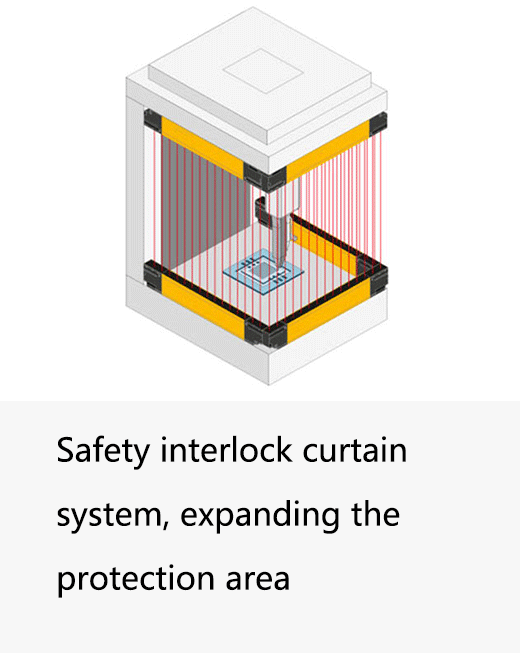
The revised standard does not invent a new safeguarding technology. Assess the established options — fixed and interlocked physical barriers, light curtains, safety laser scanners and safety mats — so that the choice between them, and the mounting distance, must come out of the task-based risk assessment and the ISO 13855 safety-distance calculation.
For the protective-device side that is reassuring continuity. A light curtain used on a robot cell is electro-sensitive protective equipment built to IEC 61496, applied to the robot application under IEC 62046. It creates a vertical plane of infrared beams across a defined access opening. Validate that interruption commands the required safety response in each applicable operating mode. It is a mature, well-understood device, and the 2025 revision keeps it firmly in scope.
Light curtain, scanner, or both
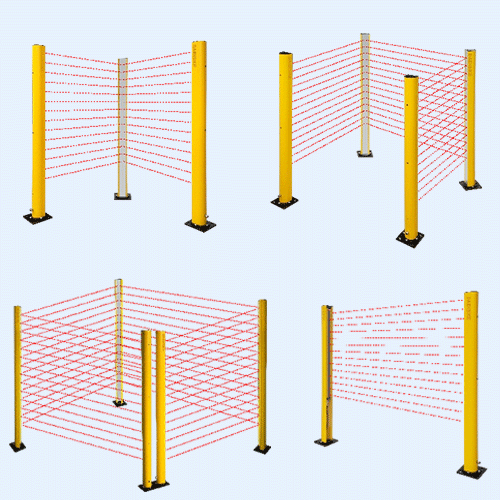
The standard expects the safeguarding to match the actual access routes. Decide whether one device, a combination or additional guards is needed; the technologies are not interchangeable:
- A light curtain guards a defined opening — a fixed plane the operator passes through to load, unload or enter. It is precise, fast, and ideal where the access point is well-defined.
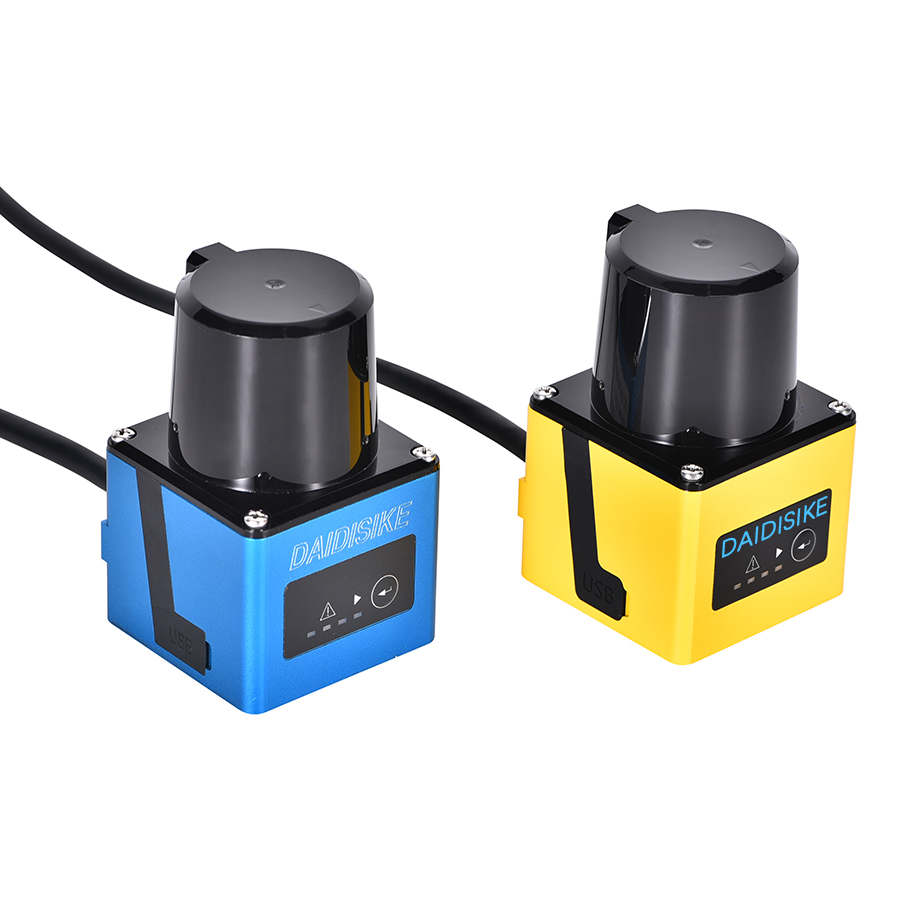
- A safety laser scanner guards an area — it monitors an area within its approved configuration. Validate supported warning and protective fields; assess cells with an open footprint or where the robot or an AGV moves through changing space.
Where someone can pass through an opening and remain inside, entry detection and continued presence are separate questions. Review scanner shadows behind fixtures, reach over or around a curtain, and the reset position. A clear entry beam must not alone permit restart. The robot-cell curtain-versus-scanner comparison develops this geometry decision.
The integration trap: a compliant robot is not a compliant cell
This is the part that costs people money, so it is worth stating plainly. ISO 10218-1 covers the robot as a product — the arm and controller the robot manufacturer ships. ISO 10218-2 covers the robot system: the application, the cell, the integration. They are different scopes.
Robot product documentation is one input, not a certificate for the completed cell. Address combined hazards from motion, tooling, payload, fixtures and access, and record safety-function validation. Market-specific conformity assessment and the responsibilities of each party must be checked separately; this summary cannot decide whether a particular CE marking is valid.
What integrators should do in 2026
- Obtain both parts of the 2025 edition and have whoever signs off cell safety read them properly — not skim the summary.
- Re-base your standard risk-assessment template and safeguarding checklist on the new text, including the now-integrated collaborative requirements.
- Check the harmonised-standards position for your market so you know when the 2025 edition gives presumption of conformity.
- Keep existing cells safely maintained and reassess changes to hazards, tasks or safeguards. Determine modification obligations for the specific market; age alone is not evidence that a cell is safe.
- Specify devices whose documented safety capability and environmental limits meet the required function. Validate the complete input–logic–output chain; device Type or PL does not establish the cell's achieved PL.
The useful outcome is an auditable integration file: which hazards were assessed, why safeguards were selected, which stop and restart functions were required, and how they were validated. Recheck it when tooling, payload, layout or modes change. This article is an orientation, not a clause-by-clause conformity assessment.
Related reading
Light Curtain vs Scanner for Robot Cells
Perimeter plane versus area zone — how to choose for a robot workcell.
DAIDISIKE DQSA Area Light Curtain
Area / body-detection protective light curtain for cell access guarding.
Safety Scanner Zone Configuration
Warning fields, protective fields and teach-in for area scanners.