
UKCA Marking for Safety Light Curtains and Safety Laser Scanners — A Post-Brexit Export Guide
Content updated:
For Great Britain, machinery within continued-recognition rules can use CE or UKCA; CE recognition is not a grace period with a currently scheduled cutoff. UKCA is an available route, including qualifying Fast-Track use of recognised EU requirements. Determine product category and route before changing labels. Northern Ireland uses CE, or CE with UKNI where required UK-body assessment is used; UKCA alone is insufficient.
Start with the destination and product scope. The GOV.UK guide updated 21 August 2026 confirms continued CE recognition and Fast-Track UKCA under the 2024 amendments. Use the machine-safety standards and conformity index to separate market law, device tests and application validation. This guide does not assert a documented pattern of held customer shipments.
This guide helps engineers and export managers choose or maintain a GB conformity route. It covers the legal framework, standards families, assessment bodies and procedures, marking, declarations, Northern Ireland and a twelve-item pre-shipment check. It is not a certificate or a finding that every model in a named family is approved for either market.
1. What changed at the legal layer
The Supply of Machinery (Safety) Regulations 2008 (SMSR), as amended, remain the GB machinery framework after EU withdrawal. They originated in implementation of Directive 2006/42/EC, but subsequent UK amendments and recognition provisions matter. The original 2008 or 2019 text alone does not state the current marking policy.
The 2019 EU-exit amendments established UK-specific terminology, approved bodies and designation arrangements. The 2024 amendments continued recognition of relevant EU-compliant goods and introduced Fast-Track UKCA. Covered machinery can use CE or UKCA; not every sector follows the same rules. Consult the GB machinery guidance and all other applicable legislation.
Protective devices designed to detect persons are among the categories addressed by Schedule 2 Part 4. The category affects assessment routes but does not always require third-party type examination. A standards prefix alone proves neither current designation nor complete essential-requirement coverage. A body number beside a mark is route-dependent, not a requirement for every type-examined ESPE.
2. UKCA vs CE — where they actually differ
EU and GB requirements share an origin, but check the chosen route, exact editions and current market rules. Report reuse may be possible; it is not a universal promise that all tests, certificates and documents remain sufficient. Continued CE recognition and Fast-Track UKCA are distinct from a direct UK assessment using designated standards.
| Item | EU / CE route | UK / UKCA route |
|---|---|---|
| Legal framework | Directive 2006/42/EC; Regulation 2023/1230 mainly from 20 January 2027 | SMSR 2008 as amended; continued CE recognition and qualifying Fast-Track UKCA |
| Standards evidence | Exact harmonised references, restrictions and dates | Exact designated references for the direct route, or recognised EU evidence for the qualifying route |
| Third-party body | Appointed EU notified body where required; verify NANDO | UK approved body for the direct route where required; recognised EU assessment may support Fast-Track |
| Conformity mark | CE, with applicable size and procedure rules | UKCA or recognised CE for covered GB products; placement rules differ |
| Declaration title | EC declaration under the Directive; EU declaration under the Regulation | UK declaration for UKCA; recognised CE uses its applicable declaration |
| EMC overlay | Directive 2014/30/EU where in scope | EMC Regulations 2016 or applicable recognised route; assess scope |
| RoHS overlay | Directive 2011/65/EU where in scope | RoHS Regulations 2012 as amended or applicable recognised route; assess exclusions |
| Economic operators | Identify manufacturer, importer and representative duties under the applicable EU rules | SMSR representative may be appointed by mandate; other applicable rules can add duties |
| Market surveillance | Competent authority in the relevant Member State | HSE for workplace machinery; OPSS and other relevant enforcement bodies |
Build a route matrix: destination, legislation, standards editions, assessment procedure, body involvement where required, declaration and marking. Fast-Track UKCA can use recognised EU requirements and processes; current guidance permits relevant EU references on the UK declaration. If choosing a direct UK-body route, confirm report acceptance and scope in writing. A certificate transfer or a new body number is not always necessary.
3. UK Designated Standards for safety light curtains and laser scanners
The following are relevant standards families, not a verified list of current designated editions. Check exact references, amendments, restrictions and withdrawal dates against the applicable UK designation notice or recognised EU route. Publication of an international standard is not automatic designation or harmonisation.
- IEC 61496-1: general ESPE requirements and tests; check the exact adopted edition and scope.
- IEC 61496-2: particular AOPD requirements, relevant to suitable light curtains and beams.
- IEC 61496-3: particular AOPDDR requirements, relevant to safety laser scanners rather than ordinary LiDAR.
- ISO 13849-1: design and performance of safety-related control systems; component evidence is not the complete machine result.
- ISO 13849-2: validation of the safety-related control system.
- ISO 13855: safeguard positioning and dimensions; the 2024 edition is not fully represented by a simple legacy distance formula.
- ISO 12100: risk assessment and risk reduction.
- IEC 62061: machinery safety-related control systems; check the 2021 edition and 2024/2026 amendments and the actual subsystem scope.
- IEC 61000-6-2 / -6-4: generic industrial EMC standards where applicable and where a more specific product standard does not take precedence.
Compare the actual British, European and international editions, amendments and annexes. A matching base number does not guarantee identical coverage or acceptance of a test report. ISO 13855:2024 addresses positioning and dimensions; IEC 62061 has 2024 and 2026 amendments to its 2021 edition. Publication currency and legal citation are separate checks.
4. The UK Approved Body — who can certify for the UK market
For a direct UK route, Schedule 2 Part 4 products can use internal checks where all relevant designated standards are fully applied and cover every applicable essential requirement. Otherwise the appropriate type-examination plus internal-check procedure or full quality assurance is needed. The current government guidance explicitly describes conditional self-declaration. Consider CE recognition and Fast-Track UKCA before commissioning duplicate assessment.
Check the UKMCAB register for a UK approved body's legal identity and scope for the regulation and procedure. Use NANDO for an EU notified body. Common branding or laboratory accreditation does not prove the required appointment. A body's role on a certificate or declaration is distinct from whether its number is required beside the mark.
First establish whether continued CE recognition or Fast-Track UKCA already meets the GB objective. If selecting a direct UK-body assessment, obtain agreed terms for evidence review, further tests and certificate scope. No universal transfer fee, lead time, report acceptance or exemption from retesting can be promised.
5. Conformity-assessment modules for ESPE devices
For the direct UK machinery route, distinguish these procedures for Schedule 2 Part 4 products. Their use depends on product scope and standards coverage; informal module labels do not replace the SMSR procedure text.
- Type examination plus internal checks: the appointed UK body examines the type under the appropriate procedure; the manufacturer must maintain the specified production controls.
- Full quality assurance: an appointed body evaluates and supervises the required quality system covering design and production. An ISO 9001 certificate alone is not this approval.
- Internal checks with full designated-standard coverage: possible where the relevant standards are fully applied and cover all applicable essential requirements. Document that coverage instead of assuming either universal eligibility or universal exclusion.
Connect the chosen route to the exact product: risk assessment, architecture and reliability evidence, drawings, relevant IEC 61496 tests, response-time and detection-capability data, environmental and EMC evidence where applicable, software/configuration controls, instructions and production controls. Do not infer the route from another manufacturer's practice or treat a component file as completed-machine validation.
6. UKCA label requirements
Use the official proportionate artwork, normally at least 5 mm high unless the applicable rules specify otherwise, and meet visibility, legibility and durability requirements. For covered sectors including machinery, current flexibility permits UKCA on an affixed label or accompanying document until 11 pm on 31 December 2027. That labelling date is separate from continued CE recognition; it is not a CE expiry date.
Do not prescribe one receiver face for every housing. Check SMSR Schedule 2 Part 1, Annex I point 1.7.3, the marking provisions in Part 3 and the applicable product standard. Review the following:
- Manufacturer or responsible-person identity and the required full address; a website alone is not a substitute.
- Designation of the product, series or type, with traceable model/variant identity.
- Serial number where applicable and the year of construction; additional traceability requirements may apply, but a universal statutory month requirement is not asserted.
- The appropriate conformity mark for the selected route and destination, with applicable placement flexibility.
- The approved-body identification number following the UK mark where the direct machinery full-quality-assurance procedure requires it; not automatically for type examination.
- Electrical ratings and other technical marking required by the applicable product rules and standards.
- The exact documented ESPE Type and other required identifiers, without assigning Type 4 or Type 3 to every device.
Choose a marking method that meets durability requirements under the declared use and cleaning conditions; a printing method is not prohibited solely by its name. Under the direct UK machinery full-quality-assurance procedure, the approved-body number follows the UK marking. Type examination alone does not trigger that particular requirement. Check any additional applicable legislation rather than copying a generic label.
7. The UK Declaration of Conformity
The machinery declaration provisions are in SMSR Schedule 2 Part 2, Annex II, not Schedule 8A. Use the current provisions for the selected route. The government's 2026 guide recognises UK or relevant recognised EU legislative references on a UK declaration. Review the following:
- Use an appropriate declaration title for the chosen route, such as "UK Declaration of Conformity" for UKCA.
- Give the manufacturer's business name and full address and the authorised representative's details where applicable.
- Identify the person authorised to compile the technical file; do not confuse that role with an importer or automatically require the same establishment rules for every route.
- Identify the product unambiguously by its denomination, function, model, type, serial information and commercial name as applicable.
- State the applicable conformity and manufacturer-responsibility declarations required by the selected legislation.
- List all applicable legislation. Assess EMC, RoHS and other scope separately; Fast-Track UKCA may reference recognised EU legislation under the current rules.
- Identify the standards and other technical specifications actually applied, with editions and amendments; check designation or harmonisation separately.
- Include the relevant body, address, identification and certificate or quality-approval information where the procedure requires it.
- Record the place and date of the declaration.
- Identify the person authorised to draw up the declaration and their signature on behalf of the manufacturer or authorised representative.
Identify exactly which models and variants the declaration covers and provide the required copy with the product. A QR code or accessible PDF should not be assumed to replace machinery accompaniment requirements. If combining EU and UK statements, distinguish the legal bases, product scope, assessment evidence and responsible signatory. Importing does not automatically authorise signing as the manufacturer.
8. The Northern Ireland exception — UKNI and the Windsor Framework
Northern Ireland follows relevant EU goods rules under the Windsor Framework, with NI-specific implementation guidance. Covered machinery still requires CE; UKCA alone is insufficient. Check the applicable rules and transition dates separately from GB.
Where mandatory third-party assessment for NI uses a suitably appointed UK notified body, apply CE and UKNI together. GB approved-body status alone does not prove the NI appointment. UKNI is not used for self-declaration or an EU notified-body assessment; CE with UKNI is not an EU-market route. Apply any identification number according to the specific procedure.
One CE-compliant product can serve NI and, where recognised, GB without automatically requiring two type-examination certificates. Qualifying NI goods can also reach GB under unfettered-access provisions. If choosing dual CE/UKCA marking, document both applicable bases, including Fast-Track reliance where used. Destination and route determine the file, not a fixed two-certificate template.
9. Twelve-item pre-shipment checklist
Use this checklist for a specific shipment. It is a preventive file-and-label review, not a ranked account of actual rejections. Product conformity and completed-machine safety require more than administrative consistency.
| # | Item | What to check |
|---|---|---|
| 1 | Appropriate marking | Confirm destination and chosen CE or UKCA route, artwork, size, durability and permitted placement. |
| 2 | Body identification where required | Check procedure-specific marking requirements and appointment scope. Type examination alone does not imply a number beside the machinery mark. |
| 3 | Manufacturer details | Required legal identity and full address consistent across the product and documents. |
| 4 | Product traceability | Model, variant, type and serial identification where applicable match the file and supplied item. |
| 5 | Documented safety characteristics | Actual ESPE Type, detection capability and response time match the exact configuration and evidence. |
| 6 | Declaration accompanies product | Provide the declaration required for the route; do not assume a QR code alone is sufficient. |
| 7 | Declaration content | Correct applicable legislation, actual standards editions, relevant assessment details and authorised signature. |
| 8 | English instructions | Installation, safe use, testing, mode restrictions, maintenance and response-time information for this product. |
| 9 | Assessment evidence | Keep the applicable type-examination, quality approval or documented internal-check evidence available; not every route requires a UK-body certificate. |
| 10 | Technical file and retention | Identify the file compiler and access arrangements. Record the retention period and trigger required by SMSR and every applicable overlay; do not count only from the first unit of a series. |
| 11 | Importer duties | Verify importer identity, contact and product/document checks under the applicable rules and any specific labelling exceptions. |
| 12 | Northern Ireland routing | CE or CE with UKNI where required; UKCA alone is insufficient. Check qualifying NI-goods rules separately. |
10. Common pitfalls
Reusing the Notified Body number beside UKCA
Do not copy a number because it appeared on an old label. Verify the route, body identity, appointment scope and whether a number is required at that location. Under the direct machinery route, full quality assurance differs from type examination. Fast-Track UKCA also means a new UK-body assessment is not universally necessary.
Citing harmonised standards in the UKDoC
Accurately describe the route and evidence. A direct UK designation claim needs the exact designation; Fast-Track UKCA may rely on recognised EU requirements and harmonised standards. An EN rather than BS prefix does not alone prove a defective declaration. Adding BS does not create designation or make a report applicable.
Assuming the CE certificate transfers automatically
An EU type-examination certificate is not automatically a newly issued UK-body certificate. Transfer is not the only GB option: continued CE recognition or qualifying Fast-Track UKCA may use recognised EU evidence. If direct UK approval is needed, confirm its scope and evidence acceptance with the appointed body. No universal acceptance or automatic relabelling is implied.
Forgetting the EMC overlay
Assess whether the exact product is in scope of EMC Regulations and other legislation, including exclusions or more specific requirements. Safety-related immunity testing does not itself settle the legal scope or emissions obligations. Cite each applicable enactment with its evidence; not every electrical product necessarily has the same overlays.
Stale CE-acceptance assumption
The 2024 amendments continued CE recognition for covered GB products without the previously scheduled end date. Verify current scope and requirements, not a supposed CE grace period or UKCA-only future. Distinguish the separate December 2027 label-placement flexibility. No incremental certification cost is estimated here.
11. The DAIDISIKE safety device family — brief and neutral
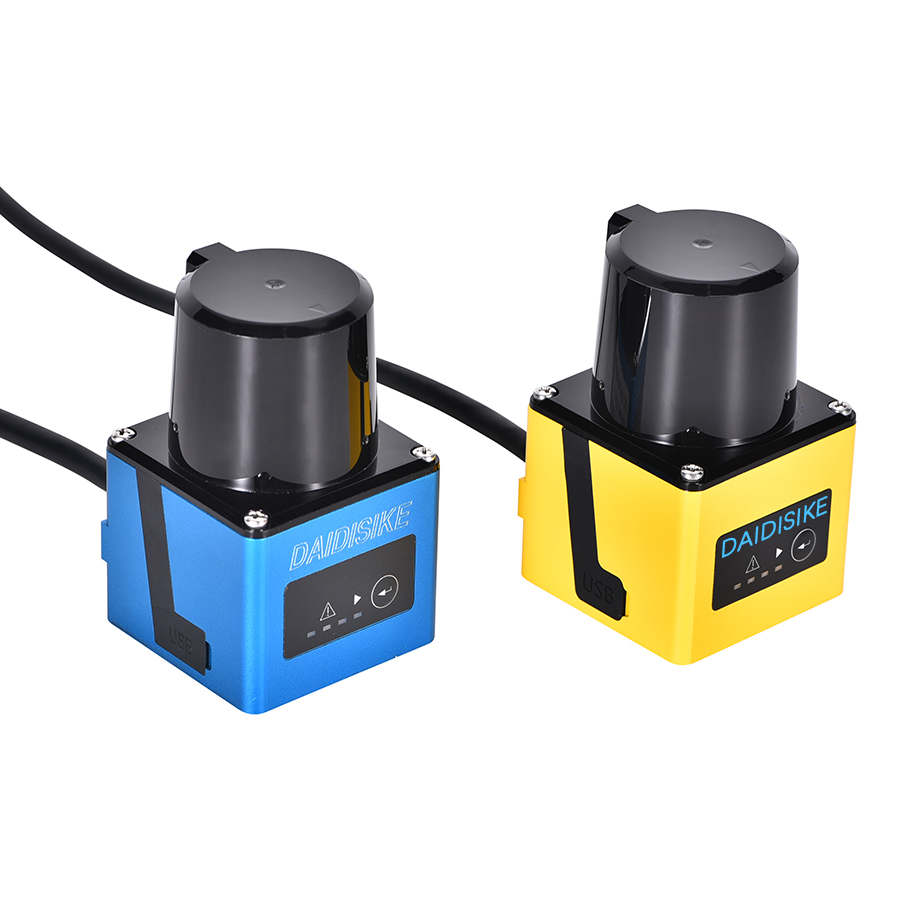
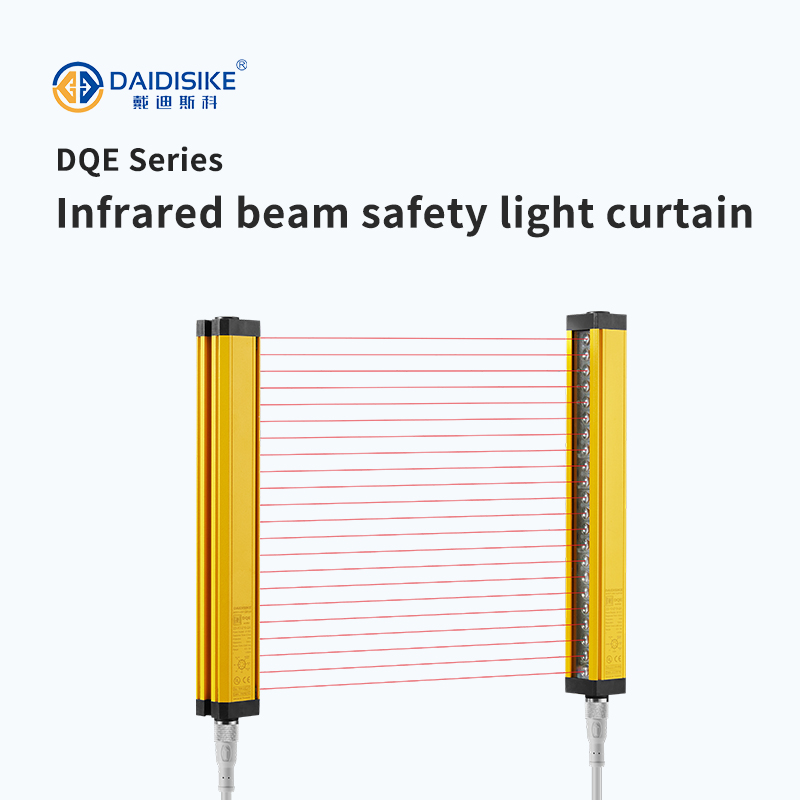
For DAIDISIKE products, request declarations, exact ordering-code coverage, reports and manuals before choosing a route. Do not assign a blanket Type, PL, SIL or UK approval to every light-curtain family. DLD, SDLD, DLDS and JPTG are non-safety sensing products, not personnel-protection ESPE. The user-confirmed safety scanner is ST27 (Type 3, PL d, SIL 2); those facts do not establish a UK-body certificate or conformity of the completed machine.
Use our engineering contact to request model-specific evidence. Compare the light-curtain catalogue and LiDAR range, distinguishing safety and non-safety models. This is not a claim of documented UK shipments or a promise that an importer can sign a manufacturer's declaration without authority.
12. Frequently asked questions
Is UKCA marking mandatory for safety light curtains and laser scanners sold into Great Britain in 2026?
No. Under the current recognition provisions, covered machinery can be placed on the Great Britain market with CE or UKCA marking. Continued CE recognition is not a grace period with a currently scheduled cutoff. Confirm all applicable product rules and the chosen route. UKCA-only products cannot use that marking for Northern Ireland.
What is the UK equivalent of the EU Machinery Directive for safety sensors?
The Supply of Machinery (Safety) Regulations 2008, as amended, govern the GB machinery route. Protective devices designed to detect persons are among Schedule 2 Part 4 categories. Internal checks can be available if all relevant designated standards are fully applied and cover every applicable essential requirement. Otherwise the appropriate type-examination/internal-check or full-quality-assurance procedure is required. CE recognition and Fast-Track UKCA are additional considerations.
What is the difference between an EU Notified Body and a UK Approved Body?
An EU notified body and a UK approved body have appointments for particular legislation and procedures. Verify the legal entity and scope in NANDO or UKMCAB, not just a laboratory's brand. A body's involvement does not always require its number beside the mark: under the direct machinery route that requirement is associated with full quality assurance, not type examination alone.
Can a Chinese OEM manufacturer apply for UKCA marking directly, or is an Authorised Representative required?
A manufacturer outside the UK can take responsibility for the product and declaration; UKCA is not an application for government permission. Under the GB machinery rules, an authorised representative may be appointed by written mandate and must be UK-established. Other product rules can add requirements. Do not confuse the representative, importer, technical-file compiler or manufacturer; importing alone does not authorise signing on the manufacturer's behalf.
What size and where does the UKCA mark have to go on a safety light curtain?
Use the official proportions, normally at least 5 mm high unless the relevant rule specifies otherwise, with visible, legible and durable marking. For covered machinery, current flexibility permits UKCA on an affixed label or accompanying document until 11 pm on 31 December 2027. Do not prescribe one housing face or add a body number merely because type examination was used.
Is UKNI marking needed for safety devices going to Northern Ireland?
For covered products, NI uses CE. Add UKNI when mandatory third-party assessment is carried out by a suitably appointed UK notified body for NI. UKNI is not used alone, with self-declaration or with an EU notified-body assessment. CE with UKNI is not an EU-market route. Qualifying NI goods may access GB under the separate unfettered-access provisions.
Does UKCA require different testing than CE for ESPE safety devices?
Not necessarily, but there is no universal identical-testing guarantee. Check the exact product, standards editions, amendments, coverage and assessment route. Existing reports may be relevant under CE recognition, Fast-Track UKCA or an agreed UK-body review. Publication, UK designation and EU harmonisation are distinct; a BS prefix alone does not establish report acceptance.
What goes in a UK Declaration of Conformity for a safety light curtain?
Use the current SMSR Schedule 2 Part 2 Annex II declaration requirements for the route chosen. Review manufacturer and representative details where applicable, the technical-file compiler, exact product identification, legislation, standards and specifications, applicable assessment-body and certificate details, place/date and authorised signature. Supply the required copy with the product; do not assume a QR code alone satisfies the machinery requirements.
Is CE marking still accepted on the Great Britain market in 2026?
Yes, continued CE recognition under the 2024 amendments covers machinery within the relevant scope and has no currently scheduled cutoff. Confirm all applicable product rules before shipment. Do not confuse continued recognition with the separate UKCA label or accompanying-document flexibility ending at 11 pm on 31 December 2027.
Can I reuse my CE technical file and Notified Body type-test report for UKCA?
Potentially. First distinguish continued CE recognition and qualifying Fast-Track UKCA from a direct UK-body procedure. The current government guide permits recognised EU requirements and assessment processes for Fast-Track UKCA. If a UK-body approval is selected or required, obtain its evidence-review scope and any further testing requirements. No automatic certificate transfer, fixed cost or universal report acceptance is promised.
What are the most common reasons a UKCA safety-device shipment gets stopped at UK goods-in?
Check the actual route, model identity, declaration, instructions, evidence and applicable markings before dispatch. Do not assume CE-only stock is unacceptable in GB or that every type-examined sensor must display an approved-body number. The checklist is preventive guidance, not a factual ranking of shipment failures.
Related reading
EU Machinery Regulation 2027 — what changes
The CE-route successor to 2006/42/EC and how it shifts the work for safety devices.
IEC 61496-3 demystified
The standard at the centre of any UKCA file for a safety laser scanner.
PL vs SIL — ISO 13849-1 and IEC 62061
How system-level performance differs from device-level evidence.
References
- GOV.UK — Placing UKCA or CE marked products on the GB market — Current guidance on CE recognition, Fast-Track UKCA and separate label-placement flexibility.
- Supply of Machinery (Safety) Regulations 2008 (SI 2008/1597) — Primary UK machinery legislation, with Schedule 2 Part 4 listing Schedule 2 Part 4 products.
- GOV.UK — UK Designated Standards — The Office for Product Safety and Standards list of designated standards by regulation.
- GOV.UK — UK Approved Bodies for product safety — Current register of designated UK Approved Bodies and their numbers.
- Product Safety and Metrology etc. (Amendment etc.) (EU Exit) Regulations 2019 (SI 2019/696) — The instrument that introduced UKCA and the UK Approved Body designation system.
- Electromagnetic Compatibility Regulations 2016 (SI 2016/1091) — Assess whether the exact product is within the EMC legislation and its exclusions.
- GOV.UK — CE and UKNI marking in Northern Ireland — Northern Ireland trading arrangements and the CE/UKNI rules.
- HSE — Work equipment and machinery — UK workplace-enforcement guidance referencing PUWER 1998 and SMSR 2008.
- IEC 61496-1:2020 — Safety of machinery. Electro-sensitive protective equipment. General requirements and tests — Source document for BS EN IEC 61496-1.
- IEC 61496-2:2020 — Particular requirements for AOPDs — Source document for BS EN IEC 61496-2 (light curtains).
- IEC 61496-3:2018 — Particular requirements for AOPDDRs — Source document for BS EN IEC 61496-3 (safety laser scanners).
- ISO 13849-1:2023 — Safety-related parts of control systems — Source document for BS EN ISO 13849-1, the PL framework.
- ISO 13855:2024 — Positioning of safeguards with respect to the approach speeds of parts of the human body — Source document for BS EN ISO 13855, the minimum-distance standard.
This is general guidance, not a conformity opinion for a product. Use current SMSR provisions, GB or NI product guidance, designation notices and appointed-body registers. Continued CE recognition, Fast-Track UKCA and temporary UKCA label-placement flexibility are separate. Recheck the exact product and placing-on-market date.