
2026 Reality Check: The True Cost of “Cheap” Safety Sensors
Quick answer: Compare safety light curtains on suitability first, then ownership cost: purchase and integration, recorded nuisance-stop losses, maintenance, spares and revalidation. A low price does not prove poor safety, and a higher price does not prove reliability. Use model-specific documentation and your own operating records; any financial example below is illustrative rather than a customer result.
Content updated: .
If you think high-quality safety is expensive, try having an accident on your watch.Let's talk business. In 2026, the global manufacturing race is faster than ever. Every procurement manager is under pressure to “trim the fat” and find more affordable components. But when it comes to safety light curtains, there is a massive difference between a bargain and a liability.
Consider a hypothetical comparison: a $200 purchase saving could be outweighed by $20,000 of interruption costs if the actual production loss supports that figure. These amounts are not a DAIDISIKE customer case, quotation or expected saving. Start with stop logs and agreed cost assumptions before drawing a conclusion.
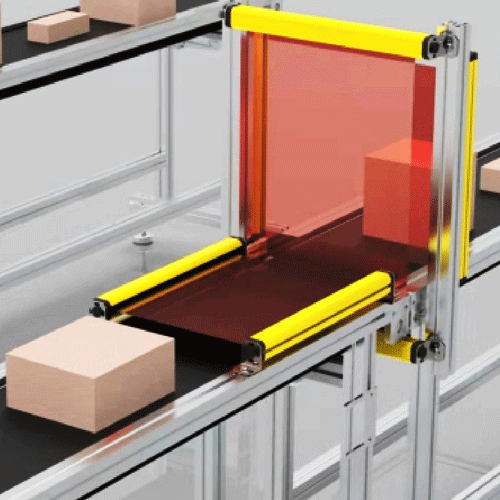
1. The “Ghost Trip” Tax
Optical interference, contamination, alignment or electrical disturbances can cause nuisance stops in an unsuitable or poorly installed system. Purchase price alone does not identify which device will tolerate the actual environment. This results in “Ghost Trips” — the machine stops for no reason.
A DAIDISIKE DQM High-Speed label does not establish immunity or suitability for personnel protection. Compare the documented intended use and test the actual conditions before assigning a cost benefit. For the detection principles, check out how safety light curtain sensors work at a component level.
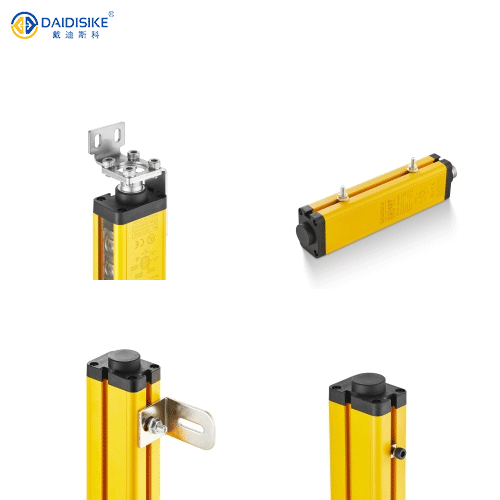
2. Response Time is Your Floor Space
This is the part most buyers miss: Math doesn't lie. According to ISO 13855, the slower your sensor's response time, the further away you must mount it from the machine.
A 30 ms sensor response is only one term in the total system response and stopping time; it does not by itself determine the separation distance. For a DAIDISIKE DQT Seriesor another model, use the documented response, measured machine stopping time and applicable geometry. Floor-space savings require a validated layout and a real local cost estimate.
- Labor: Hours spent by maintenance crews troubleshooting intermittent sensor errors.
- Waste: Scrapped material when a “Ghost Trip” happens mid-cycle on a CNC or Injection molder.
- Suitability and rework: Costs of correcting a design that does not meet its risk assessment. Type 2 is not inherently uncertified, and no insurance premium is predicted here.
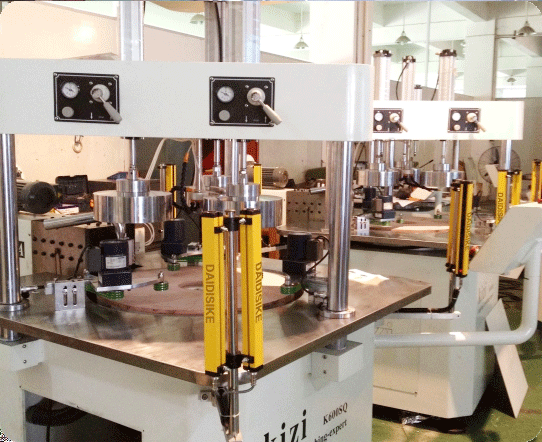
3. Durability: Build for the Long Haul
Our Multi-beam safety devices and Safety light screens need model-specific checks for enclosure rating, vibration, temperature and cleaning exposure. An IP rating does not establish resistance to every chemical or installation condition. Plan inspection and proof of function throughout service; no device is a maintenance-free investment.
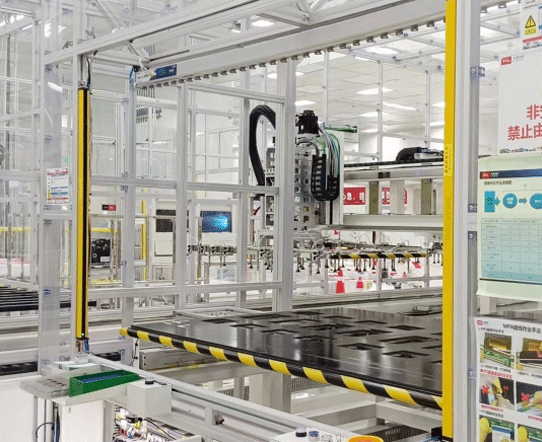
Summary: Invest in Reliability
Safety is the last place you should look for a “discount.” In the long run, the reliability of a suitable documented model matters to Total Cost of Ownership (TCO). Compare the safety light curtain families and intended uses after confirming the required safety function. Lowest cost and uninterrupted production cannot be guaranteed by a series name.
A practical ownership-cost worksheet
- Record purchase, integration and initial validation costs separately.
- Estimate downtime from measured stop frequency × duration × an agreed production cost.
- Add maintenance, spares and revalidation over the same comparison period.
- Compare a range of assumptions, including no downtime advantage; reject any option that fails the required safety function.
ISO 13855:2024 covers safeguard positioning. Use the applicable method in the full standard; a simplified time formula is not a complete layout approval. The operator inspection checklist helps identify the maintenance work to include.
If a quote compares named brands, our ABB Jokab candidate-comparison guide explains why price comparisons also need interface, safety-function and replacement validation checks.
Use your facility's recorded costs and assumptions to assess whether a suitable documented model could reduce ownership cost.
Explore the High-Performance Range →