The Future of AI-Integrated Safety Sensors: Beyond Simple Beam Breaking
Quick answer: AI can support diagnostic analysis and maintenance planning, but adding an AI classifier does not establish a safety function. Personnel detection, response time, fault behavior and restart control still need documented validation. This article discusses possible development directions; it does not claim that DQC, DQT4, DQO, MK or JER currently provide AI-based object classification or safety-rated adaptive control.
Content updated: .
For decades, the “safety” in industrial sensors was binary: either the beam was clear, or it was broken. If a stray spark, a heavy plume of dust, or a piece of scrap metal flew through the sensing field, the machine stopped. While safe, this led to countless hours of lost productivity due to “nuisance trips.”
At DAIDISIKE (戴迪斯科), we are seeing a shift. The next generation of safety technology isn't just about stopping a machine; it's about understanding why it needs to stop. This is where Artificial Intelligence (AI) integration begins to redefine the factory floor.
1. Smart Filtering: Ending the “Nuisance Trip”
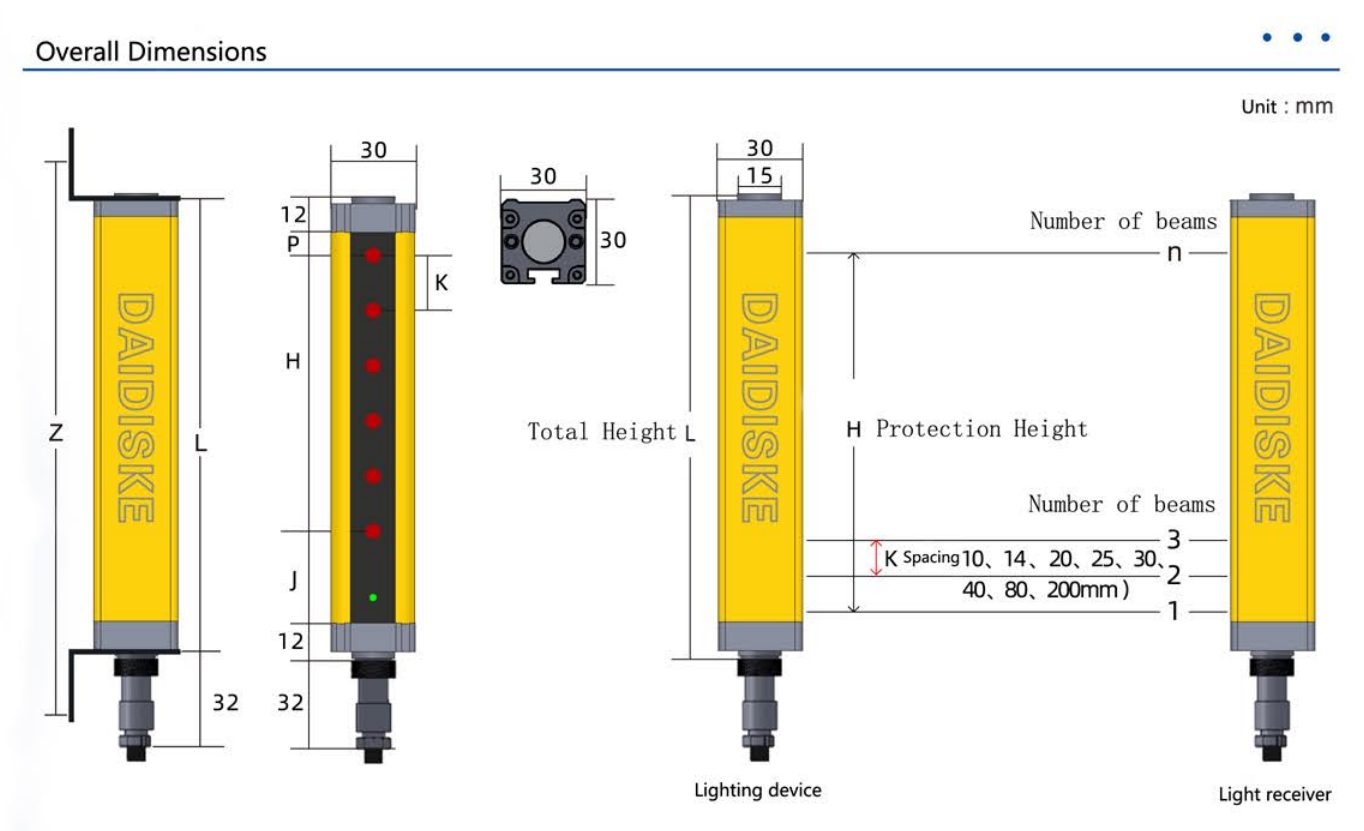
Traditional sensors, like our reliable DQC Series, respond according to their documented optical detection function. An external AI system does not give them a validated ability to distinguish a hand from scrap. Selective filtering is a research direction that must be evaluated for missed detections and worst-case response. Do not configure aDQT4 Type 4 or another curtain to ignore an interruption on the assumption that AI has classified it as harmless.
2. Predictive Maintenance and Self-Diagnostics
Contamination is one possible cause of declining signal margin. Dust, oil, and grime slowly degrade the signal strength. Future AI-enabled sensors will monitor their own health in real-time. Instead of a sudden machine stop, a future monitoring application could send an alert to the maintenance team's tablet: “Lens at 70% clarity; please clean during next scheduled break.” That is a hypothetical interface example, not a documented DQO measurement or alert feature.
This proactive approach moves us away from reactive repairs and toward better maintenance scheduling; it cannot guarantee zero unplanned downtime. If you are curious about the technical foundation of these systems, you can explore the underlying optical safety mechanisms that make this precision possible.
3. Human-Robot Collaboration (HRC)
As “Cobots” become more common, the barrier between humans and machines is disappearing. Future safety systems won't just create a “forbidden zone”; they will create a “dynamic zone.” Using advanced logic and validated safety functions, a robot application may implement speed and separation monitoring. There is no documented AI speed-control function claimed here for MK or JER. Required separation and stopping response must account for the whole system; “the last moment” is not a design criterion.
4. Conclusion: The Road Ahead
For currently documented hardware and interfaces, start with the industrial sensor and control product catalog. Treat the SPE cabling discussion as a separate communication topic; a data connection alone does not add functional safety.
Checks before connecting an AI application
- State whether the AI output is advisory or part of a safety-related function.
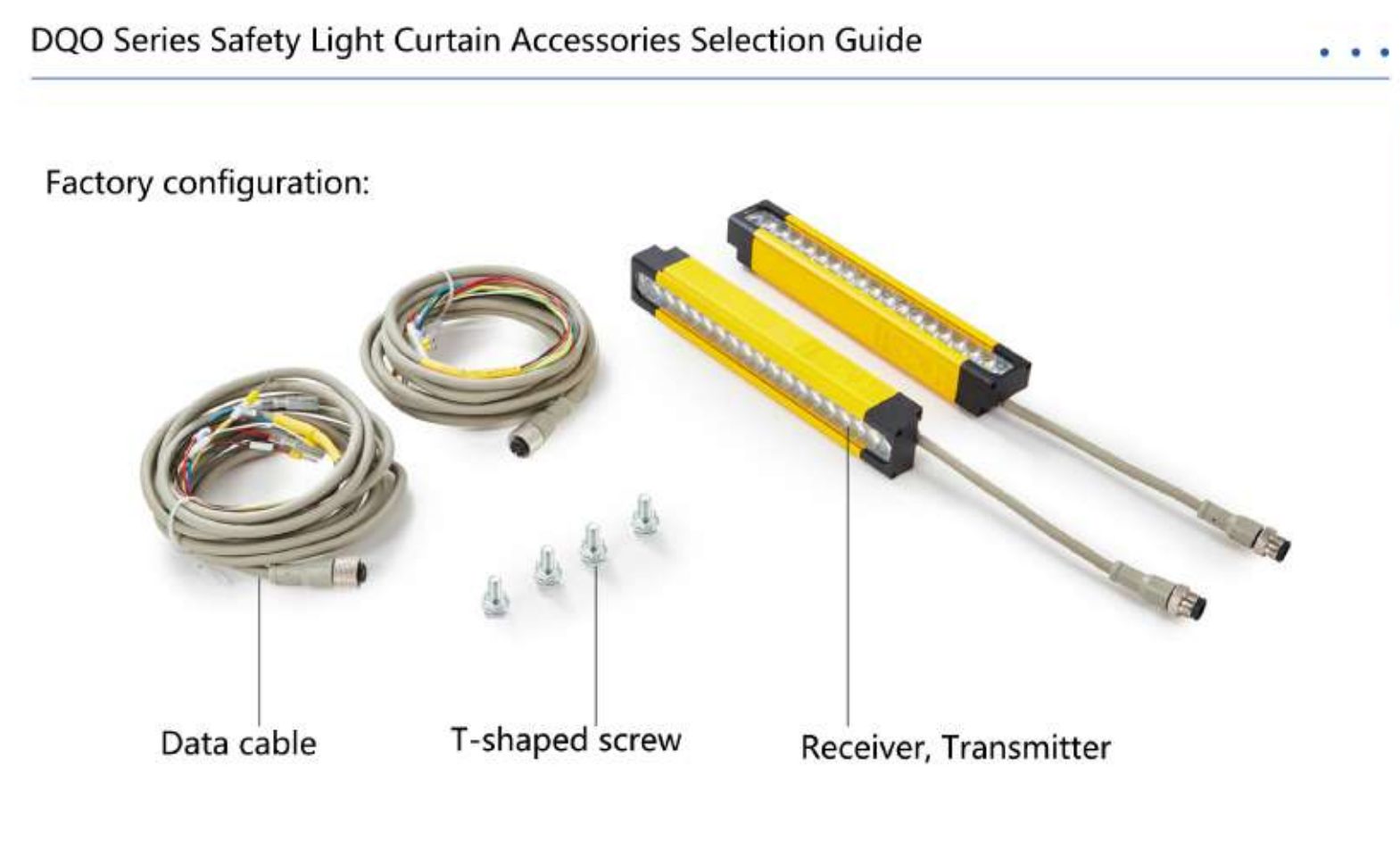
- Verify which diagnostic data the actual product exposes; do not infer it from marketing images.
- Document failure behavior, update control, response-time bounds and the effect of lost communication.
- Keep the protective function effective when an advisory model or its data connection fails.
ISO/IEC TR 5469:2024 discusses AI and functional-safety methods and risk factors. It is a technical report, not a certificate for an AI-equipped sensor.
AI isn't going to replace the fundamental physics of the safety light curtain, but it is going to make it significantly smarter. By reducing false alarms and providing deep data insights, AI-integrated sensors will turn safety from a “cost center” into a “productivity driver.”
As we continue to innovate at DAIDISIKE, we remain committed to the belief that the safest factory is the one that never has to stop for the wrong reason.
Reliability in Every Rotation | DAIDISIKE (戴迪斯科)