
From a Few Old Presses to Intelligent Lines: Mr. Li’s Stamping Upgrade Journey
An illustrative manufacturing story—sweat, risk, and the hard choices behind moving from hand-fed presses to stable, data-driven automation.
Quick answer: Modernize a press line in stages: assess the press and tooling, stabilize material handling, select a feeder and straightener for the real stock, then coordinate automation and guarding. Revalidate each changed safety function. The Mr. Li narrative below is an illustrative story; its characters, dialogue, dates, costs and outcomes are not a verified customer case or company history.
Content updated: .
The Workshop Years: Keep the Factory Alive
In the early days of reform and opening up, Mr. Li was barely past twenty. With a few tens of thousands of yuan borrowed from relatives, he rented a run-down plant in a small southern county and called it a factory. In truth, it was a workshop: three or four aging mechanical presses and everything done by hand. Operators bent over the tables, feeding, pressing, and unloading by muscle memory. Batches rose and fell with “the feel of the hand,” not the clock. Steel chips flew, noise pounded the walls, and at night Mr. Li would startle awake, worried that orders would dry up and the shop wouldn’t make payroll. Still, he held one stubborn goal: keep the place alive.
First Leap: A Pneumatic Feeder Opens the Efficiency Gate
The break came quickly. In the early 1990s, Mr. Li heard about a “pneumatic feeder” that could push material into the press automatically, turning the beat of production from “watch the hands” into “watch the stroke.” In this fictional sequence he chose a basic pneumatic feeder and a safety light curtain for one of the old presses.
The crew was wary at first. But within days, the results were encouraging: smoother feeding and less manual handling. The earlier “nearly double” throughput figure was a narrative assumption, not measured evidence. For the first time, the shop considered the value of press peripheral equipment. Orders stabilized; the team even took on small custom runs. Mr. Li told anyone who would listen: “This automatic feeder is our lifeline. We’re going to move toward automation.”
Second Leap: WTO Tailwinds Make NC the New Baseline
With the new millennium and China’s WTO entry, manufacturing surged. Fragmented local orders turned into big buyers from Europe, America, and Japan. They wanted more than stamped parts; they wanted accuracy, volume, and fast lead times. The limits of manual plus pneumatic showed up fast: multi-segment pitches, thicker coils, high-strength steels, and long, stable tact times exposed every weakness.
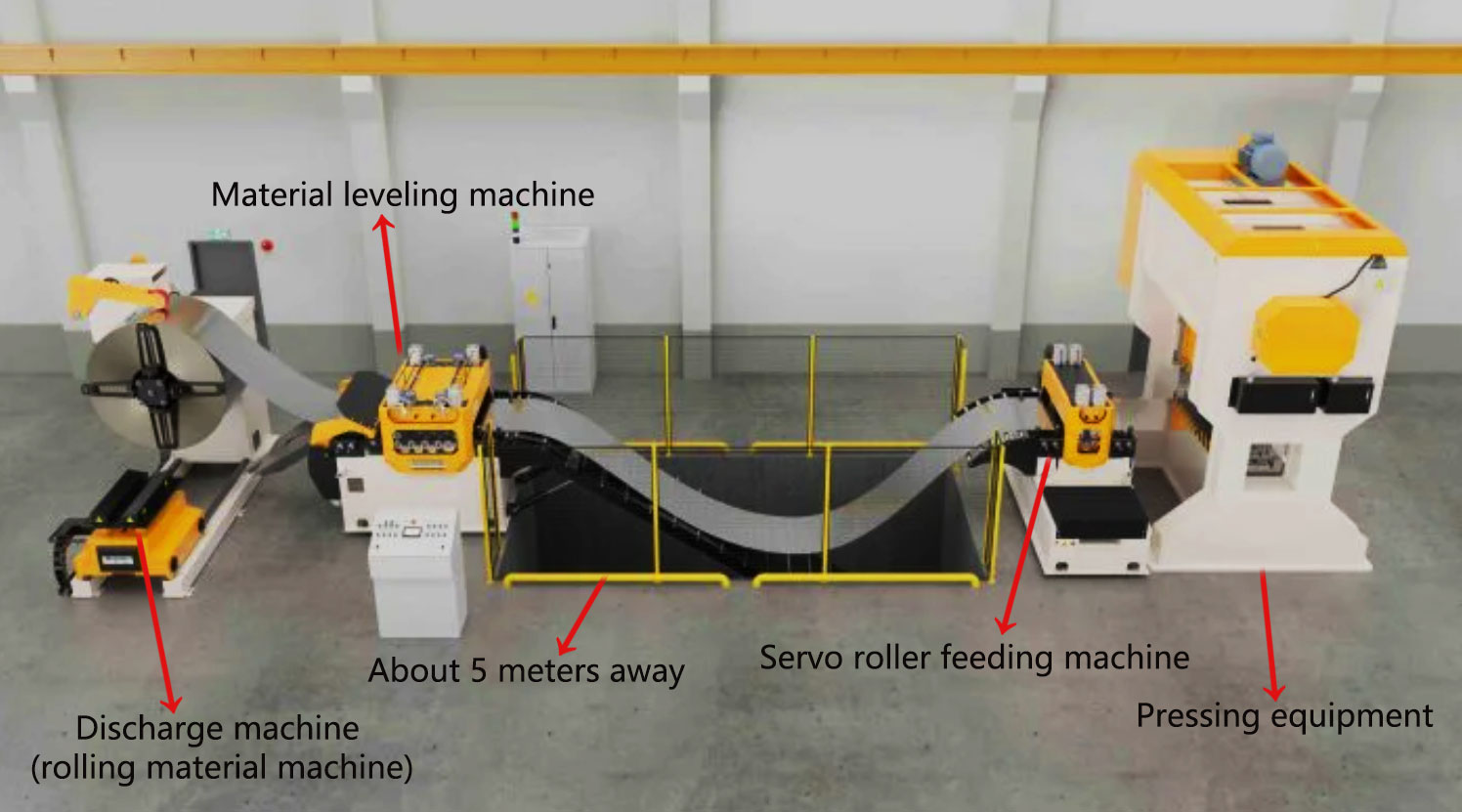
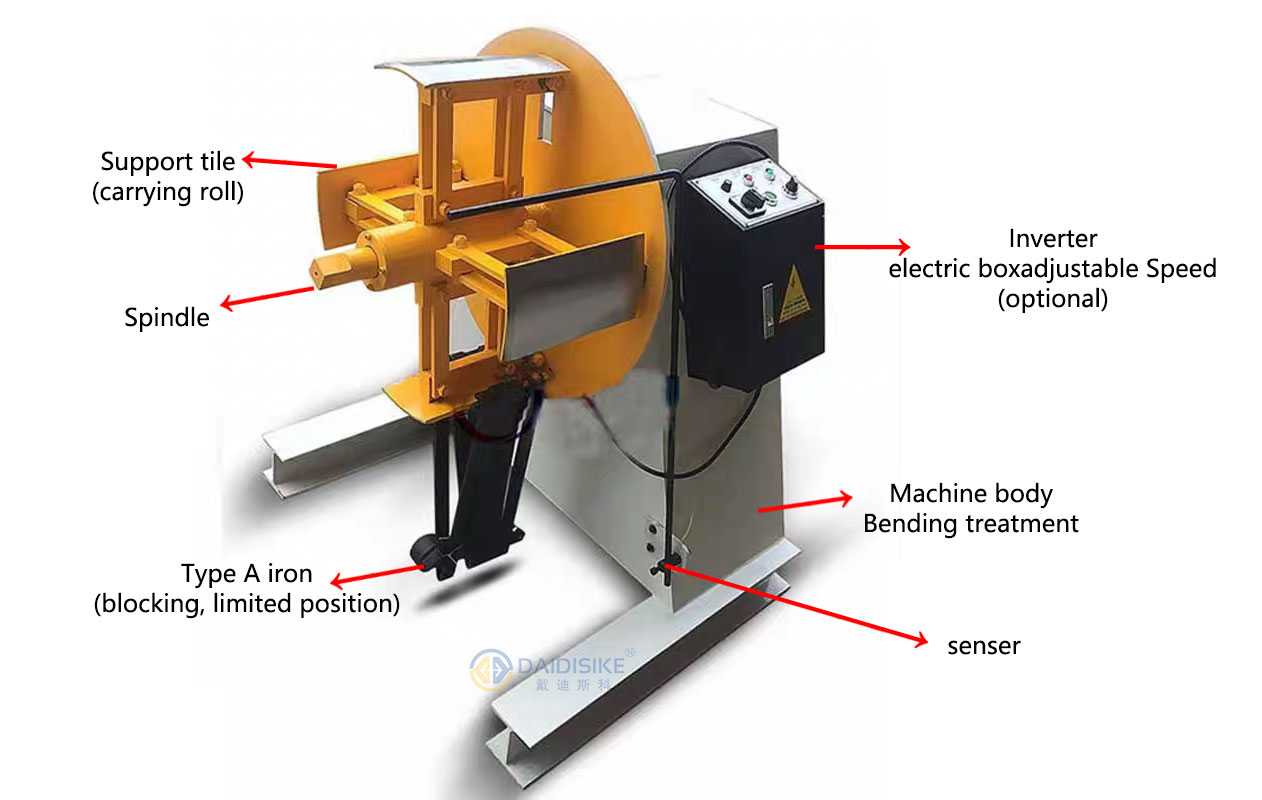
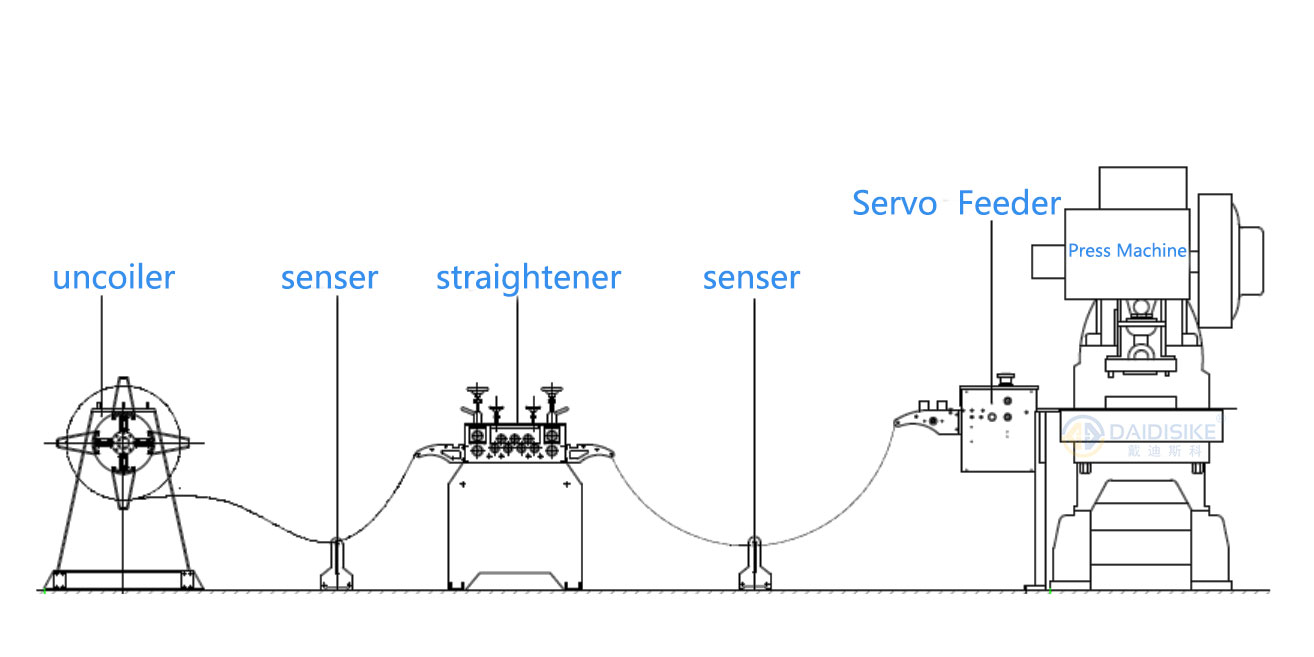
Mr. Li doubled down on the feeding system first: he brought in NC/servo feeders, paired key stations with straighteners, and soon replaced the main line with 3-in-1 coil systems—decoiling, straightening, and feeding in a compact, rigid package.
- Repeatability: define an acceptance tolerance from the actual part and process, then measure it on the selected feeder, stock and press. The earlier ±0.01–0.10 mm range is not a verified result for this story.
- Changeovers: from gears and air knobs to HMI recipes—with changeover time and repeatability measured during acceptance rather than assumed.
- Material control: better bite and pull on galvanized, aluminum, and high-strength steels.
Noise enclosures and oil-mist treatment followed. The floor got quieter and cleaner. First impressions with overseas audits jumped.
Third Leap: Press Robots and Line Synchronization Lock in Consistency
Once the NC servo feeders locked precision, Mr. Li focused on removing people from the hazard zone. He added press robots and line-level synchronization: automatic pick-and-place, precise loading and unloading, and in-line part sorting—synchronized with the 3-in-1 feeder and the press encoder. The takt stabilized. Dashboards went on the wall. Data became part of daily work.
At the first trial, the robot moved like a tireless teammate, stacking stamped parts neatly. Operators gathered around: “It’s steadier than any of us.” From that day, true stamping automation had a home in the plant.
Scaling Up: Sell Solutions, Not Just Machines
With the lines stable, Mr. Li turned hard-won experience into standard playbooks:
- Thin, precision parts: servo feeder + precision straightener for repeatability.
- Automotive / NEV, thick or high-strength steels: 3-in-1 coil line + high-rigidity straightener for pull force and flatness.
- Legacy line retrofit: 2-in-1 decoiler-straightener to stabilize incoming material before talking takt time.
Each option came with parameters, selection tables, videos, and case studies. Buyers could see the logic, choose confidently, and order the right system—the argument was stronger than a standalone machine quote.
Reputation Abroad: Stable, Fast, Durable
From Southeast Asia to Europe, the Middle East to North America, the company’s parts landed on assembly lines across industries. During one visit, a German customer watched the NC servo feeder run in lockstep with the press robot and said, “This is real stamping automation.”
Why did they return? Three words Mr. Li repeated: stable, fast, durable.
- Stable: NC feeders and 3-in-1 lines lock precision and takt.
- Fast: recipe changeovers and higher first-pass yield make lead times predictable.
- Durable: rugged equipment, simple maintenance, and a clear support structure.
More emails began with: “We heard your decoiler-straightener-feeder lines are stable.”
Mr. Li’s Three Takeaways
The press peripheral equipment overview helps compare the feeder, straightener and coil-handling roles. Before a retrofit, record material width/thickness and strength, coil mass, feed pitch, press interface, changeover needs and the guarding concept. A light curtain is suitable only where the press can achieve the validated protective stop; a feeder alone does not make a press safe.
- Survive first: on a tight budget, start with a pneumatic feeder + safety light curtain. Get hands out of the danger zone and lock the takt.
- Go deeper once volume rises: switch to NC/servo feeders and add a straightener or 3-in-1 line to lock precision and flatness.
- Win with systems: for global customers, pair the press with robots, line-level sync, and a full decoiler–straightener–feeder chain. Turn tribal knowledge into standardized automation.
Afterword: Equipment Is a Lever; Standards Are the Moat
From a handful of old presses to intelligent lines; from hand feeding to NC servo closed-loop; from “feel” to “data.” With a coherent set of DAIDISIKE peripherals—pneumatic feeders, NC feeders, 3-in-1 lines, straighteners, press robots, and integrated coil-feeding systems—Mr. Li pulled a small shop into industry-benchmark territory.
He likes to say: reform and opening provided the opportunity, but it was stable automation and habitual standardization that kept the company on its feet. Next up: in-line inspection, energy monitoring, and smarter algorithms—so the line not only runs, but learns. In a fast-moving world, the only safe place is forward.