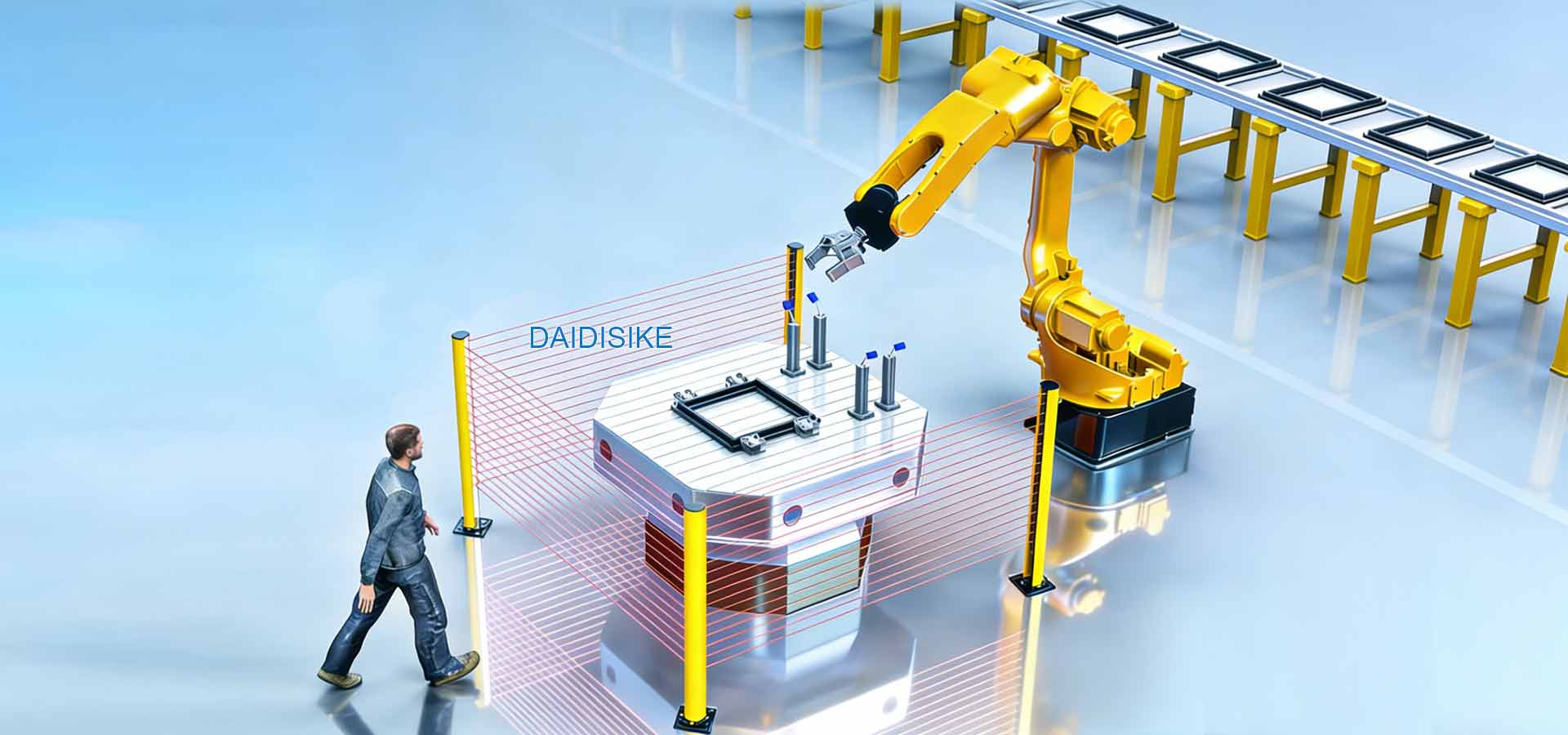
How to Choose the Right Safety Light Curtain for Automatic Palletizing Systems?
Content updated:
Selection answer: separate operator access, pallet passage and occupancy inside the cell. Compare light curtain detection and mounting options only after defining those functions, the required PLr/SIL and measured stopping time. A product-passage muting sequence must not permit a person to follow or accompany the load.
1. Overview: The Kinetic Risks of High-Speed Palletizers
Palletizers combine robot or gantry motion with moving loads, conveyors and pallet transfer. Use the actual maximum payload, speed, reach and stopping measurements; generic weight, power and bags-per-minute figures are not suitable safety-design inputs.
The core engineering challenge is not just maintaining the documented positioning accuracy, but ensuring that operators, maintenance crew, or forklift drivers do not accidentally enter the robotic arm's operating radius. A collision with a palletizing robot operating at full load is catastrophic. Therefore, implementing a fault-tolerant industrial sensor safety system is a mandatory compliance requirement for global factory floors.
2. Palletizing Workflow & Hazard Zones
To understand where to deploy safety sensors, we must first break down the machine's automated workflow:
- Packaging Infeed: Goods are conveyed to a positioning device.
- Pallet Supply: Empty pallets (typically 800×1200 mm or 1000×1200 mm) are fed into the stacking station.
- Robotic Palletizing: The mechanical arm grips and stacks products to the process-defined height; assess the complete reach and falling-load envelope.
- Output: The finished pallet is transported to a stretch wrapper or warehouse.
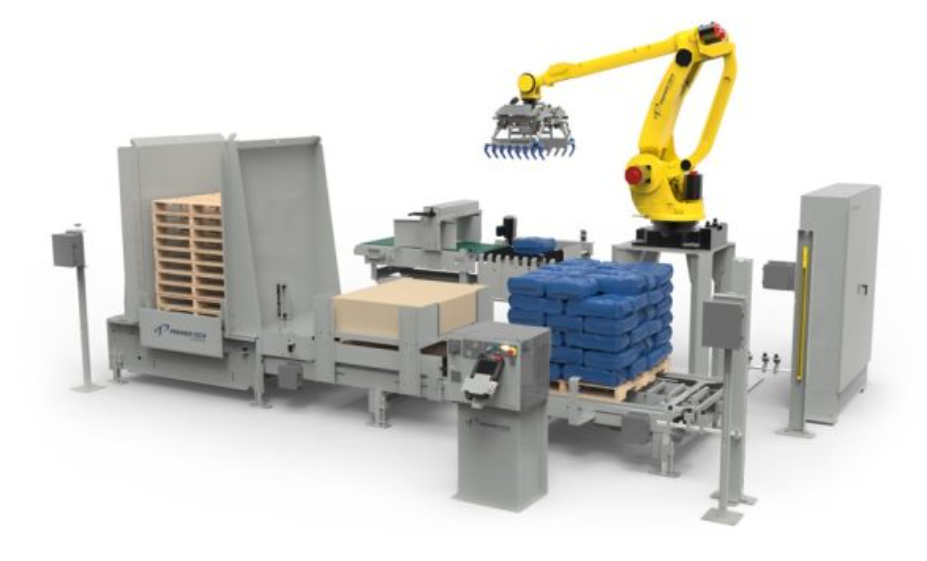
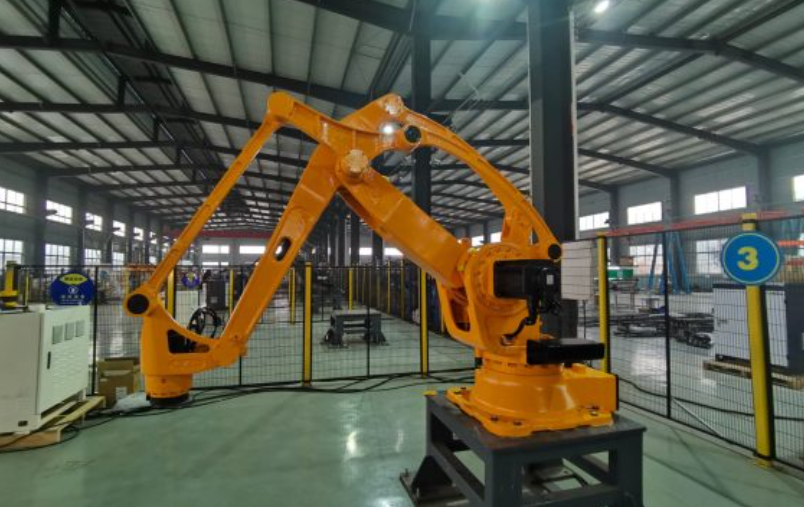
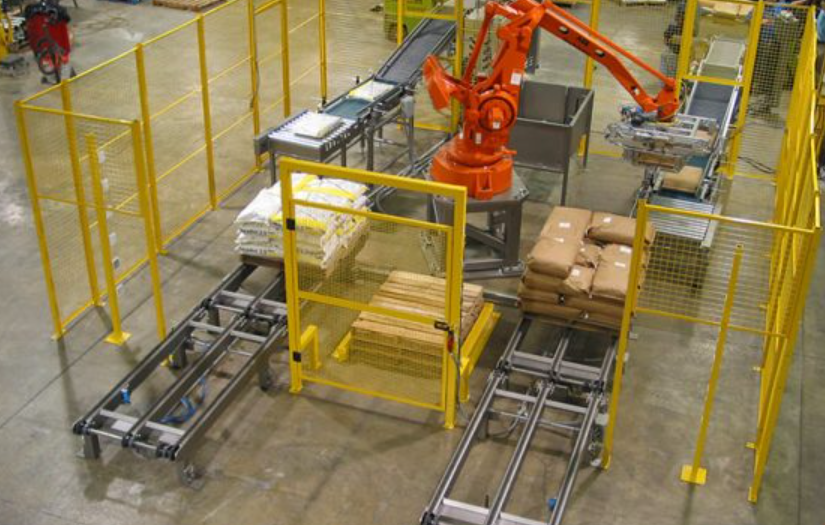
The Blind Spot: The primary hazard zone is the open area where forklifts extract the finished pallets or where operators enter to clear occasional packaging jams. Physical fencing alone is inefficient for areas requiring constant material flow. This is where optoelectronic guarding becomes critical.
3. Primary Protection: DQSA Area Safety Light Curtains
For the majority of heavy-duty palletizers, the standard and most reliable engineering recommendation is creating a virtual perimeter using Area Safety Protection Light Curtains. Our recommended setup utilizes floor-stand models with through-beam infrared technology.
Interruption of the protective field must switch the documented safety outputs to qualified safety logic, which commands the validated robot stop. The complete response is not instantaneous and must not depend on an ordinary PLC input.
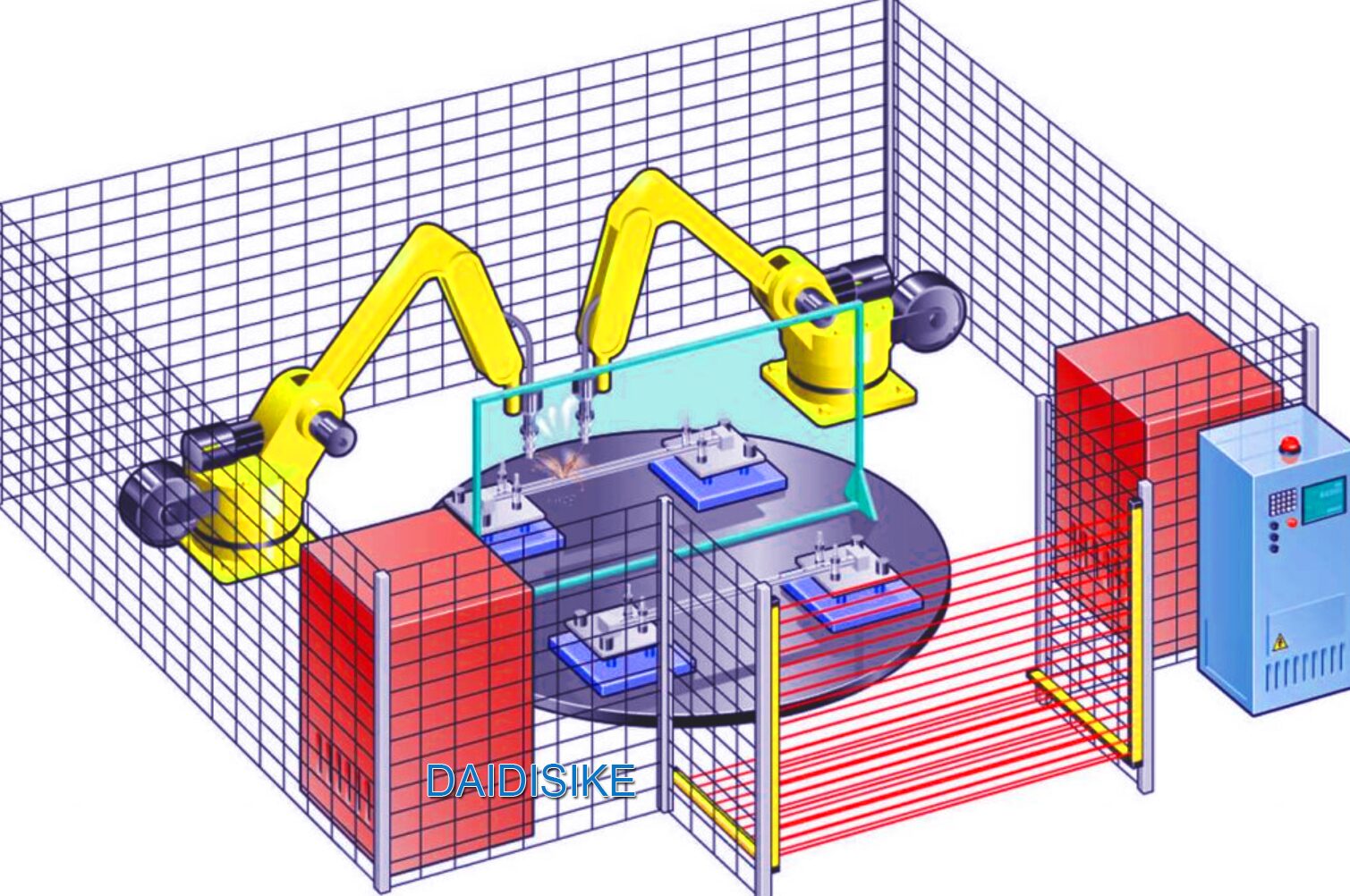
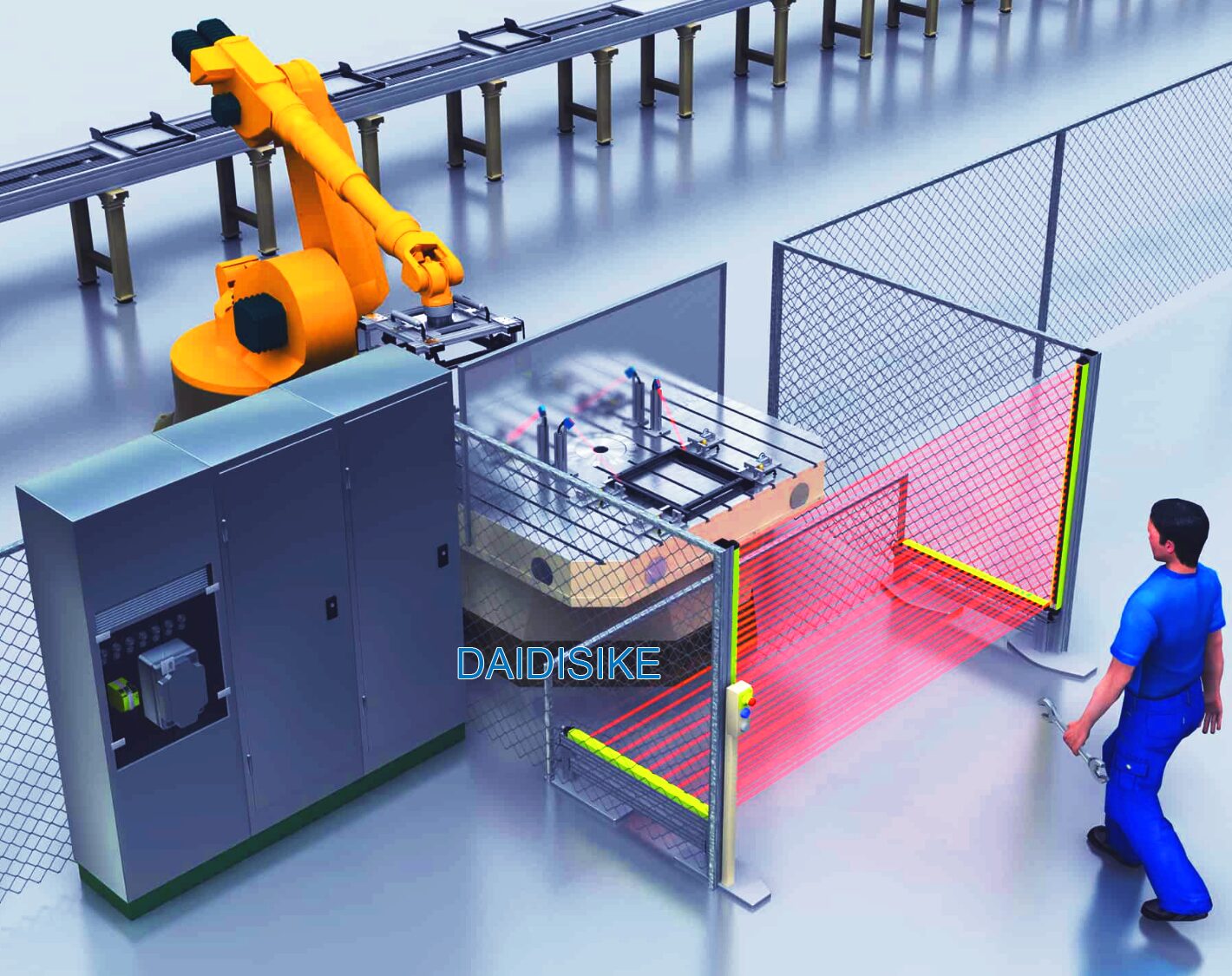
Why engineers prefer the DQSA Series:
- Floor-Stand Design: Easy to mount firmly to the concrete floor without welding to the machine frame, isolating the sensor from the palletizer's mechanical vibrations.
- Through-Beam Reliability: verify optical immunity, range, contamination and reflective clearances for the exact unit; no device guarantees zero false trips.
- Documented response: include the exact worst-case sensor response in the total stopping time. A fast response alone does not establish CE conformity.
Learn more about technical dimensions and wiring configurations:
→ View the DQSA Area Safety Protection Light Curtain Specs
4. Flexible Alternative: Safety Laser Scanners
In certain layout scenarios — such as end-of-line packaging where AGVs (Automated Guided Vehicles) and manual operators share a highly dynamic workspace — installing fixed floor stands might impede traffic. In these cases, an excellent alternative is the Industrial Safety Laser Scanner.
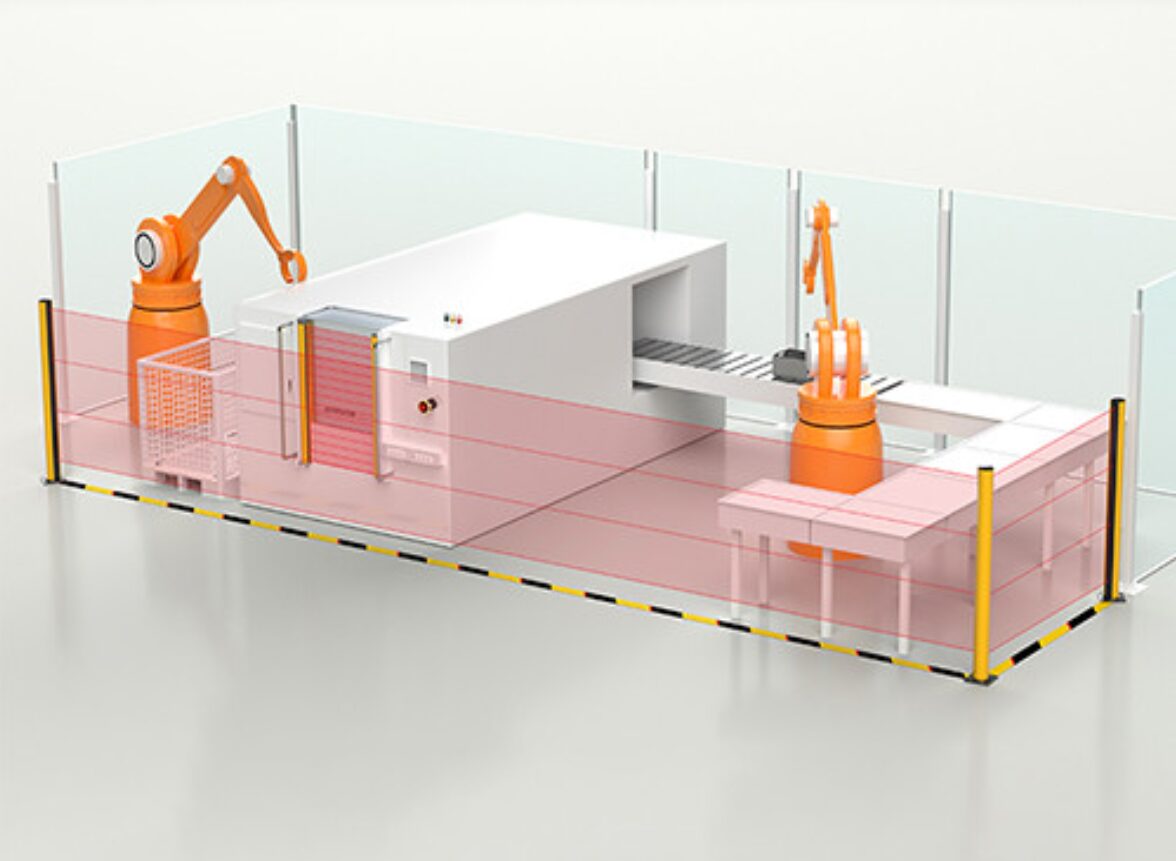
A certified protective scanner can monitor a configured area when its protective range, detection capability and field switching meet the risk assessment. Warning fields are not protective fields. ST27 is user-confirmed Type 3 / PL d / SIL 2; ordinary SDLD/DLD perception devices cannot replace the credited protective function, even when connected to a safety controller.
Separate perception example — not a person-protection replacement:
→ Explore SDLD non-safety LiDAR for process perception
5. Engineering Notes: Safety Distance & Response Time
Position the DQSA or other protective device from the actual robot and conveyor stopping performance and hazard envelope. The expression below is a historical introductory model, not a complete ISO 13855:2024 calculation and not a universal scanner formula. Choose the method for the installed geometry, and include all applicable reach and uncertainty allowances.
S = (K × T) + C
- K: Use the approach speed required by the applicable method. The historical perpendicular fine-resolution curtain example starts at 2000 mm/s; a permitted recalculation at 1600 mm/s above 500 mm retains a 500 mm minimum. Walking access alone does not select that reduced value.
- T: Total response time = (Sensor response time) + (Qualified safety logic response time) + (Robot mechanical braking time).
- C: Intrusion distance (depends on the resolution of the light curtain).
* DAIDISIKE's engineering team can supply model-specific inputs; the integrator remains responsible for the complete risk assessment and conformity validation.
6. Application Scenarios and Acceptance Checks
The following sector scenarios illustrate what to validate; they are not verified customer deployments, measured downtime results or evidence of CE certification:
Feed Mill — bag handling scenario
Check bag shape, pallet overhang, dust and sensor occlusion. Validate that muting ends after the load and that a person cannot accompany or follow it into the robot envelope.
Biomass Pellet Plant
Assess dust exposure, cleaning access and changing load profiles. Network diagnostics must remain separate from the validated protective function and cannot substitute for restart-prevention checks.
Chemical Company
Evaluate container stability, material compatibility and any hazardous-area requirements separately from optical guarding. Record stopping time and pallet-transfer access tests for the installed equipment.