How Do Safety Light Curtains Work?
Content updated:
What is a Safety Light Curtain Sensor?
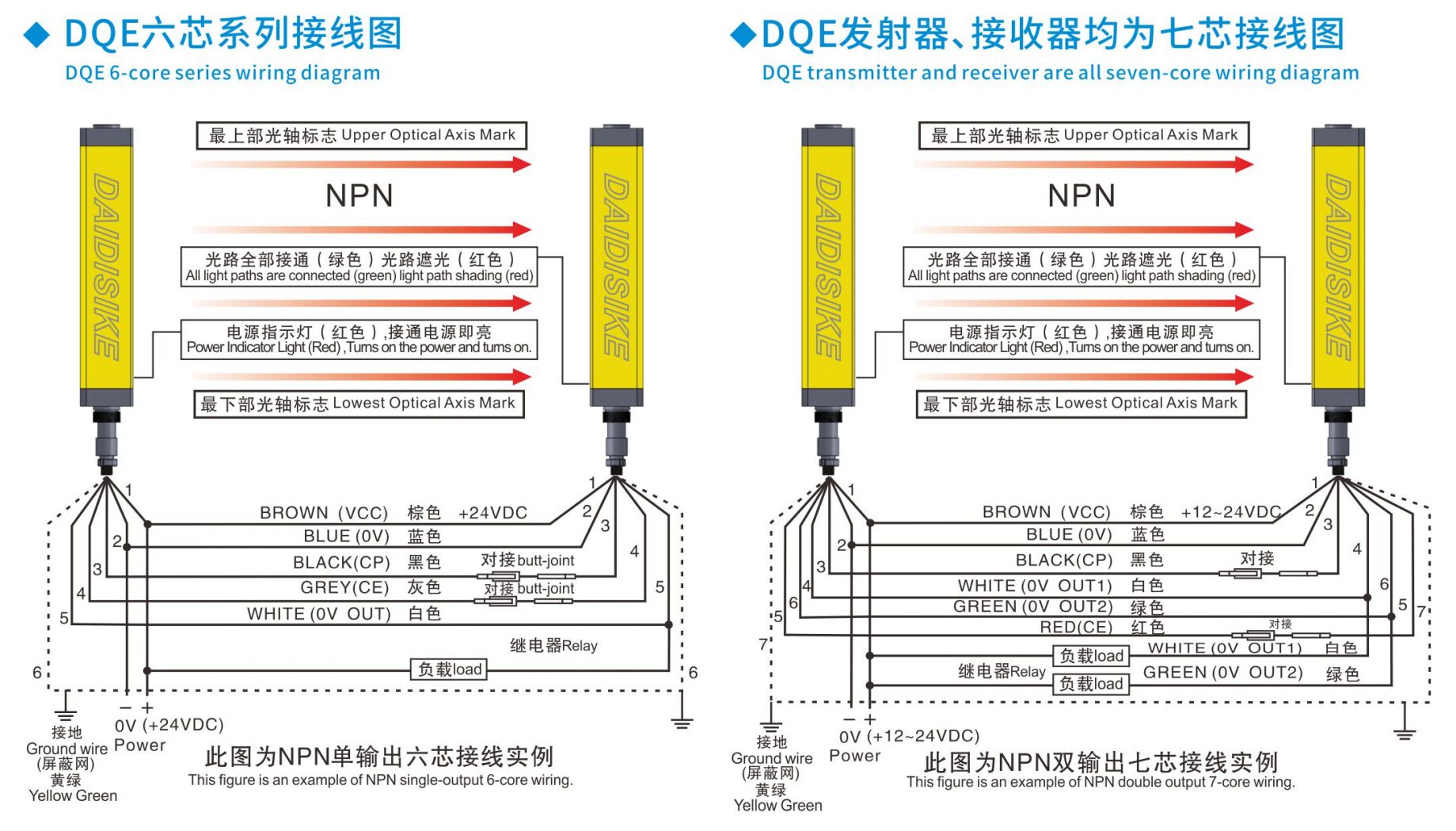
Examine how the principle of operation of a light curtain is shared by the professional maker DAIDISIKE, with the electrical wiring layout for one of our products, the DQE collection, as an illustrative case. In unsafe places that can be fatal, like strike presses and robotic assembly lines, why do machines ‘stop promptly’ when no one bothers to switch the switch? The answer is the ‘infrared sensing magic’ of the safety light curtain. Where the risk assessment permits electro-sensitive protection, invisible beams can safeguard an access opening. The response time must be taken from the exact model documentation and included with the control and measured machine stopping times.
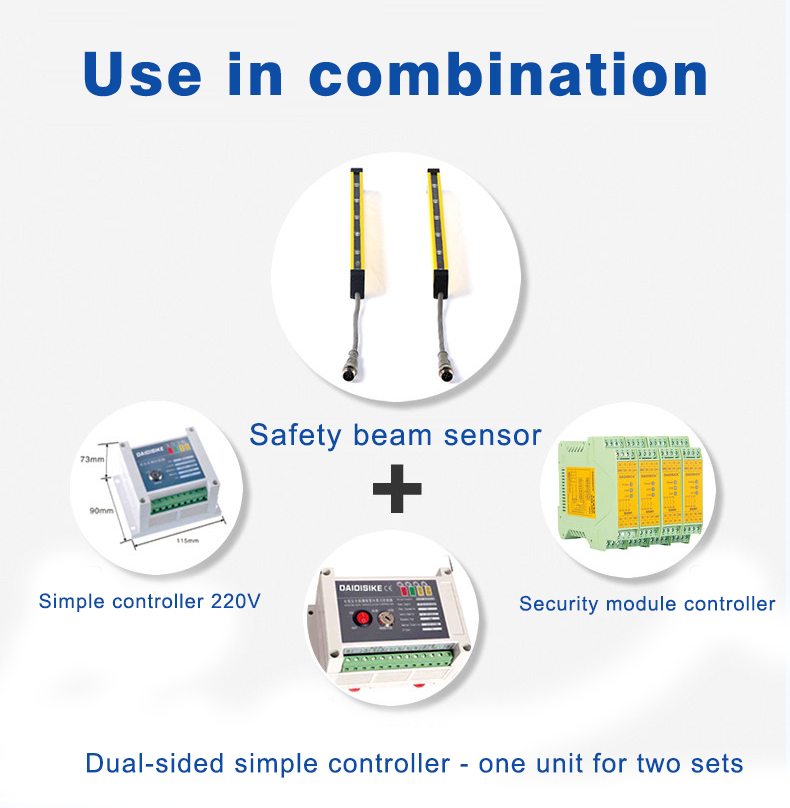
This article uses the most colloquial language and takes apart the entire working of the safety light curtain, so you understand what it does from ‘launch light beam’ to ‘trigger shutdown’, protecting employee safety. A Safety Light Curtain (Safety Light Drape or safety grating) is an optoelectronic safety shielding device, widely used in the field of industrial automation. Through the emission and reception of infrared beams of light, it supplies an ‘invisible wall of protection’ — a non-contact safeguard. IEC 61496, ISO 13849-1 and other applicable standards guide device selection and complete safety-function design; Type, PL/SIL suitability and certificate scope must be verified for the exact model and integration.
After understanding the operating sequence, compare industrial safety light curtains by detection capability, protective height, response time, output architecture and the documentation required for the application.
I A. Core Components
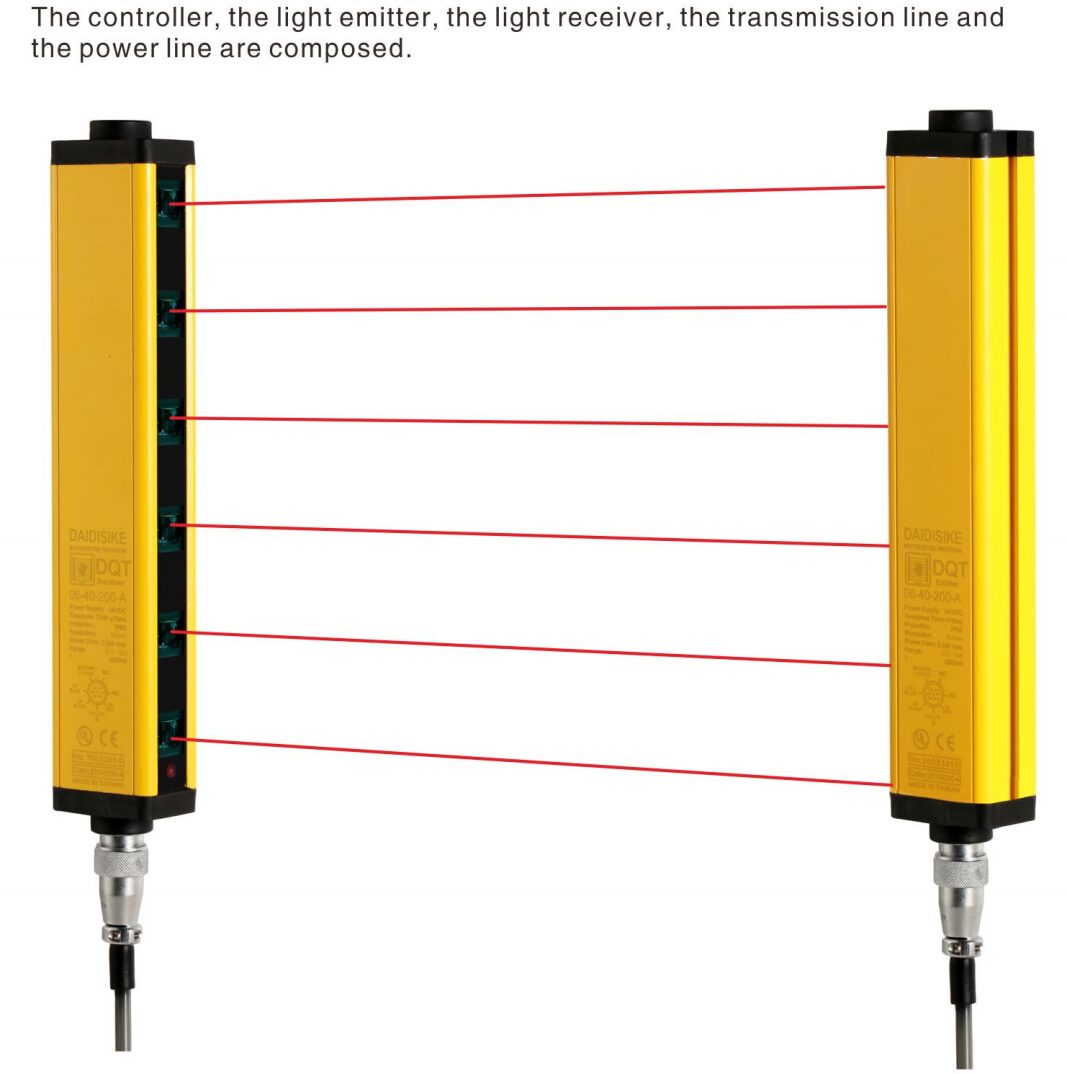
The safety light curtain relies on the operation of a whole ‘transmitter-receiver-controller’ control system, mainly made up of 3 basic parts:
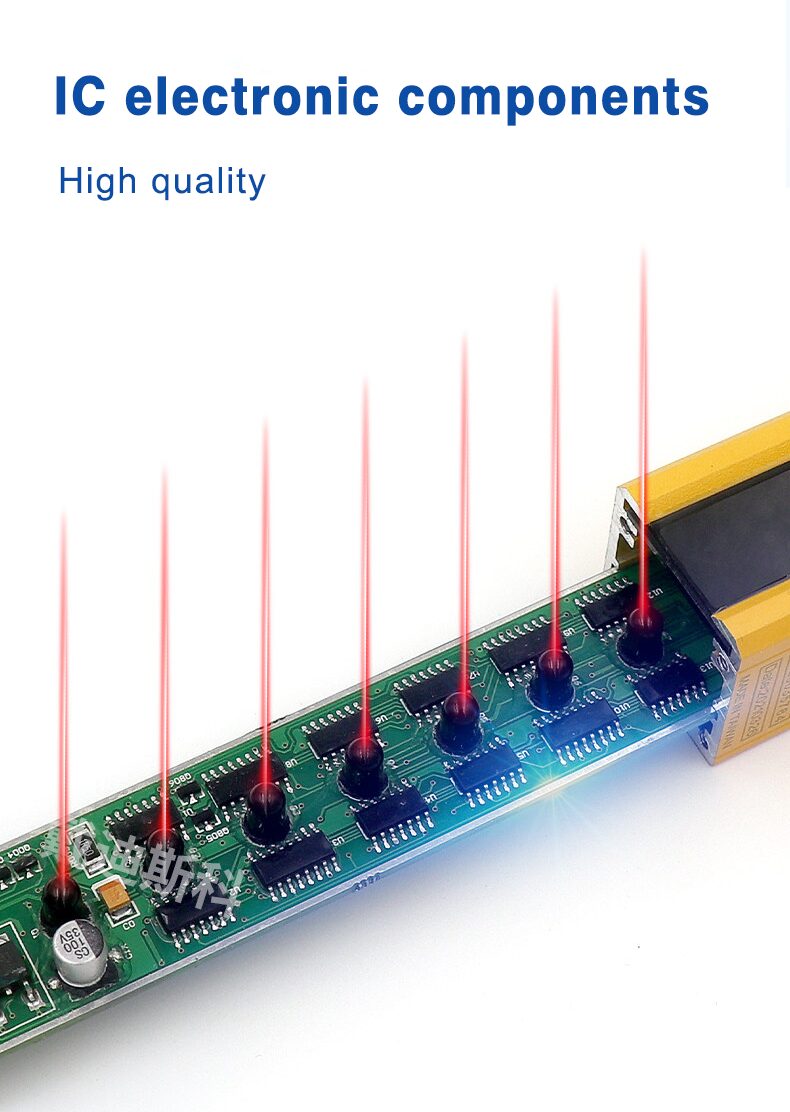
- Transmitter: Peripherally emits numerous parallel modulated infrared beams. Synchronisation and coding help reject interference, but wavelength, coding scheme and immunity limits depend on the exact device. Beam density is modelled to define the resolution (e.g., 14mm finger protection, 30mm palm protection, 40mm or more for body protection).
- Receiver: Receives the corresponding beams synchronously using photodiodes. It evaluates the documented optical signals; immunity to sunlight, lighting and other interference remains limited by the exact specification. Continuously checks beam integrity and its present state in real time.
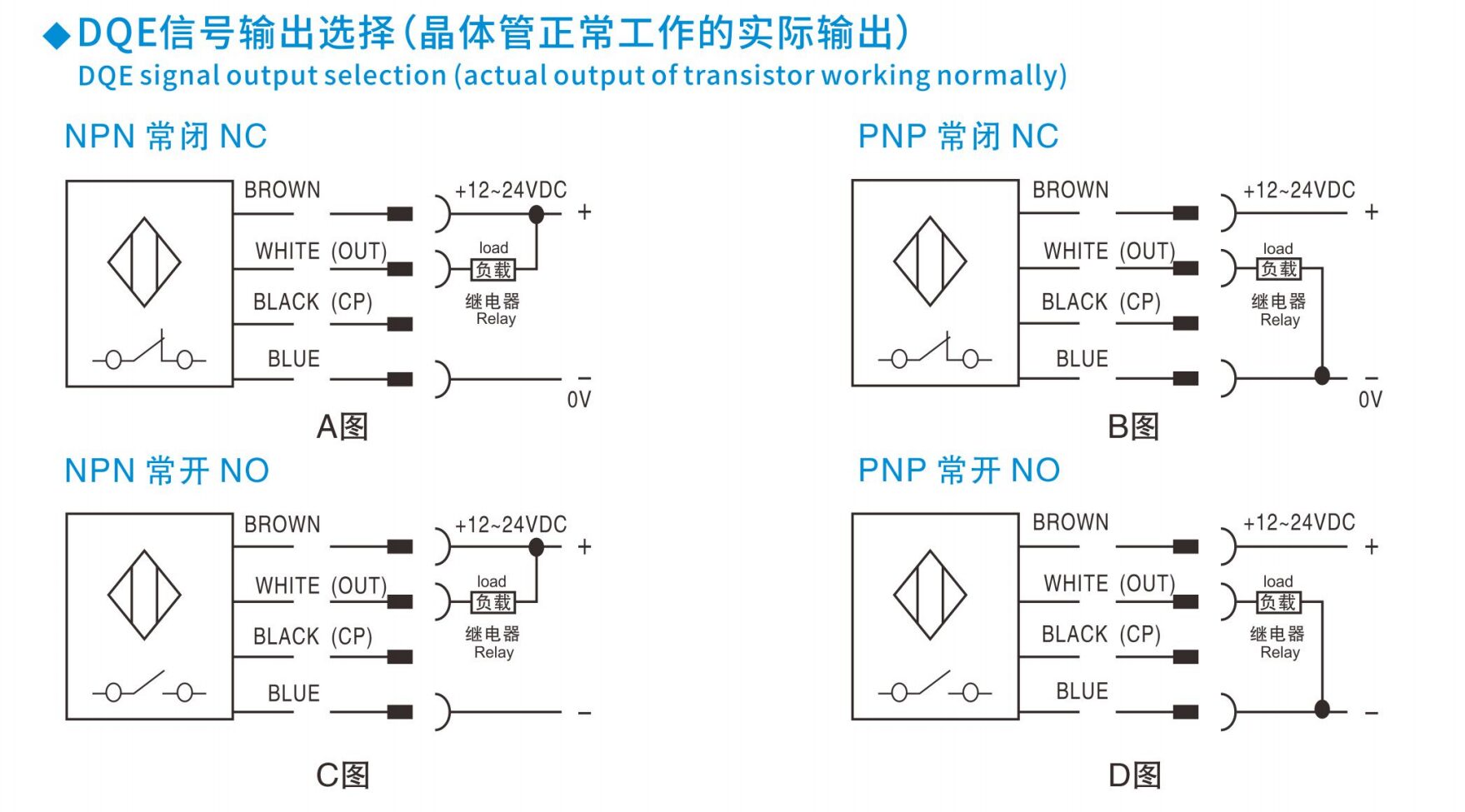
- Controller: Processes the receiver signal and performs the model's documented logic. Depending on the device, it may provide OSSD, relay or another output interface for evaluation by the machine safety circuit. Diagnostic and fault-response behaviour must be confirmed from the manual.
II. The Safety Light Curtain Working Process (5 Stages)
The process is broken down into 5 stages for an ‘intrusion-to-shutdown’ cycle measured in milliseconds:
- 1. Establishing the light curtain: When transmitter and receiver are set in precise alignment, the transmitter starts transmitting the infrared light beam matrix and an entire ‘light curtain’ is formed.
- 2. Normal monitoring: When all beams are received, the controller generates a ‘safe on’ (OSSD is ON) signal to allow the controlled equipment to run in normal operation.
- 3. Intrusion detection: When a human body, or another object, blocks one or several light beams, the receiver detects the missing signal and changes the protective outputs within its documented configured response time.
- 4. Safety shutdown: The curtain changes its documented safety output state within the model-specific response time. The validated safety circuit then commands the machine's final switching devices to stop hazardous motion.
- 5. Reset recovery: After the object is completely cleared, restart follows the selected device's documented interlock/reset functions and the risk-assessed control design; beam clearance alone must not cause an unintended hazardous restart.
III. Crucial Technical Functions
- Response time: Use the value documented for the exact model and configuration in the complete stopping-time and safety-distance calculation.
- Anti-interference: Use documented coding, spacing, shielding and EMC provisions. Filtering is not universal sunlight or welding-arc immunity.
- Fault response: IEC 61496 Type 4 requires more stringent fault detection and tolerance than Type 2, but the exact architecture and certificate scope remain model-specific.
- Advanced features: Muting and blanking are optional documented functions, not automatic person/material recognition. Confirm which device provides them and validate the modified protective function.
Safety Light Curtain for Hand and Finger Protection
IV. Performance Parameters and Application Implications
- Resolution: 10mm / 14mm for finger protection; 30mm for palm protection.
- Protection height: use the declared active field of the selected model, excluding unguarded end gaps.
- Protection range: verify the operating range for the exact model and any mirrors; it is distinct from protective height.
- Ingress protection: check the exact housing and connector rating against the actual exposure; an IP code is not a general waterproof or washdown guarantee.
V. Frequently Asked Questions
Why doesn't the passing material cause the shutdown process?
An ordinary light curtain detects beam interruption; it does not identify a person versus a pallet. Material passage without stopping requires a documented, validated muting function and sensor sequence that prevents a person passing alongside or behind the load.
Will an extreme environment affect its stability?
Temperature, humidity, vibration, ambient-light and ingress limits are model-specific. Check the exact manual and installed environment; do not apply a family-wide temperature or immunity claim.
What is the difference between Type 2 and Type 4?
IEC 61496 specifies different fault-detection and fault-tolerance requirements for Type 2 and Type 4. The required Type comes from the machine risk assessment and required safety-function performance; verify the exact model certificate and complete integration rather than reducing the difference to a channel count or a low-risk/high-risk label.