
Ultimate Guide to Industrial Proximity Switches: Selection, Wiring, and Troubleshooting
1. What is a Proximity Switch?
A Proximity Switch is an industrial sensor that detects the presence of objects without any physical contact and outputs a switching signal. It is an essential component in modern industrial control, widely used in automated production lines, material handling, and mechanical positioning.
As a leading brand in industrial sensors, DAIDISIKE offers a comprehensive range of products — from Inductive to Capacitive — covering M8, M12, M18, and M30 specifications to meet precision detection needs in various environments.
2. Inductive vs. Capacitive: A Deep Dive
Inductive Proximity Switches
Principle: Based on Electromagnetic Induction. The sensor head generates a high-frequency alternating magnetic field. When a metal object enters this field, Eddy Currents are induced within the object.
Feedback: These eddy currents consume energy from the sensor’s oscillation, causing it to weaken or stop. The detection circuit then triggers the output signal.
Representative DAIDISIKE Models:
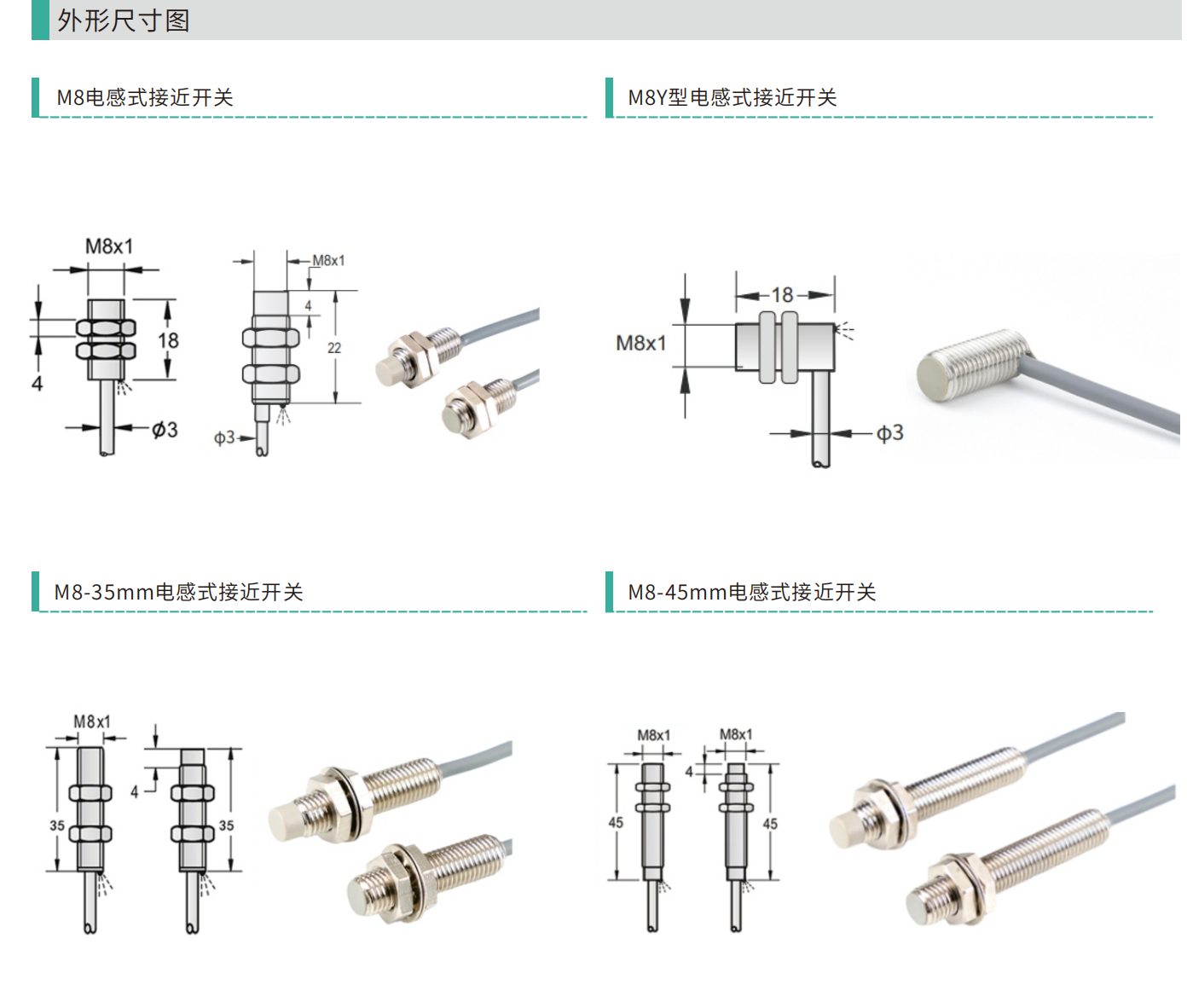
- M801N1P18: M8 Flush, 1 mm, NPN NO
- M1204N1P: M12 Flush, 4 mm, NPN NO
- M1808N1P: M18 Flush, 8 mm, NPN NO
Capacitive Proximity Switches
Principle: Based on Electrostatic Capacitance changes. The sensor face acts as one plate of a capacitor. When an object (metal or non-metal) approaches, the dielectric constant changes, altering the total capacitance.
Feedback: Once the capacitance reaches a pre-set threshold, the circuit is triggered to send a signal.
Representative DAIDISIKE Models:
- RS1202N1: M12 Flush, 1-2 mm Adjustable, NPN NO
- RS3010N1: M30 Flush, 2-10 mm Adjustable, NPN NO
Selection Table: Comparison at a Glance
| Feature | Inductive Switch | Capacitive Switch |
|---|---|---|
| Primary Target | Metals (Iron, Steel, Copper) | Liquids, Powders, Plastic, Wood |
| Sensing Distance | Model-, target- and mounting-dependent; use assured operating gap | Model-, dielectric- and installation-dependent; not inherently longer |
| Interference Resistance | Often tolerates non-metallic dust/oil; metal chips can affect detection | Lower (sensitive to humidity/water) |
| Cost-Effectiveness | Compare for the actual metal-detection job | Compare for the actual material/level-detection job |
| DAIDISIKE Series | M8, M12, M18, M30 | RS12, RS18, RS30 |
3. NPN vs. PNP Wiring Explained
In industrial control systems (PLCs), choosing between NPN and PNP is crucial for compatibility.
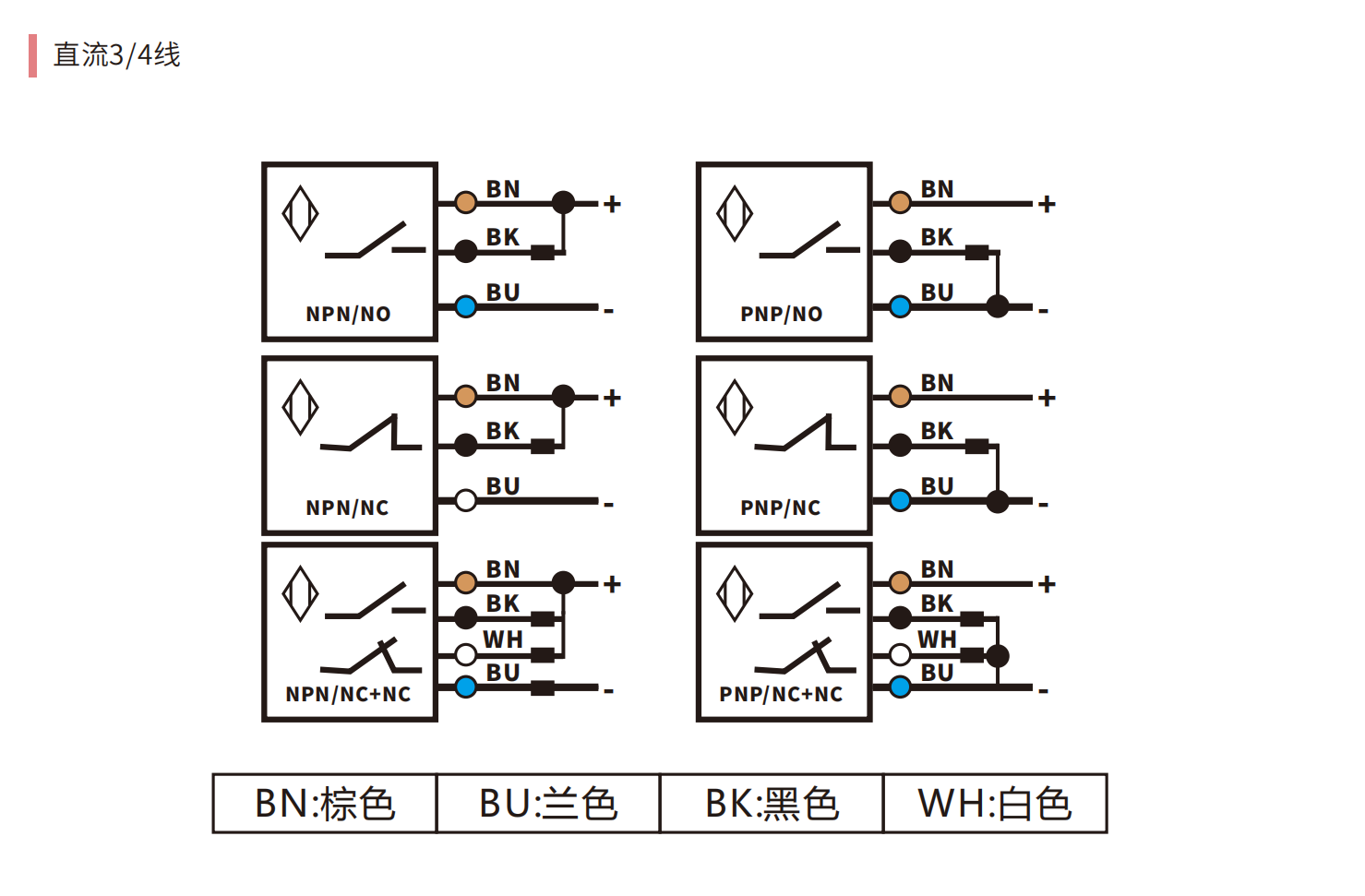
- NPN Type: Active-Low output (Output connects to negative/0V when triggered).
- PNP Type: Active-High output (Output connects to positive/24V when triggered).
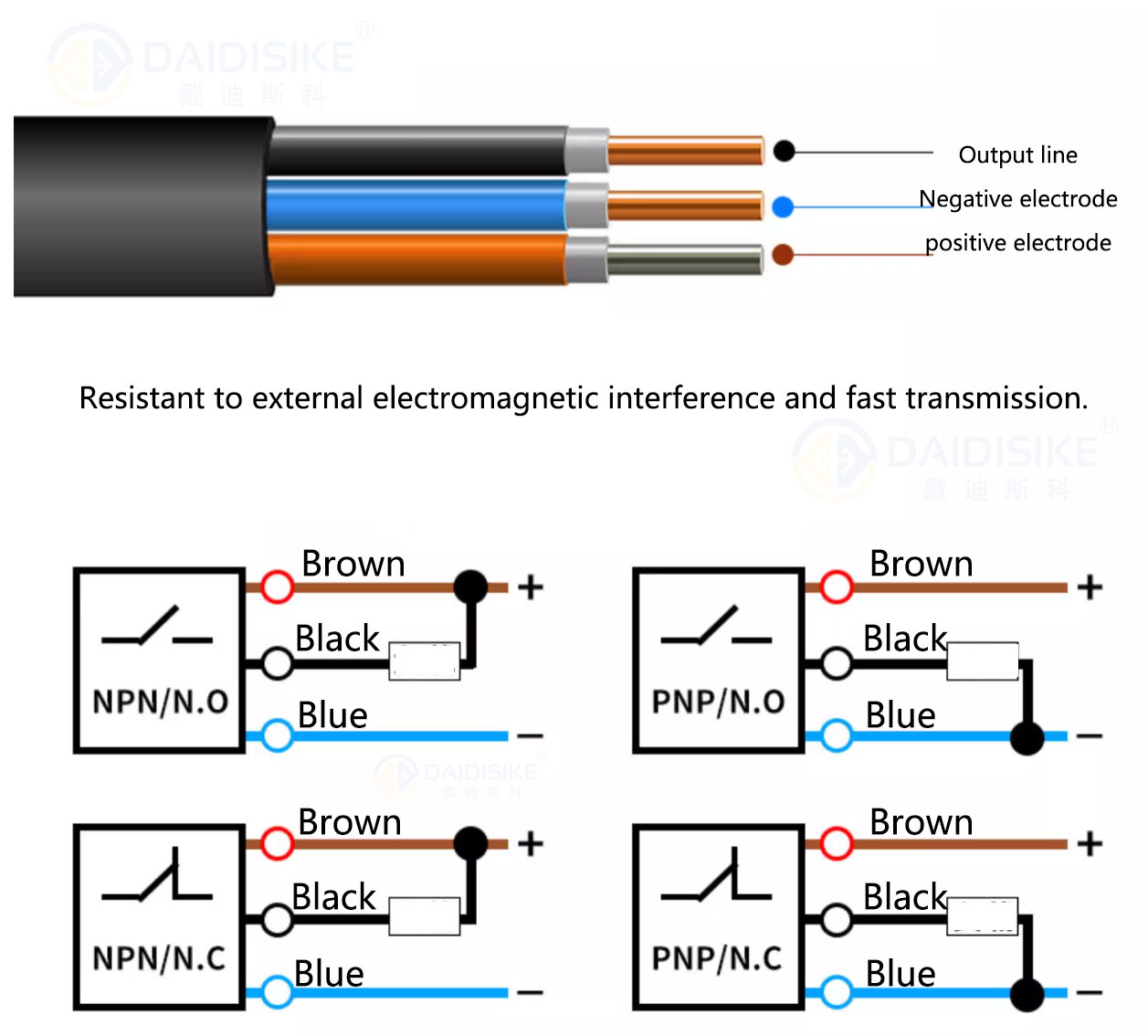
Typical Wiring (DAIDISIKE Standard)
Brown Wire: Positive Power (+24 V DC)
Blue Wire: Negative Power (0 V DC)
Black Wire: Output/Signal (Connects to PLC Input)
4. Troubleshooting & Maintenance
If your sensor is not responding, check the following. First identify the installed model in the proximity switch product range, then compare its supply and input circuit before changing sensing distance or sensitivity. This keeps an electrical fault from being mistaken for a target problem.
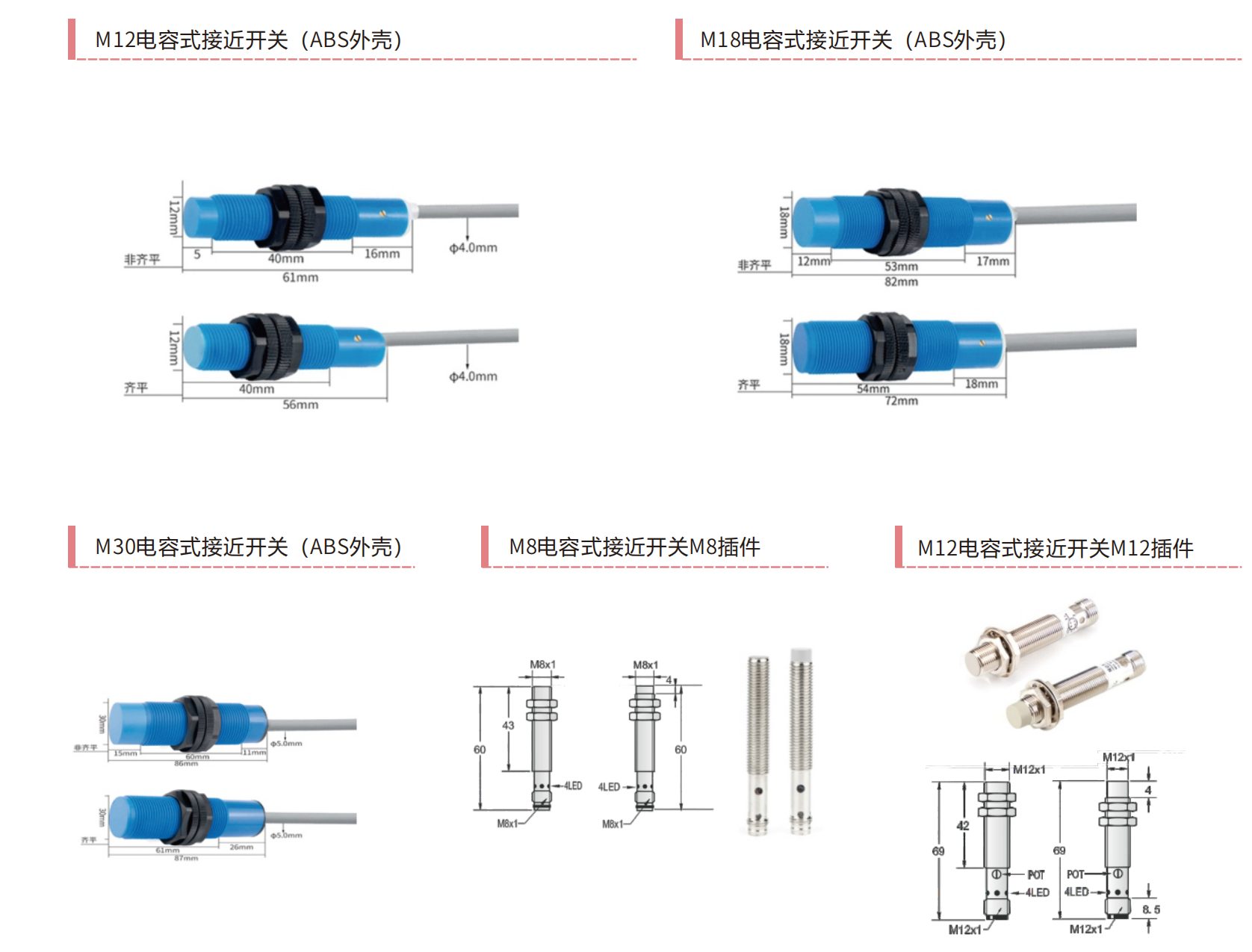
- No Signal: Verify the power voltage (usually 10-30 VDC) and ensure the NPN/PNP type matches your PLC logic.
- False Triggers: For Capacitive sensors, check for extreme humidity or oil buildup on the sensor face.
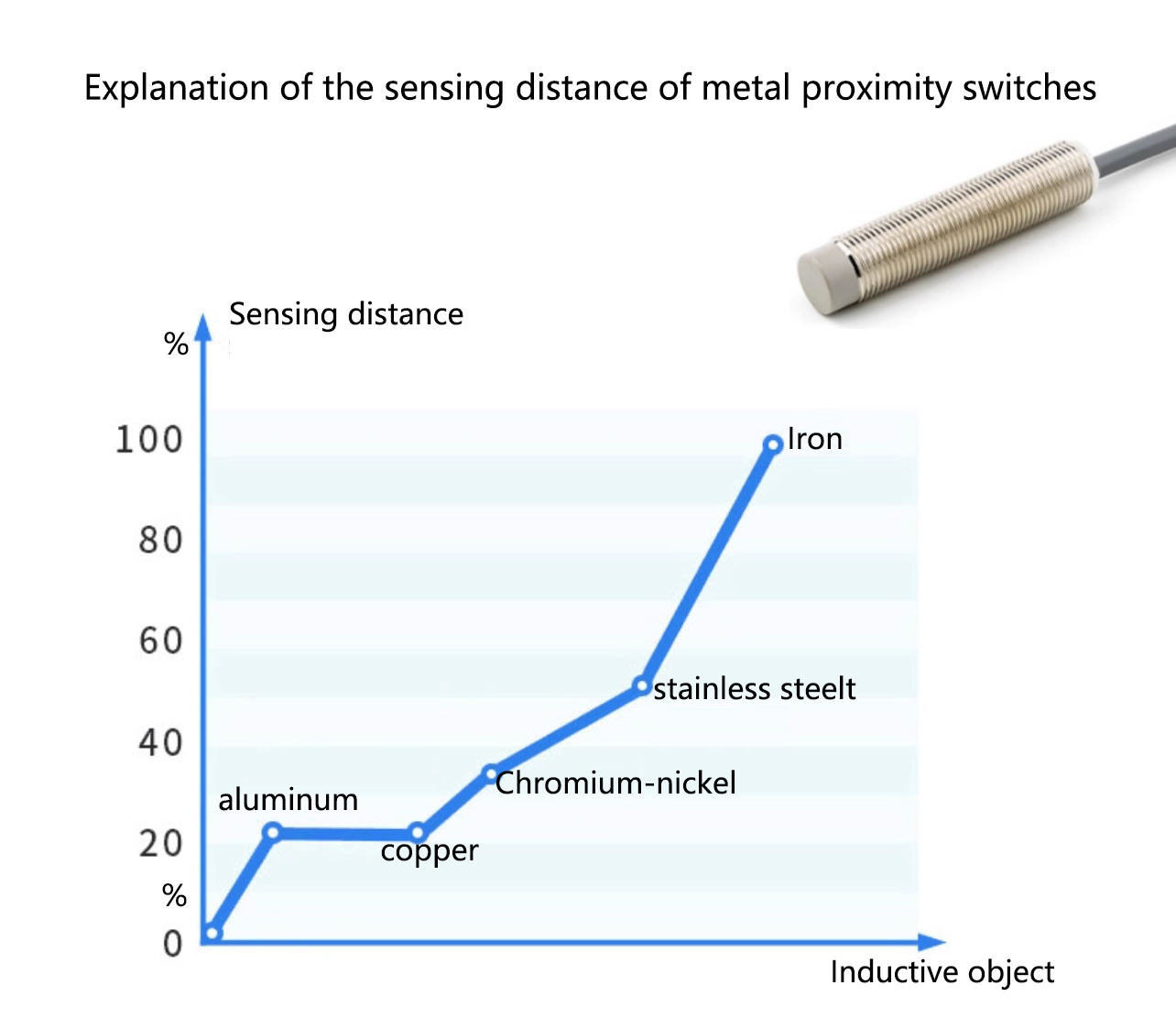
- Distance Decay: For Inductive sensors, non-magnetic metals like Copper or Aluminum will naturally reduce the sensing distance.
→ Learn More: For applications involving human safety, ordinary proximity switches may supply process information alongside Safety Light Curtains. They must not replace the safety-rated protective device or its validated stop circuit. Check our guide for machine guarding solutions.
Contact our technical team for 1-on-1 support.