
OMRON Unveils E3AS-HF Laser Sensor Series: Tackling Tough Detection from 0.05-6m with ±85° Tilt Flexibility for Tricky Low-Reflectivity Parts
Release Date: October 7, 2025
Industry Sectors: Industrial Automation / Intelligent Manufacturing / Precision Detection
Quick answer: The OMRON E3AS-HF is a TOF photoelectric detection sensor for objects from 50 to 6,000 mm, including low-reflectivity targets at installation angles up to ±85°. It offers selectable 2, 10, 50, or 200 ms response settings and separate NPN or PNP models. It is an industrial detection sensor, not a personnel-protection safety device, and should not replace a certified safety light curtain or safety laser scanner.
In modern manufacturing, low-reflectivity materials such as black plastics, rubber, or rough metals are notoriously hard for sensors to detect reliably, which can lead to missed parts on the line and reduced throughput. OMRON’s E3AS-HF series laser sensors target exactly this problem. With a detection span from 0.05 to 6 meters and a ±85° tilt allowance, the lineup is aimed at reliable performance on hard-to-detect targets in applications such as car assembly, package sorting in logistics, and electronics production.
The E3AS-HF uses TOF (Time of Flight) sensing. According to OMRON’s published product information, its 50 to 6,000 mm range and angular characteristics of up to ±85° are intended to support detection of low-reflectivity workpieces, including black targets, even when the sensor must be installed at a distance. Engineers should still validate the actual target, mounting angle, background, and ambient conditions in the intended machine.
Key Tech Specs
OMRON specifies a red 660 nm laser, a 10 to 30 VDC power supply, and selectable response times of 2, 10, 50, or 200 ms. NPN and PNP are separate model variants rather than a software-selectable output on one unit; NO or NC operation is selectable within the applicable output type. The published operating-temperature range is -30°C to +55°C, with no icing or condensation. Enclosure ratings include IP67, IP69K, and IP67G, and the communication specification is IO-Link version 1.1. The “Class2” notation in OMRON’s table is attached to the power-supply and load-circuit requirements; it should not be read as the laser classification.
As factories grow smarter, sensors increasingly serve as a backbone for keeping automated lines running. The E3AS-HF is positioned to address detection of low-reflectivity parts and angled mounts. Its selectable external-input functions include laser off, teaching, and zero reset, while the exact model and control interface should be confirmed before integration.
Where It Shines and Why It Matters
This sensor is suited to confirming parts on fast conveyors, tracking shifts in welding, or pinpointing goods in automated storage. On auto parts lines, for example, it is designed to catch edge slips on black-coated pieces despite uneven reflections. In food packing, side-angle scans of dull boxes can help improve sorting consistency, and reduced alignment fuss may contribute to less downtime over time.
For connected diagnostics and parameter exchange, OMRON lists IO-Link version 1.1 at COM3 (230.4 kbps). The IO-Link master, process-data mapping, and controller architecture should be validated separately rather than assumed from the sensor model alone.
Spotlight on Homegrown Tech: DAIDISIKE’s Laser Ranging Sensors—Boosting Smarts with High-Freq Precision
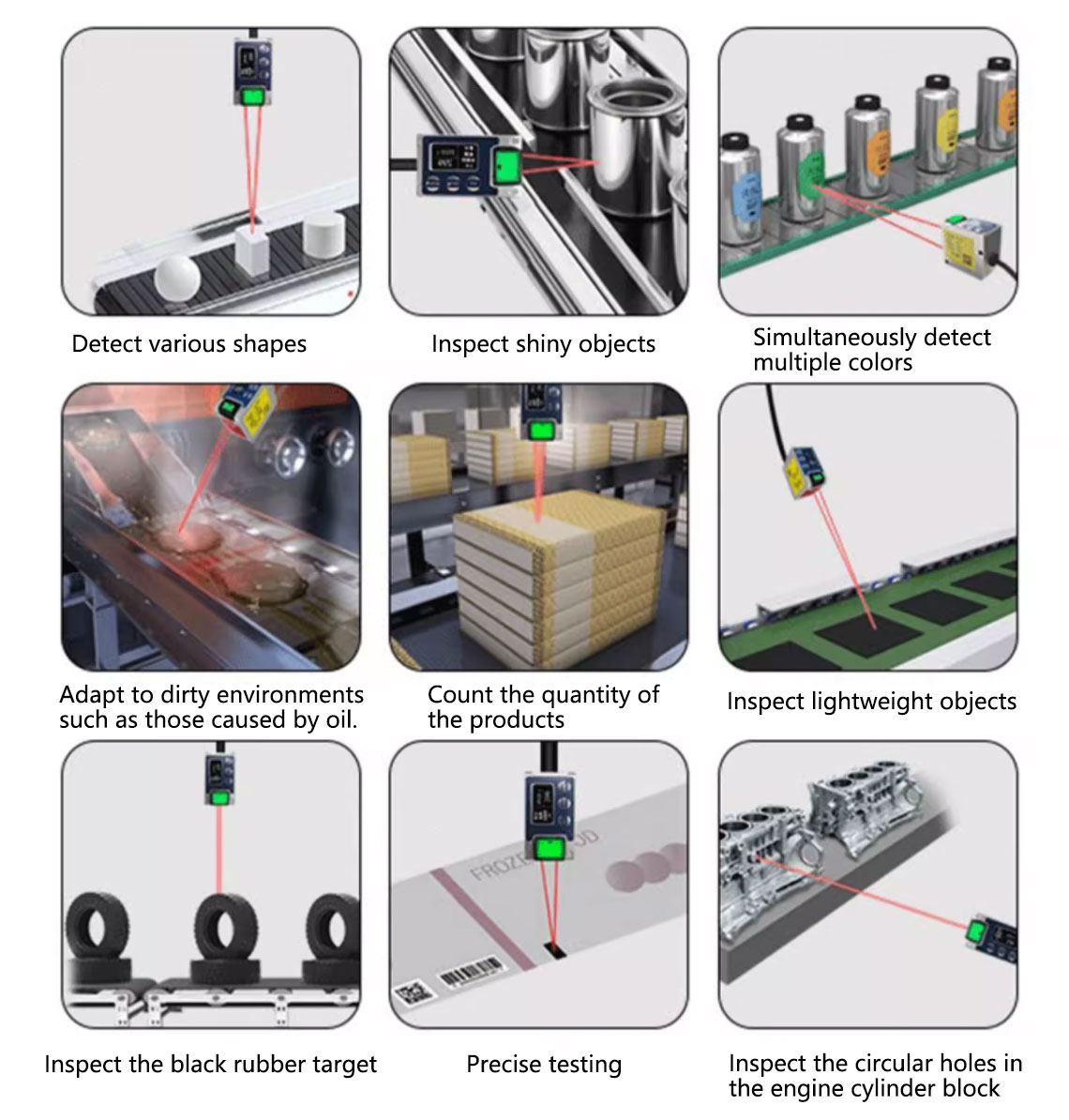
Right alongside OMRON’s news, China’s own DAIDISIKE is turning heads with its laser ranging lineup. Built on Time-of-Flight (TOF) tech and custom chips, these sensors handle tough industrial jobs with ease, offering broad diffuse reflection spotting, quick responses, long reaches, and versatile outputs. The JNS10 and G20 models showcase local ingenuity, fitting everything from fine-tuned assembly to warehouse ops, and they dovetail nicely with E3AS-HF for extra reach and speed in building sharper production setups.
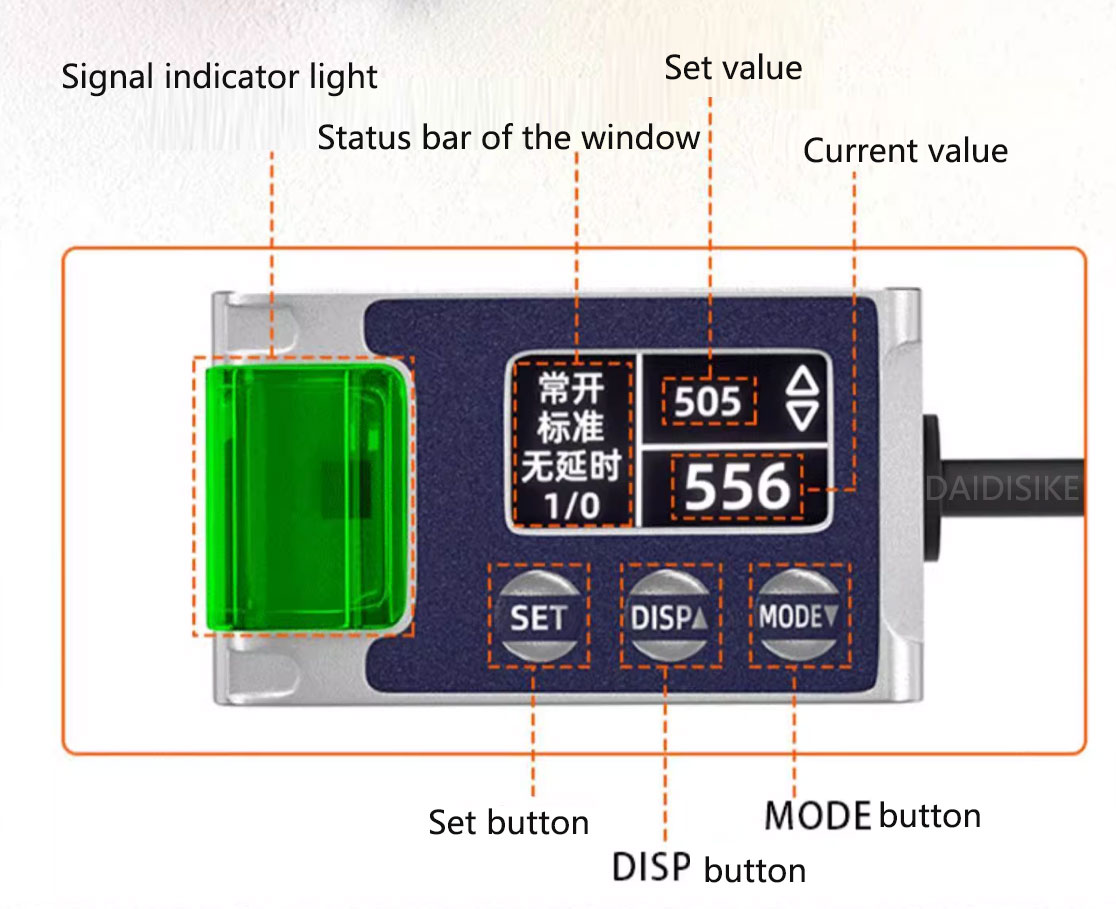
DAIDISIKE JNS10 Series: Precision Powerhouse for Closer Ranges (0.05-5m)
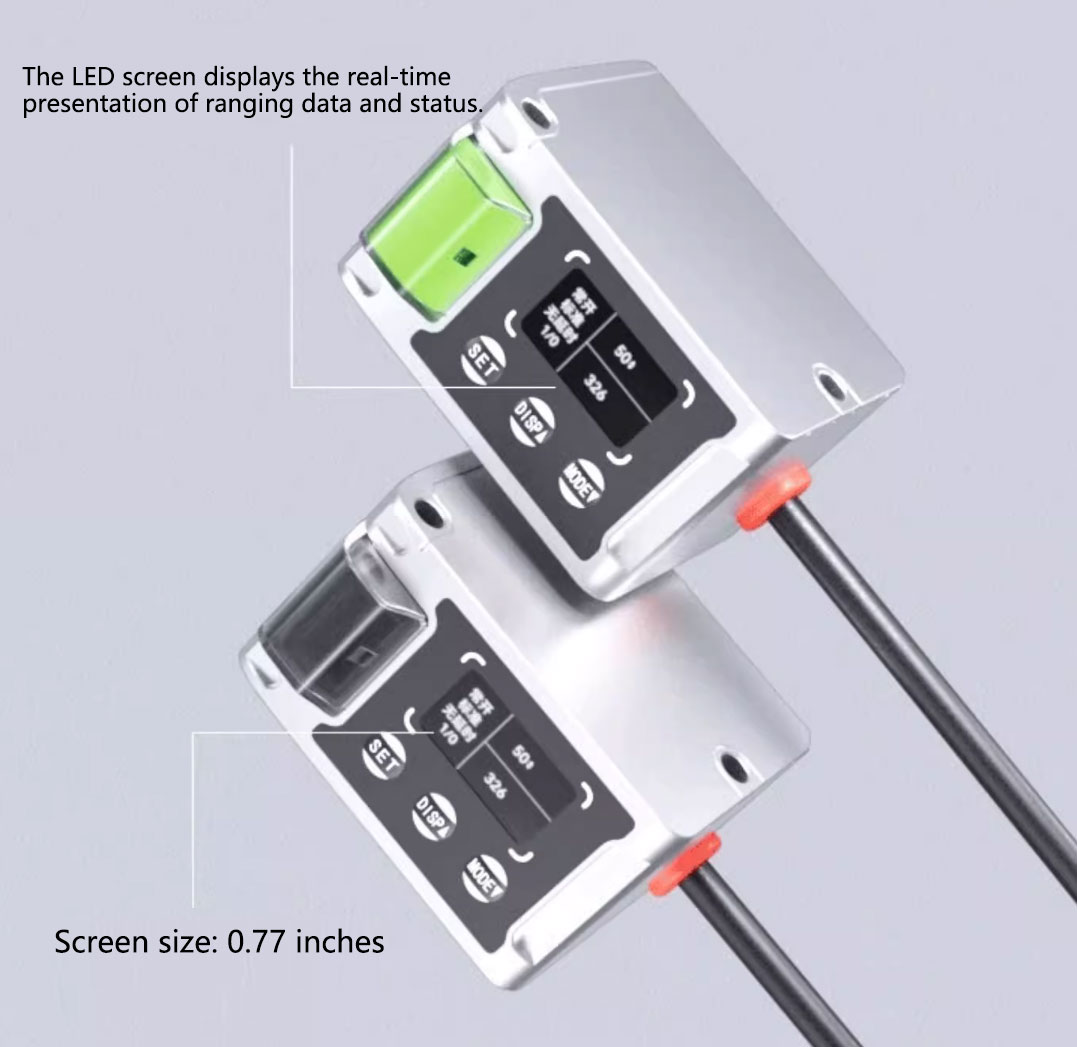
The JNS10 zeros in on accuracy, using a 650nm Class 2 laser (under 1.3mW) that hits 2kHz max frequency and 0.5ms response, with ±10mm absolute error and ±2mm repeatability. Spanning 50-5000mm, it offers modes like standard (one or two-point thresholds), reference plane for shifts, and window for ranges—great for checking part placement, spotting misses, or monitoring levels.
Options include:
- DAI-JNS10-PN: PNP/NPN switches (up to 100mA load), 9-30V power, plugs straight into PLCs; handles NO/NC and delays (none, off, on, one-shot).
- DAI-JNS10-MI: 4-20mA analog (up to 400Ω at 24V), 18-30V, for ongoing distance tracking and controls.
- DAI-JNS10-485: RS-485 for networking multiple units to a central system, 9-30V.
IP65 tough, small at 41x37.5x23mm (85g), runs -20°C to +55°C, shrugs off >10,000Lux light. Easy setup via MODE/SET/DISP buttons for tweaking thresholds, hysteresis, or resets. Think auto welding checks, food line positioning, or warehouse spotting—cuts false alarms and speeds cycles.
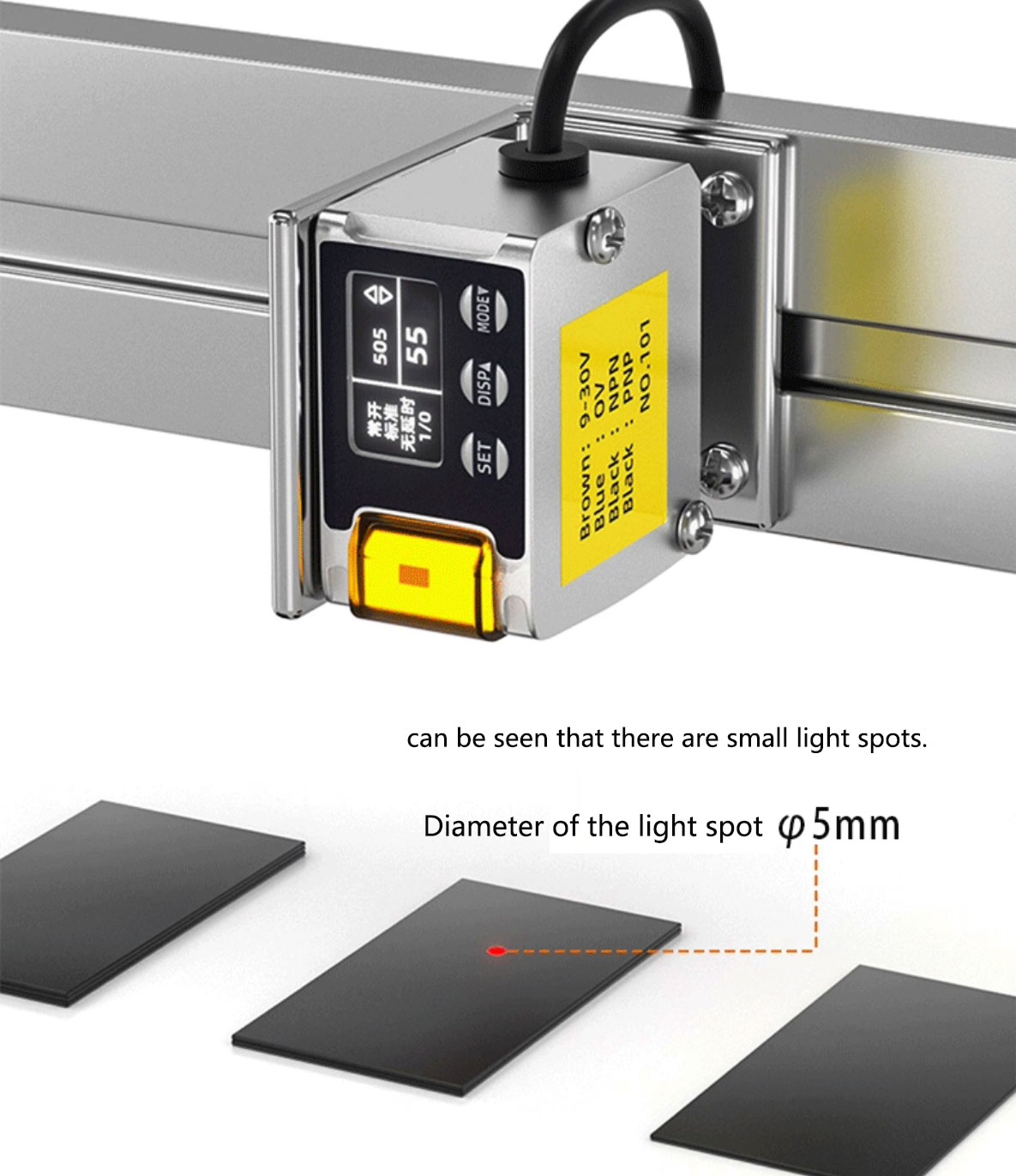
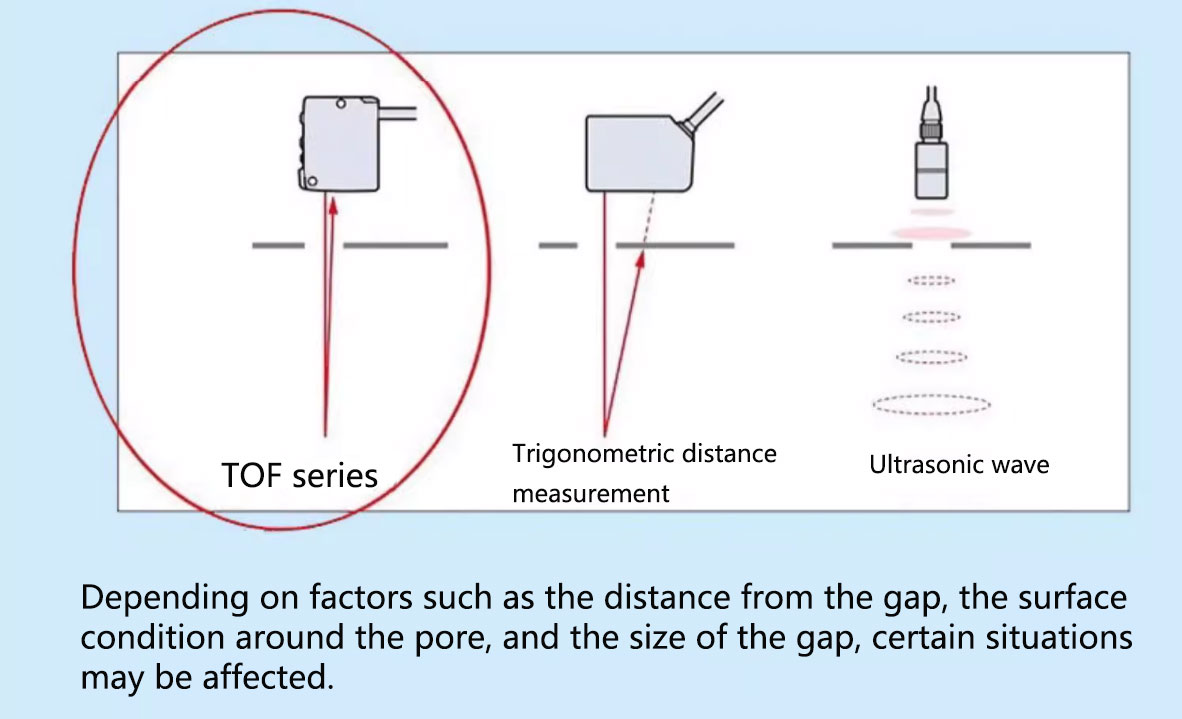
DAIDISIKE G20 Series: Versatile Long-Hauler with High Freq (0.05-10m, Up to 50m Boost)
G20 amps up frequency and distance, with a 905nm Class 1 laser (≤0.4mW) at 2kHz (or 20Hz-5kHz on RS), 1ms response, ±100mm accuracy, ±5mm repeatability. Hits 10m on 10% reflective stuff, 0.05-10m at 80%, stretching to 50m for shiny targets—perfect for out-of-the-way mounts to skip bumps.
Key models:
- DAI-G20-MK2: PNP/NPN plus 4-20mA analog (100mA load), 9-30V (18-30V analog), analog maps forward/back (e.g., 100-1000mm to 3-21mA linear).
- DAI-G20-RS: RS-485 output (500Ω at 24V), 9-30V, for high-bandwidth multi-point grabs.
Measures 52x44x31mm (140g), <2W draw, -20°C to +50°C, <10,000Lux resistant. Orange action and green status lights, button-driven menus. Analog details: off at 0mA, on at 3-21mA with direction tweaks for spot-on control. Suits resin/metal loops, tire forming, paper rolls, robot grabs—keeps lines humming.
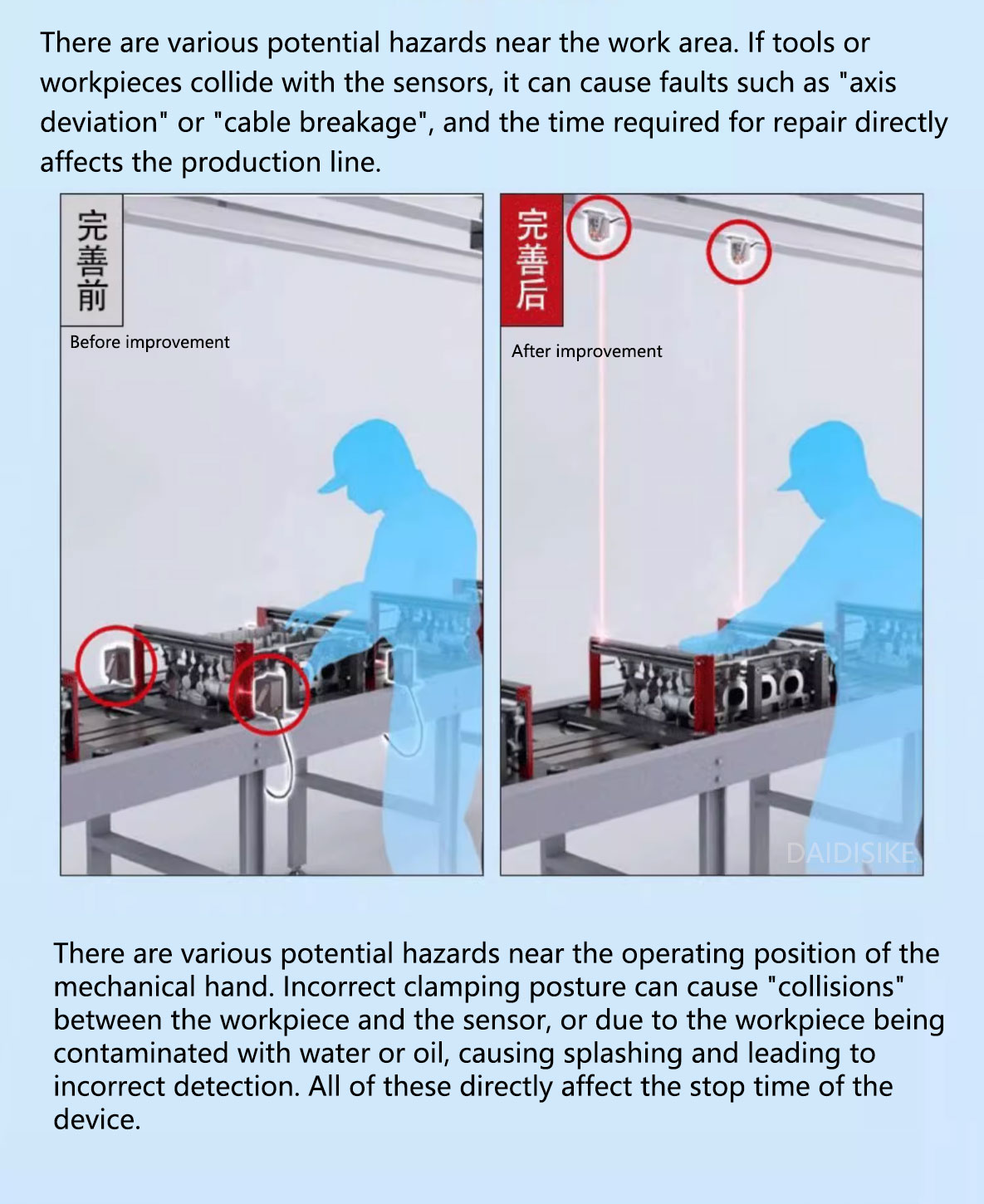
Why DAIDISIKE Stands Out and How to Pick
Treat the OMRON and DAIDISIKE families as separate selections, not automatic substitutes. Start with target material, working distance, required response, output or communication interface, enclosure needs, and mounting space. Within the DAIDISIKE range, consider JNS10 for close-range precision, G20 for longer-range detection, and then verify the exact datasheet against the application. For example, consider JNS10-PN for on/off checks; JNS10-MI or G20-MK2 for steady tracking; G20-RS for linked systems.
Selection Boundaries, Not Drop-in Equivalence
| Selection point | E3AS-HF published basis | What the engineer must verify |
|---|---|---|
| Sensing range | 50 to 6,000 mm | Target reflectivity, angle, background, and required margin |
| Response setting | 2 / 10 / 50 / 200 ms selectable | Machine cycle time and stability required for the target |
| Control output | Separate NPN and PNP model variants; NO/NC selectable | Exact model code, PLC input type, load, and wiring |
| Communication | IO-Link version 1.1 | Master, process-data mapping, and controller compatibility |
| Safety role | Industrial object-detection sensor | Use a separately certified safety device for personnel protection |
Source checked against the OMRON E3AS-HF official specification table (last update shown by OMRON: March 3, 2025).
DAIDISIKE’s laser ranging sensors are already deployed across automotive, food, and logistics applications, offering a cost-effective domestic alternative to imported units. To choose between them, match the sensing range and output type to your task: the JNS10 for close-range precision and the G20 for longer-range, high-frequency detection. For other object detection formats, browse the DAIDISIKE industrial laser switch sensor range; final selection should always be based on the exact target, wiring, environment, and required function.