
DLDS2030A-5S Laser Scanning Radar — 20 m, 270°, Zone Outputs
The model code early customers bought — and the page that keeps identification, spares and accessories one inquiry away, without inventing a specification the factory has not released.
- Laser scanning radar in the DAIDISIKE LiDAR line
- Dedicated DLDS-1…6 factory accessory line still supplied
- Detection range, scan angle, resolution and output type are not published under this code — we confirm them per unit with the factory
- Send a photo of your unit's label and we identify it from factory records
- Perception LiDAR — no IEC 61496 safety rating
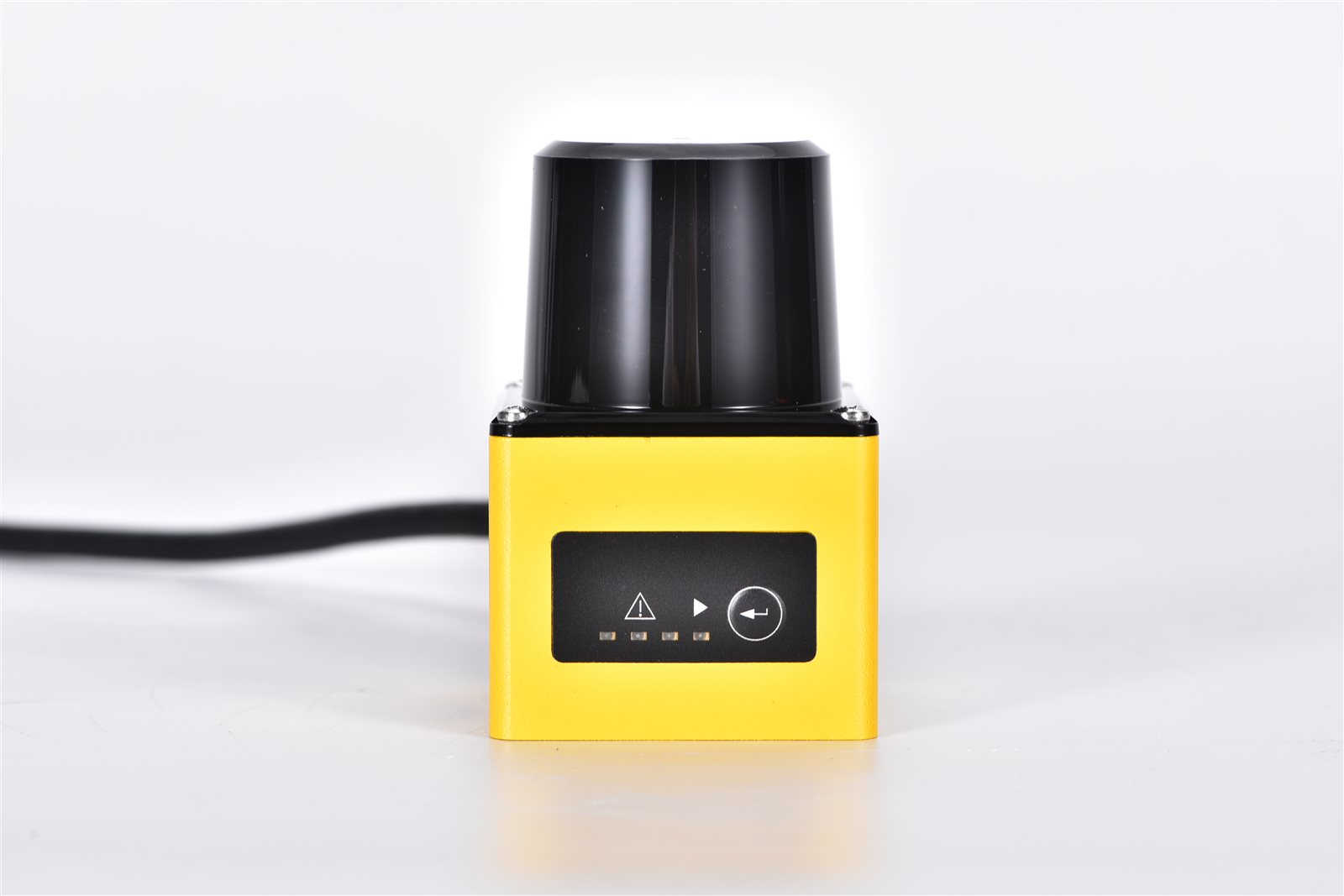
A Legacy Code We Verify Rather Than Guess
DLDS2030A-5S is a laser scanning radar carried on one spread of the DAIDISIKE laser-sensor catalogue, alongside the DLD-05D and DLD-20D series, with its own six-item accessory line (DLDS-1 to DLDS-6). We keep this page alive so a maintenance engineer holding an old unit can find us — but the factory has not released a parameter table under this code, and the catalogue spread that carries it shows the product photographs without verified figures.
So this page publishes no detection range, scan angle, scan rate, angular resolution, accuracy, output type, supply voltage or ingress-protection figure for the DLDS2030A-5S. Borrowing them from a similar scanner elsewhere in the range would read convincingly and could still be wrong by a wide margin — which is exactly how a replacement ends up short of the range or the output polarity the machine was built around. Send us a photo of the label on your unit and we will confirm its specification and its correct current replacement in writing with the factory. If you are specifying a new machine, start instead from the models whose figures we can show in full: the DLD05A3 (5 m) and DLD20A5 (20 m) obstacle-avoidance radars or the DLD30T-5N measuring LiDAR.
How Staged Zones Work on a Scanning Radar
The figure below is a generic explanation of the staged-zone principle used across obstacle-avoidance scanning radars — it is not a specification of the DLDS2030A-5S, whose zone count, scan angle and output ratings the factory has not published.
Original DAIDISIKE schematic illustrating the general principle: nested zones let one scanner drive warning, slow-down and stop reactions from separate switching outputs.
Specification
| Model code | DLDS2030A-5S (catalogue code — verify against the label on your unit) |
|---|---|
| Category | Laser scanning radar (2D LiDAR-type scanning sensor) |
| Detection range | Not published under this code — contact factory |
| Scan angle | Not published under this code — contact factory |
| Scan rate / angular resolution | Not published under this code — contact factory |
| Detection accuracy | Not published under this code — contact factory |
| Outputs | Not published under this code — contact factory |
| Zone configuration | Not published under this code — contact factory |
| Laser | Not published under this code — contact factory |
| Supply voltage | Not published under this code — contact factory |
| Enclosure | Not published under this code — contact factory |
| Accessories | DLDS-1 to DLDS-6 factory accessory line |
| Classification | Measurement/perception LiDAR — not IEC 61496 safety equipment |
Every row above marked "not published" is a value the factory has genuinely not released under this model code, and we leave it blank rather than transferring a figure from a similar scanner. Tell us your application, or send a photo of your unit's label, and we will get the specification confirmed in writing. Certification documents are available on request.
How We Support This Model
Legacy Fleet Spares
Identification and sourcing path for machines commissioned under the DLDS2030A-5S code, verified against your unit's label.
Specifying a New Machine
For new designs we steer you to the confirmed DLD05A3 / DLD20A5 / DLD30T pages, whose figures come straight from the factory catalogue.
Documentation Requests
We will obtain written parameters and, where they exist, certificates from the factory for the unit you actually hold.
Accessory Supply
The DLDS-1 to DLDS-6 factory accessory line listed for this scanner remains orderable.
Frequently Asked Questions
I have a DLDS2030A-5S in service — what do I order as a replacement?
Send us the code exactly as it appears on your unit's label, together with a photo of the label and of the wiring, and we will identify the device from the factory records before quoting. We deliberately do not publish a like-for-like cross-reference here: DLDS2030A-5S appears on one catalogue spread only, and mapping it to a current model on guesswork is how a customer ends up with a scanner whose range or output polarity does not match the machine.
What are the detection range, scan angle and output type of the DLDS2030A-5S?
Not published. The factory has not released a parameter table under this model code — the catalogue page carrying it shows the product photographs but no verified figures for range, scan angle, scan rate, angular resolution, accuracy, output type, supply voltage or ingress protection. Rather than borrow numbers from a similar scanner in the range, we leave them blank and ask the factory per inquiry. Contact us with your application and we will obtain written figures.
Why does this page carry no specification table when your other LiDAR pages do?
Because the specification for this exact code has not been confirmed by the factory, and publishing an unverified table would be worse than publishing nothing. Our DLD05A3 (5 m), DLD20A5 (20 m) and DLD30T-5N (30 m) pages carry full tables taken straight from the factory catalogue and datasheets — if you are specifying a new machine rather than maintaining an old one, start from those.
Is the model code DLDS2030A-5S itself confirmed?
It is under internal review. The factory's own DLD naming-rule sheet indicates the code printed in the catalogue may be a transcription of a differently formatted designation, which is one more reason we verify each unit against the label rather than the catalogue text. If you are holding a unit, the label is the authority — send us a photo of it.
Can I use the DLDS2030A-5S for personnel protection?
No. This is a perception/measurement LiDAR, not an IEC 61496 certified safety component; do not use it as the sole means of personnel protection. No Type, SIL or PL rating is published for it. Where a person must be protected by the scanner, specify the ST27 Type 3 safety laser scanner and calculate the field per ISO 13855.
What accessories exist for this scanner?
A dedicated six-item factory accessory line, DLDS-1 through DLDS-6, is listed for this scanner in the factory catalogue. The individual function of each item (bracket, cable, protective cover and so on) is not itemised in the documentation we hold, so tell us your bracket and cabling situation and we will confirm with the factory which DLDS items your installation needs.
What are the MOQ, lead time and OEM arrangements?
MOQ 1 unit, including single-piece replacement orders for legacy installations. Typical lead time is 3–15 days depending on stock and variant, confirmed in writing at quotation. Factory-direct export from China; OEM/ODM programs (private labelling, preset zone tables, cable lengths) are available for fleet and machine-builder volumes.
Safety Light Curtain — Customer Cases
Real installations from DAIDISIKE clients. Click any case to view in full. Filter by scenario to quickly find a similar setup.