
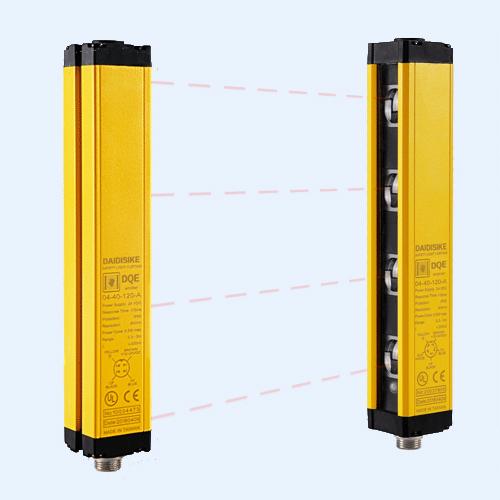
A useful buying question is: which exact sensor, switch, power source and cable can be ordered and supported together? Treat this as a project-selection question, not a customer quotation or a promise that every existing M12 connection can be replaced by one pair.
Single-Pair Ethernet — SPE — is genuinely the biggest shift in sensor cabling since the M12 connector itself. It is also a multi-year migration, not a flag day. This article is the version of the SPE conversation we have with engineers who are trying to plan around it: what the underlying standards actually say, what is shipping in 2026, where safety sensors fit, and when the migration story pays off on a real factory.
What SPE actually is, in plain terms
Classical industrial Ethernet at the field level — 100BASE-TX over Cat5e, 1000BASE-T over Cat6 — uses two or four twisted pairs in an eight-conductor cable terminated with RJ45 or M12 D/X-coded connectors. It works, but it is heavier, more expensive per metre, and harder to route in tight machinery than the two- or three-conductor cables that fieldbus and analog instrumentation have always used.
SPE collapses the physical layer back to one twisted pair while keeping Ethernet on top. That is the whole idea. The standards that matter for industrial sensors are:
- IEEE 802.3cg-2019 — the amendment that defined two new 10 Mbit/s SPE variants. 10BASE-T1L is the long-reach option, point-to-point, up to 1000 m on a single pair. 10BASE-T1S is the short-reach option, which supports multidrop topologies on a shared bus for shorter distances, with the PLCA (Physical Layer Collision Avoidance) mechanism handling deterministic media access.
- IEEE 802.3bu-2016 plus the PoDL clauses added by 802.3cg — Power over Data Lines, the SPE equivalent of PoE. Unlike classical PoE, which uses spare pairs or phantom power across two pairs, PoDL carries DC power on the same single pair as the data. The combined specification defines a set of power classes spanning roughly power appropriate to the selected PSE/PD class. For 10BASE-T1L SPoE, classes 10–15 use nominal 24 V or 55 V systems with cable-resistance limits; a long data reach does not guarantee maximum power at that distance.
- 100BASE-T1 and 1000BASE-T1 — older SPE variants originating in automotive networking. They exist on factory floors too, particularly inside machines, but the 10 Mbit/s long-reach 10BASE-T1L is what is reshaping sensor cabling specifically, because the cable budget and reach match the way sensors are actually installed.
Notice what is not on that list: a new application protocol. SPE defines physical connectivity. Application protocols require compatible endpoints, supported network topology, bandwidth and timing. Ethernet framing alone does not make every industrial protocol work unchanged on a particular 10 Mbit/s link.
The connector politics — T1 Industrial, IEC 63171, and the still-unfinished consolidation
The single most confusing thing about SPE for a buyer in 2026 is the connector. Ethernet historically converged on RJ45 for office and M12 for industrial, and you could buy a cable without thinking. SPE has not converged. The IEC has standardized multiple connector interfaces in the IEC 63171 family. The following are examples, not a complete list or a market-share ranking:
- IEC 63171-2 — a compact interface for IP20 office, building automation and control-cabinet environments.
- IEC 63171-5 — an IP67 industrial extension of the -2 mating face, with Phoenix Contact and Weidmüller as the principal backers, aimed at harsh environments.
- IEC 63171-6 — the “T1 Industrial” interface developed by HARTING (the Tw1ster) and adopted by TE Connectivity, also IP67-rated and one industrial interface option; check the specific connector variant.
All three are real standards with shipping product behind them. For sensor work on the factory floor, the -5 and -6 IP67 variants are the ones that matter, and a practical rule for 2026 is: pick one ecosystem, align your cables, panel feedthroughs, switches and sensor vendors to it, and stop worrying about the other. The SPE Industrial Partner Network — whose founding members include HARTING, TE Connectivity, HIROSE, Würth Elektronik, Bizlink, MURR Elektronik and Softing — has been the gravitational centre for the -6 ecosystem, and the two organizations announced closer coordination in July 2025. Their announcement alone does not prove a completed legal merger or universal connector interoperability.
SPE vs the cabling you already have
The clearest way to see what SPE changes is to put it next to the two cabling schemes it competes with on a sensor: the classical three- or four-wire 24 V DC sensor on M12, and a three-wire IO-Link sensor on M12 class A.
| Aspect | Traditional 3/4-wire M12 | IO-Link on M12 class A | SPE (10BASE-T1L + PoDL) |
|---|---|---|---|
| Conductors | 3 or 4 (V+, 0V, OSSD1/PNP, OSSD2) | 3 (V+, 0V, C/Q signal) | 2 (single twisted pair) |
| Reach (typical) | Per sensor/controller cable limits | 20 m max per IO-Link spec | Up to 1000 m (10BASE-T1L) |
| Data | Digital on/off only | Up to ~230 kbit/s, point-to-point | 10 Mbit/s full-duplex Ethernet |
| Power on the cable | 24 V DC, full sensor power | 24 V DC, up to ~200 mA typical | Optional; verify PSE/PD class and cable losses |
| Topology | Point-to-point to PLC or relay | Point-to-point to IO-Link master | Point-to-point (T1L) or multidrop (T1S) |
| Diagnostics | Model-specific status outputs may exist | Yes, via IO-Link master | Only diagnostics implemented by the endpoint |
| Safety variant today | Mature (OSSD pair to safety relay) | IO-Link Safety, certified, shipping | Requires documented supported safety protocol and devices |
| Where it wins | Cheap, universal, simple I/O | Parametrizable sensors, last meter | Long runs, IP-native diagnostics, fewer wires |
Read the table carefully and the message is not “SPE replaces everything tomorrow.” The message is that SPE finally puts a single physical layer in the row labelled “long runs, IP-native diagnostics, fewer wires” — a row that, until recently, no sensor cabling option really owned. Traditional M12 is still the cheapest answer for a simple on/off proximity switch one metre from a PLC. IO-Link is still the right choice today for parametrizable sensors at the last meter, including safety-rated IO-Link devices. SPE pulls ahead when distance, data, and diagnostic openness all matter on the same cable.
What SPE means for safety sensors specifically
The honest answer for safety sensors — light curtains, laser scanners, safety door interlocks, safety relays — is more nuanced than for general industrial sensors, and it is worth separating cleanly.
What SPE changes: a device designed with a compatible SPE port can use a single balanced pair for Ethernet, with optional power where supported. It does not convert a conventional OSSD receiver into a networked device. Cable reach, power, latency and fault behavior require an end-to-end design; 1000 m is not a universal sensor-cable allowance.
What SPE does not change: the safety architecture. A safety light curtain is still a Type 2 or Type 4 device per IEC 61496, still has to be evaluated as part of a safety function up to PL e / SIL 3 per ISO 13849 / IEC 62061, and still has to deliver its safe state to a certified safety logic device. Today, that means an OSSD pair into a safety relay or safety PLC. A safety application on a network requires a supported safety protocol and compatible validated devices; neither a connector nor a media converter provides that function by itself. SPE removes wires; it does not remove safety architecture. If anyone tells you otherwise, push back. The same point we made in our companion piece on connecting light curtains to PLCs applies: the cable is the easy part of the safety function.
IO-Link, IO-Link Safety, and where SPE intersects them
IO-Link has spent the last decade becoming the dominant last-meter sensor protocol in factory automation, and IO-Link Safety added a certified safety profile on top of the same three-wire physical layer. So a fair question is whether SPE eats IO-Link, or vice versa, or whether they coexist.
IO-Link Safety has its own specified point-to-point safety communication and compatible masters/devices. Evaluate any IO-Link-over-SPE proposal against the exact released specification, devices and conformance evidence; concept work or an SPE media switch does not establish IO-Link Safety compatibility. This page does not claim a release date for a safety-over-SPE product.
Select a supported safety communication system for the project's requirements. Ordinary IO-Link, IO-Link Safety, an industrial Ethernet protocol and SPE describe different aspects of the system. Verify the full combination before using it for personnel protection.
How to verify product availability in 2026
Check evidence separately for each part of the proposed installation:
- Process instrumentation — obtain the actual 10BASE-T1L or Ethernet-APL instrument and switch manuals. APL introduces additional topology, power and application rules; do not treat every field-device spur as a 1000 m T1L link.
- Standard factory sensors — distinguish a demonstration or product study from an orderable supported sensor. Request an order code, released manual, lifecycle status and delivery quotation.
- Safety sensors — request the exact safety protocol, certified functions, compatible logic device and validation requirements. No adoption timetable is established in this article.
- Infrastructure — verify switches, converters and optional power-source compatibility, including supported PHY, connector and power class. A converter cannot supply an unsupported safety protocol.
When does the migration pay off?
The SPE business case is not the cable. A pair of conductors is cheaper than four, but not by enough to retrofit a plant. The case is everything around the cable: fewer terminations, smaller cable trays, smaller panels because remote I/O can live in the field, fewer protocol-conversion gateways (HART-to-Ethernet, fieldbus-to-Ethernet) because IP-native devices speak directly to your controls layer, and richer diagnostics because every sensor has its own MAC address and can be queried with the same tooling as the rest of the network.
That payoff is concentrated in new builds. The three project shapes where SPE is genuinely a 2026-grade choice are:
- Process plants and large skids with long runs from field instrumentation to marshalling, where 10BASE-T1L's reach replaces both 4-20 mA loops and HART gateways at once.
- Greenfield factory automation cells being specified now for production in 2027 and beyond, where SPE-native sensors and switches can be selected from the start instead of bolted on later.
- Distributed perimeter and area protection applications — large fence lines, wide entrance curtains, scattered scanners around a complex cell — where the SPE reach genuinely shortens the cable tray and removes intermediate junction boxes.
Conversely, ripping out working M12 cordsets on a running line to chase a thinner cable is rarely justified. Treat the existing fleet as a sunk asset; compare SPE with the supported alternatives for the next project using actual integration and lifecycle costs.
A short list of things to get right before you commit
- Pick a connector family and stick to it. Verify the required IEC 63171 interface and environmental variant; different mating faces are not automatically interchangeable.
- Verify the PoDL class on every device. The PoDL class on the sensor must be supported by the power sourcing equipment; mismatches lead to under-powered devices that look like intermittent network faults.
- Plan the migration of safety functions separately. Standard SPE sensors can move faster than safety-rated ones. Do not let an enthusiastic pilot push safety devices onto an uncertified path.
- Test cable lengths in the actual environment. 10BASE-T1L is rated to 1000 m on cable that meets the standard, but in heavy-EMI environments a real-world test with the cable you intend to install is worth a week of theoretical argument.
- Treat SPE switches and media converters as controls infrastructure. They need the same change control, firmware management, and lifecycle planning as your PROFINET or EtherNet/IP gear.
Where DAIDISIKE fits — honestly
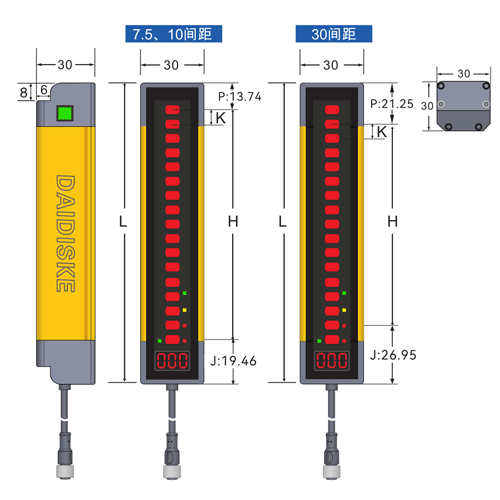
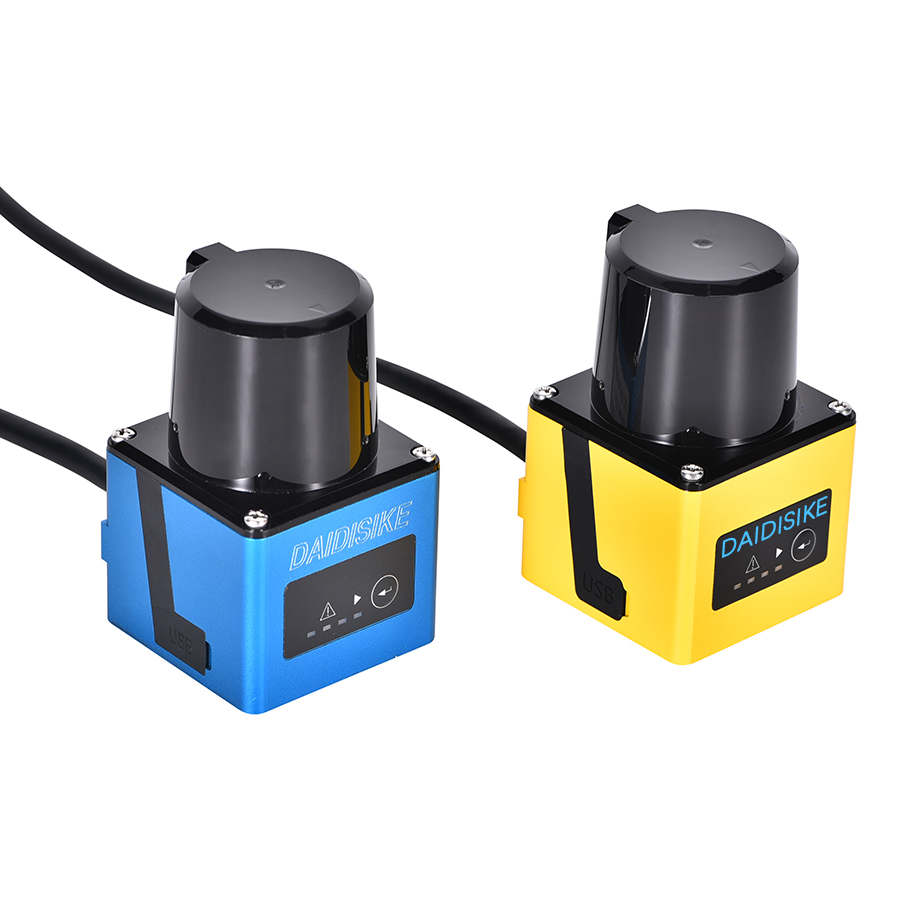
Start with the DAIDISIKE sensor and control product catalog and the actual model's interface documentation. Light curtains, DLD industrial LiDAR, DA31 and DX interlocks serve different roles; no native SPE port is established for these illustrated products. DLD/SDLD remain non-safety sensors. Customer names, shipment claims and a development roadmap are not evidence of protocol support.
For an existing system, document the sensor outputs, receiver limits and safety function before considering a new communication path. The AI and sensor diagnostics discussion addresses a separate question: more data or analysis does not establish a safety-rated control function.
The bottom line
SPE is an established Ethernet physical-layer option whose value depends on the application. Compare complete supported systems, including optional power, connectors, diagnostics, lifecycle and commissioning. No universal cost advantage, connector winner or safety-product launch date follows from the standard alone.
For a controls engineer in 2026, the right posture is neither rip-and-replace nor wait-and-see. It is: keep buying the cabling that works for the line you are running today, pilot SPE on the next greenfield project where its reach and diagnostics genuinely earn it, and let your sensor vendors tell you when the safety side has caught up. The cable will come; the standards are already there. The discipline is in getting the timing right.