
M8 vs. M12 Inductive Proximity Sensors: A Practical Selection Guide for Automation
When you're designing a high-speed sorting line or upgrading automated machinery, selecting the right detection components can make or break your system's reliability. More often than not, engineers find themselves weighing two industry-standard cylindrical sizes: the M8 and the M12.
At first glance, the difference is just 4 millimeters in thread diameter. However, in the field of industrial automation, that small dimensional shift drastically changes sensing ranges, mounting requirements, and mechanical durability. Here is a practical breakdown of how to choose the right inductive proximity sensors for your specific application.
1. Sensing Distance: The Physics of Coil Size
The core principle is straightforward: a larger sensor face accommodates a larger internal copper coil, which generates a stronger electromagnetic field.
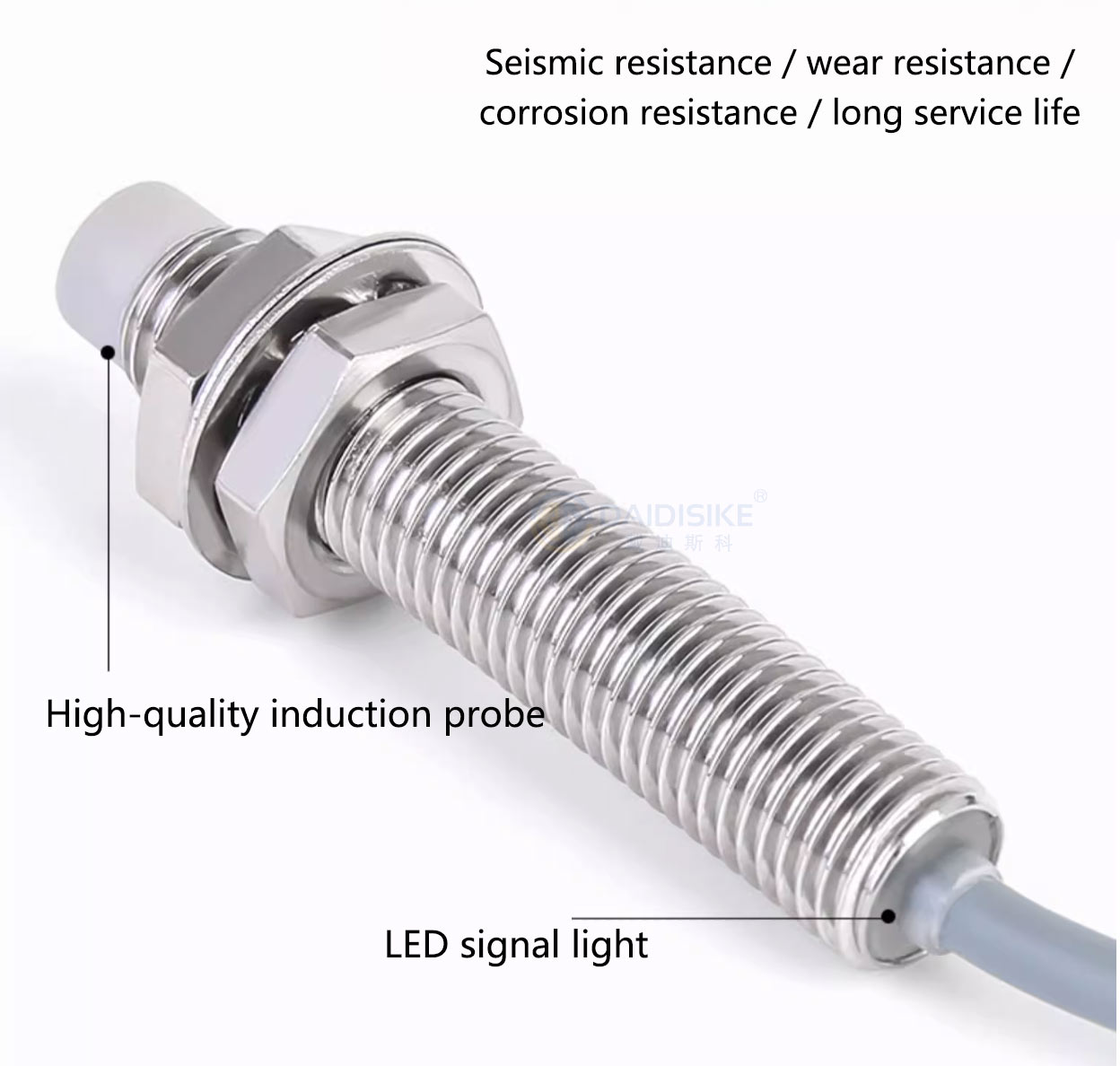
- M8 Sensors: Typically offer a sensing distance (Sn) between 1 mm and 2 mm for flush (shielded) models, and up to 4 mm for non-flush variants. They are strictly for close-quarters detection.
- M12 Sensors: Usually double that capacity. You can expect 2 mm to 4 mm ranges on flush models, pushing up to 8 mm on non-flush designs.
If your target object experiences mechanical vibration and might drift slightly on the conveyor, the extended range of an M12 provides a much-needed safety buffer against physical collisions.
2. Flush vs. Non-Flush Mounting Realities
Space constraints dictate your mounting style, which in turn dictates your sensor choice.
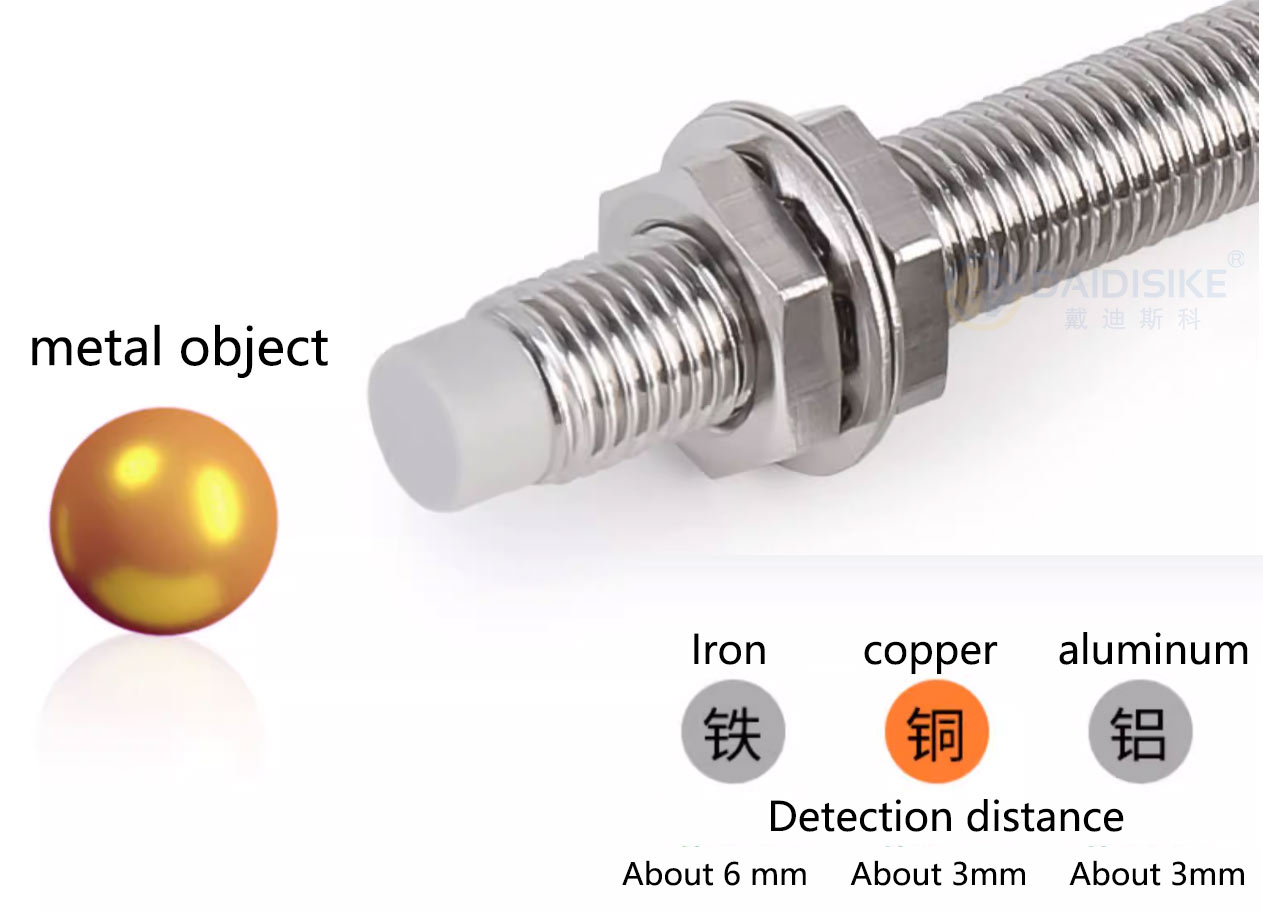
Flush (Shielded) mounting allows the sensor to be embedded directly into a metal bracket without false triggering. Because M8 sensors are inherently smaller, engineers heavily rely on shielded M8s for tight integrations in robotic arms or compact assembly jigs.
Non-Flush (Unshielded) mounting leaves the sensing head exposed. It gives you more range but requires a “clear zone” around the sensor head. The M12 non-flush is an absolute workhorse in heavy-duty conveyors where space isn't an issue, but detecting a target from a safe distance is critical.
3. Mechanical Durability and Wiring
In harsh environments — think CNC machining centers with cutting fluids, or stamping presses with heavy shock — durability matters. M12 sensors inherently have thicker housings. Their larger thread size allows for higher torque during installation, reducing the risk of the sensor vibrating loose over time.
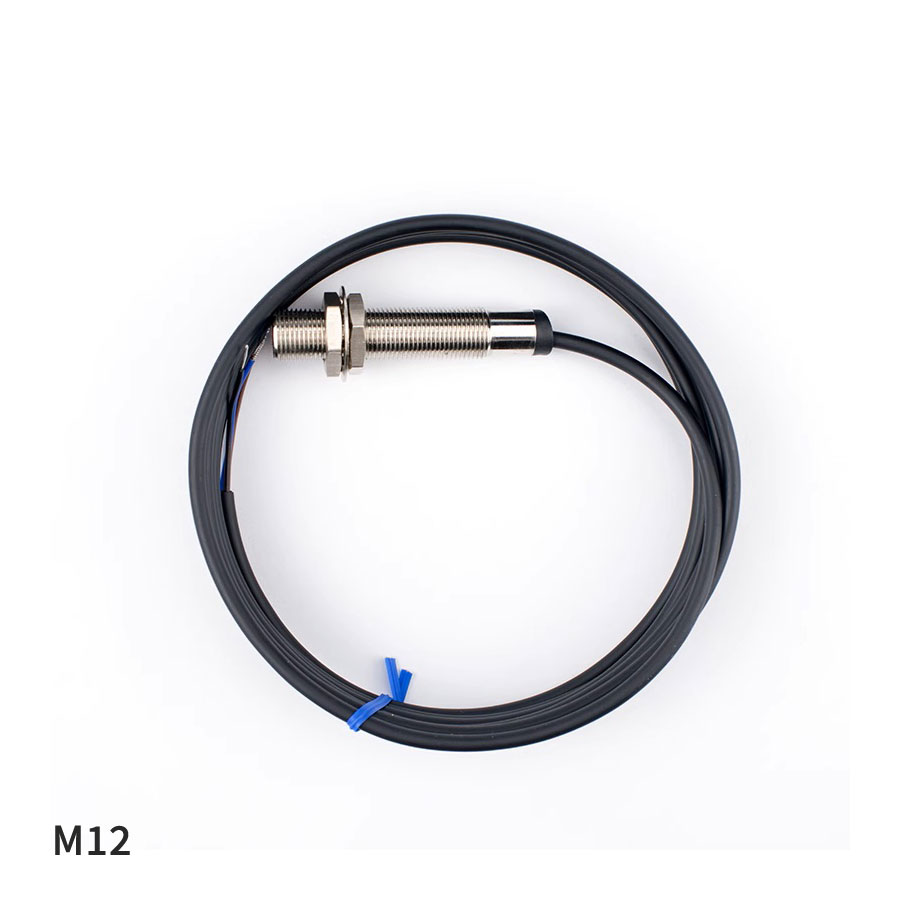
M12 connectors are also the global standard for heavy-duty industrial wiring. While M8 connectors are perfectly reliable, an M12 setup usually matches the cordsets already stocked across the plant, so you spend less on spare cable types.
Which One Should You Choose?
Go with the M8 if:
- Installation space is heavily restricted (e.g., small cylinders, micro-conveyors).
- Target parts pass very close to the sensor face with high mechanical precision.
- Weight reduction on moving mechanical parts (like a robotic end-effector) is necessary.
Go with the M12 if:
- You need a longer sensing distance to prevent target-to-sensor collisions.
- The environment involves heavy vibration, requiring higher mounting torque and a sturdier thread.
- You are looking for a versatile, general-purpose standard for plant maintenance.
Sourcing Reliable Components
Whether you're specifying components for a new OEM machine or replacing aging parts on a factory floor, consistency is key. Substandard sensors lead to false triggers, machine downtime, and endless troubleshooting.
For high-quality alternatives and a wide range of reliable automation detection solutions, explore the DAIDISIKE sensor lineup. If you have specific technical requirements regarding switching frequencies, NPN/PNP logic, or IP67/IP68 ratings, don't hesitate to reach out to our engineering support team for a tailored recommendation.