A plain-English, reference-style definition hub for the machine-safety and industrial-sensor terms our customers ask about most — safety light curtains, ISO 13855 safety distance, Type 2 / Type 4, PL e, SIL 3, OSSD, safety relays and door interlocks, proximity and photoelectric sensors, LiDAR, laser displacement, NPN/PNP, IP ratings and press feeders.
Each entry gives a one-line quick answer followed by a fuller explanation. Standards and codes (GB/T 19436, IEC 61496, ISO 13849-1, ISO 13855, IEC 62061, ISO 14119) are stated as written; figures are illustrative and any safety installation must be verified by a qualified engineer against the real application.
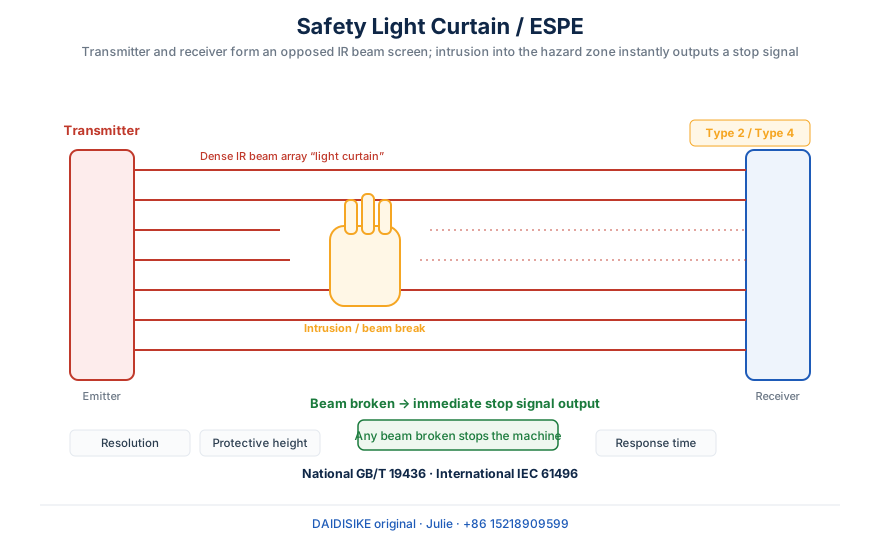
Also known as: Light grid · Press guard / punch-press guard · AOPD · Electro-sensitive protective equipment
Quick answerAn industrial photoelectric guarding device made of a transmitter and a receiver that form a curtain of beams and issue a stop signal the instant a person or object enters the hazardous zone.
A safety light curtain (also called an electro-sensitive protective equipment, ESPE, or active opto-electronic protective device, AOPD) consists of a transmitter and a receiver that project a dense array of infrared beams — a "light curtain" — between them. Breaking any single beam immediately issues a stop signal to protect the operator. The applicable Chinese standard is GB/T 19436; the international standard is IEC 61496. Core parameters: resolution, protection height, response time, and safety type (Type 2 / Type 4).
Also known as: Beam pitch / beam spacing · Detection accuracy
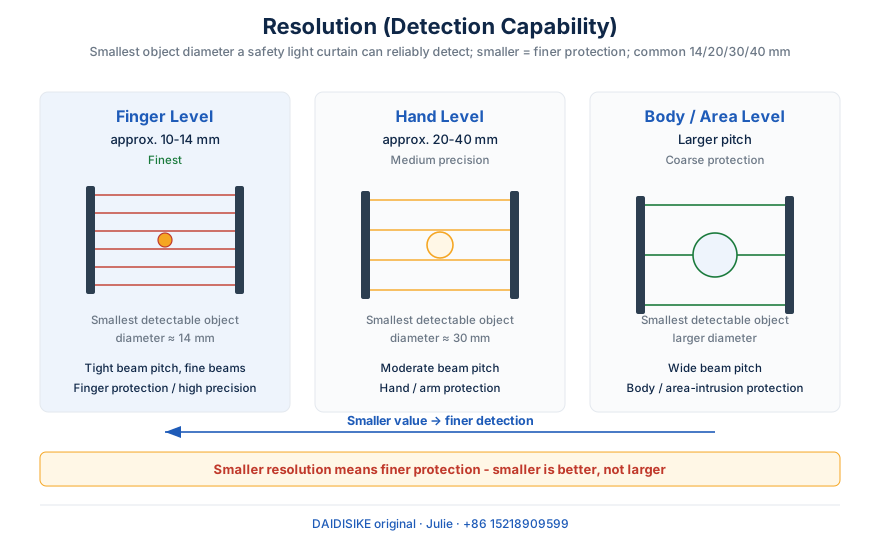
Quick answerThe smallest object diameter a safety light curtain can reliably detect — the smaller the value, the finer the protection; common ratings are 14/20/30/40 mm.
Resolution is the smallest object diameter a safety light curtain can detect, determined together by the beam pitch (spacing between optical axes) and the beam diameter; a smaller value means it can detect a finer target. Common classes: finger detection (about 10–14 mm), hand detection (about 20–40 mm), and body/area detection (larger pitch). Note: a smaller resolution figure is finer, not "worse" — smaller is more precise, larger is not better.
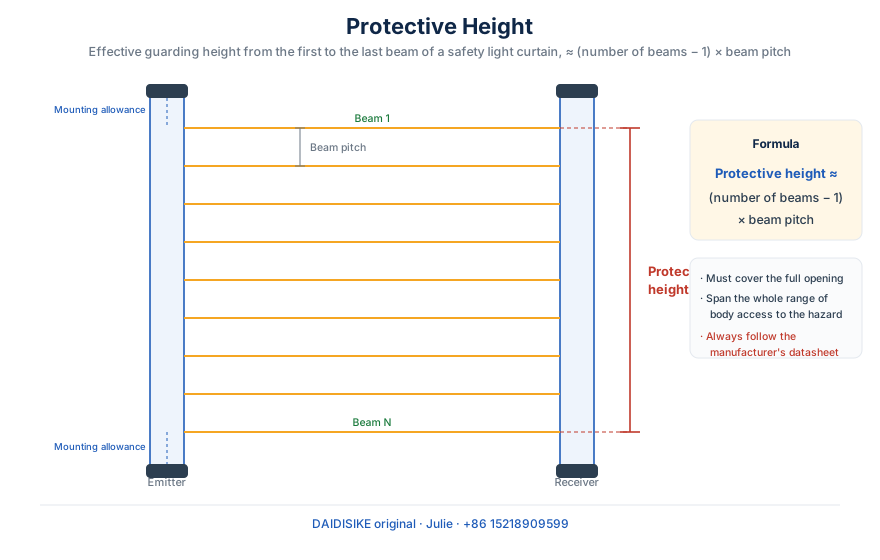
Quick answerThe effective protected vertical span of a safety light curtain, from the first beam to the last, approximately equal to (number of beams − 1) × beam pitch.
Protection height is the effective vertical range a safety light curtain guards, and it should cover the entire opening through which a person could reach into the hazardous zone. Relationship: protection height ≈ (number of beams − 1) × beam pitch; the actual specification follows the manufacturer's selection table (there is a mounting allowance between the first/last beam and the end caps).
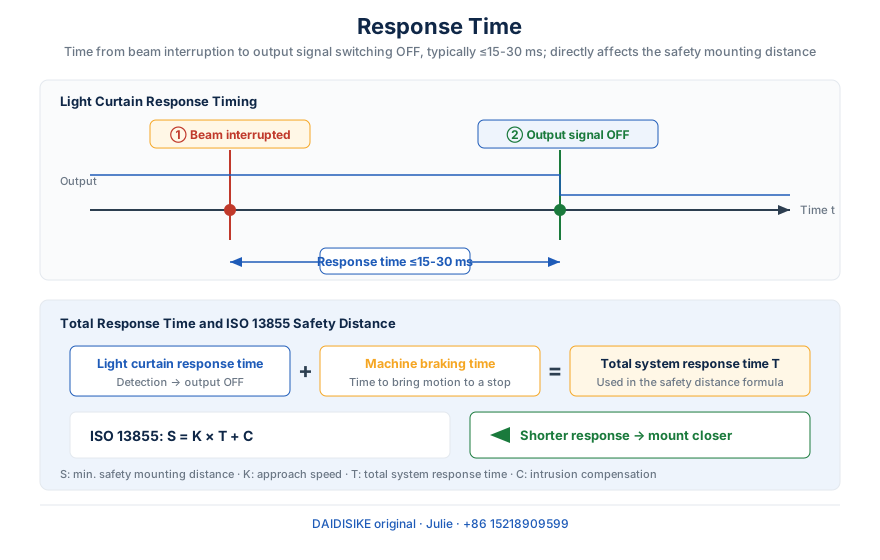
Quick answerThe time from a beam being interrupted to the safety output switching off — typically ≤ 15–30 ms — and it directly affects the required safety mounting distance.
Response time is the time a light curtain takes from detecting an interruption to issuing the stop output. It is one part of the total system response time in the ISO 13855 safety-distance formula (the other part is the machine's stopping/braking time). The shorter the response time, the closer to the hazard the light curtain can be mounted under otherwise equal conditions.
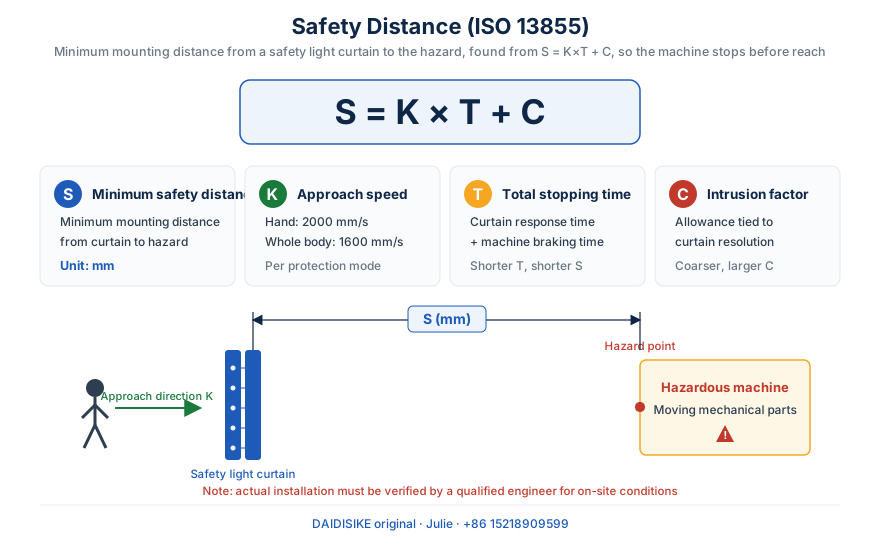
Also known as: Minimum mounting distance · S = K×T + C
Quick answerThe minimum mounting distance from a safety light curtain to the hazard point, calculated with the ISO 13855 formula S = K×T + C so the machine has stopped before a person can reach the hazard.
In the ISO 13855 formula S = K×T + C, S is the minimum safety distance (mm); K is the approach speed of the body (2000 mm/s for hand/arm, 1600 mm/s for whole-body approach); T is the total system response time (light-curtain response + machine stopping time); and C is the intrusion (penetration) allowance, which depends on the detection resolution. The actual installation must be verified by a qualified engineer against the real on-site conditions.
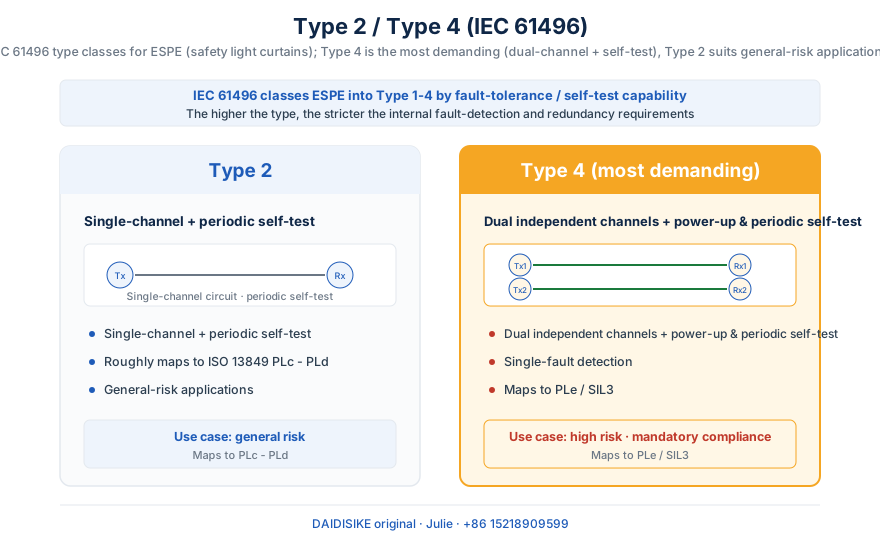
Quick answerIEC 61496 type ratings for electro-sensitive protective equipment (ESPE); Type 4 has the highest requirements (dual-channel + self-test), while Type 2 suits general-risk applications.
IEC 61496 classifies ESPE into Type 1–4 by fault tolerance and self-test capability. Type 2 is single-channel with periodic self-test, roughly corresponding to PL c–PL d under ISO 13849. Type 4 requires dual independent channels, power-up and periodic self-test, and single-fault detection, corresponding to PL e / SIL 3, and is used for high-risk applications with mandatory compliance.
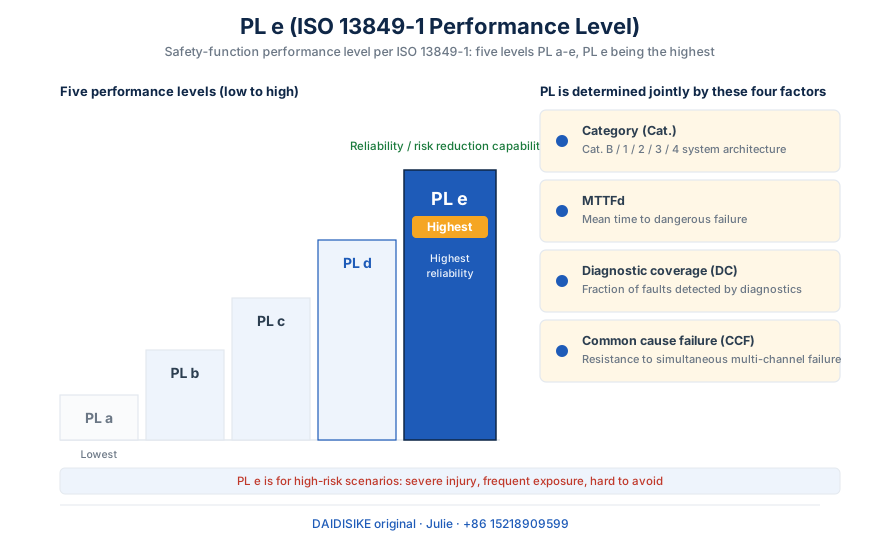
Quick answerThe performance level for a safety function defined by ISO 13849-1, on a five-step scale PL a–PL e, where PL e is the highest level.
Performance Level (PL) measures how reliably a machine-safety control system carries out a safety function. It is determined together by the architecture category (Cat. B/1/2/3/4), the MTTFd, the diagnostic coverage (DC), and common-cause failure (CCF). PL e is used for high-risk situations where injury is severe, exposure is frequent, and the hazard is difficult to avoid.
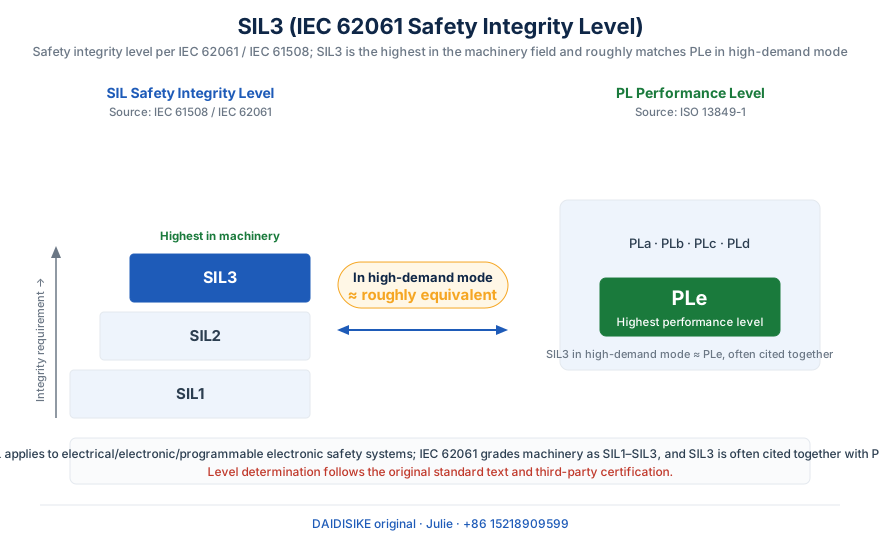
Quick answerA safety integrity level defined by IEC 62061 / IEC 61508; in the machinery sector the highest level is SIL 3, which in high-demand mode corresponds roughly to PL e.
SIL (Safety Integrity Level) applies to electrical/electronic/programmable electronic safety systems; for the machinery sector IEC 62061 defines SIL 1–SIL 3. In high-demand mode of operation, SIL 3 is broadly equivalent to PL e of ISO 13849-1, and the two are often labelled together. The level determination should follow the original standard text and third-party certification.
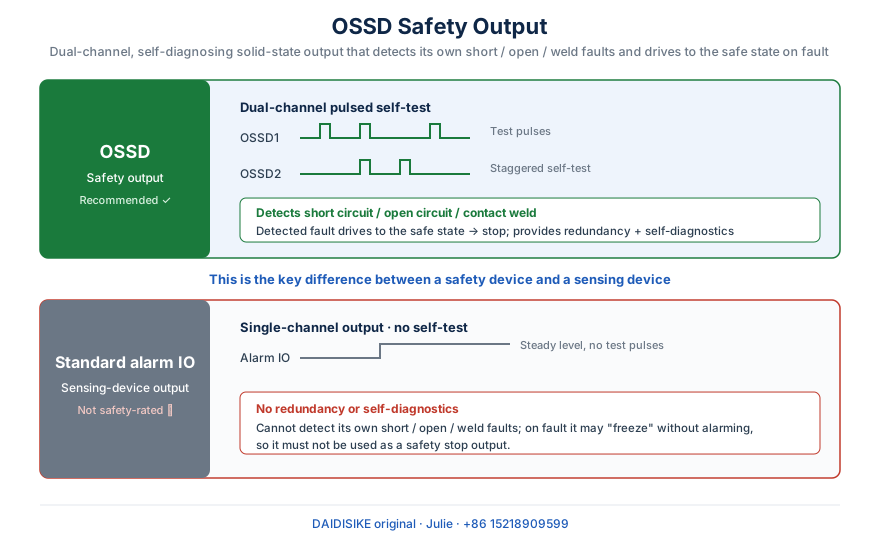
Quick answerThe dual-channel, self-diagnosing solid-state output of a safety device that detects its own short-circuit / open-circuit / contact-welding faults and switches to the safe (stopped) side on failure.
OSSD (Output Signal Switching Device) is the standard safety output of safety components such as safety light curtains and safety laser scanners: it uses dual channels with pulse-based self-testing and fails to the safe side. The alarm I/O of an ordinary sensor is not an OSSD and lacks this redundancy and self-diagnosis — which is one of the key differences between a safety component and a perception sensor.
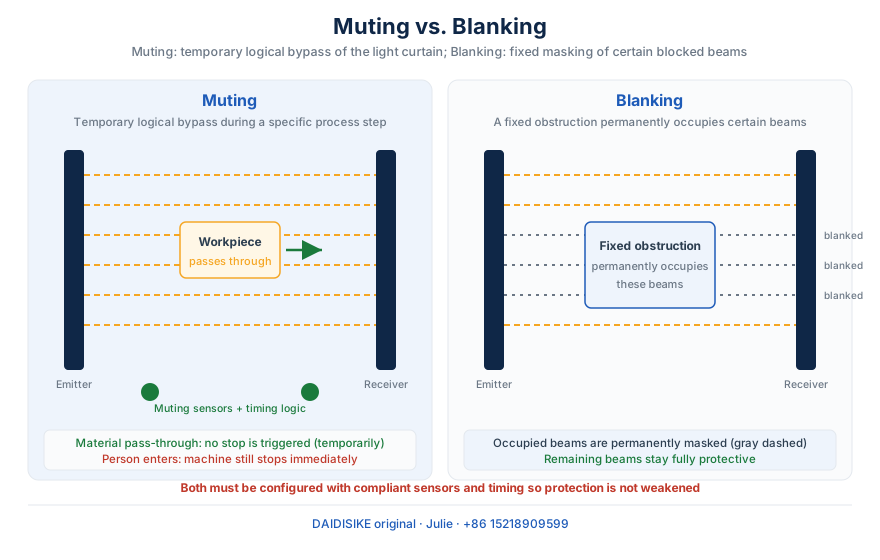
Quick answerMuting temporarily and logically bypasses the light curtain during specific process steps (e.g. material loading or workpiece pass-through); Blanking permanently masks specific beams that are obstructed.
Muting allows material to pass through normally without triggering a stop, while a person entering by mistake still triggers an immediate stop; it must be configured with the proper sensors and timing per the standard. Blanking is used where a fixed obstruction permanently occupies certain beams. Both must be configured in compliance with the relevant standards so that they do not weaken the safeguarding.
Safety Relay
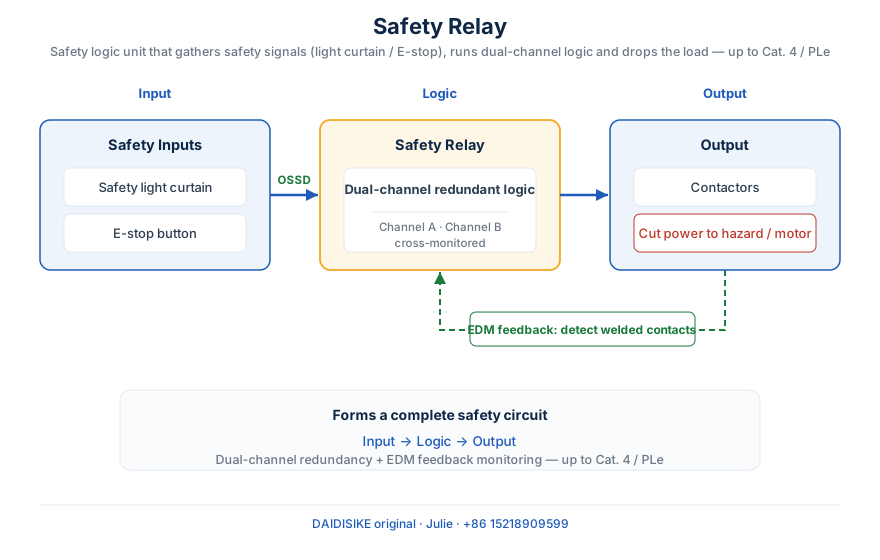
Quick answerA safety-logic unit that gathers safety signals (from light curtains, emergency stops, etc.), evaluates them logically and switches off the load; it can reach Cat. 4 / PL e.
A safety relay receives safety inputs such as OSSD signals, processes them through dual-channel redundant logic, and controls contactors to disconnect the hazardous load, while using EDM (external device monitoring) feedback to check whether the contactors have welded. It is the core link of a complete safety circuit (input → logic → output).
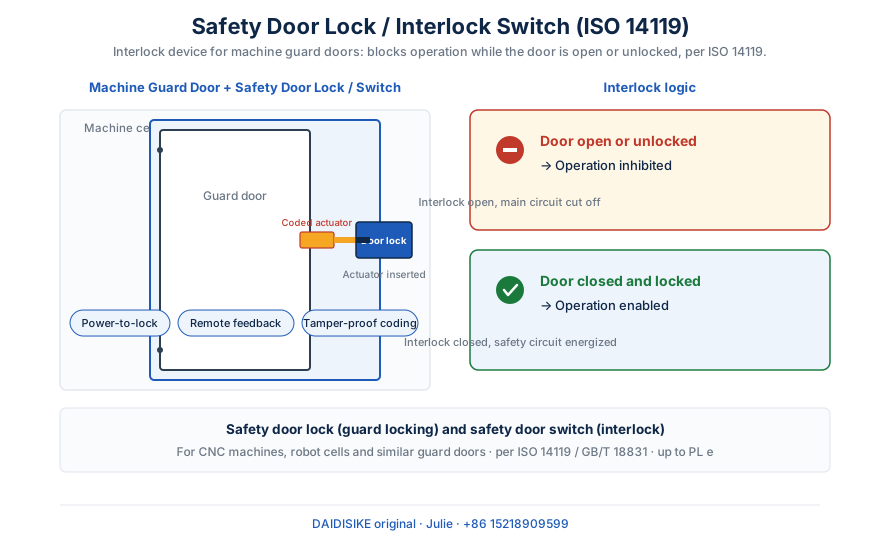
Quick answerAn interlocking device for machine guard doors that prevents the machine from running while the door is not closed/locked, in conformity with ISO 14119.
A safety door lock (with guard locking) and a safety door switch (interlock) are used on the guard doors of CNC machine tools, robot cells and similar equipment. They provide power-off self-locking, remote signal feedback and anti-tamper coding, conform to ISO 14119 / GB/T 18831, and can reach PL e.
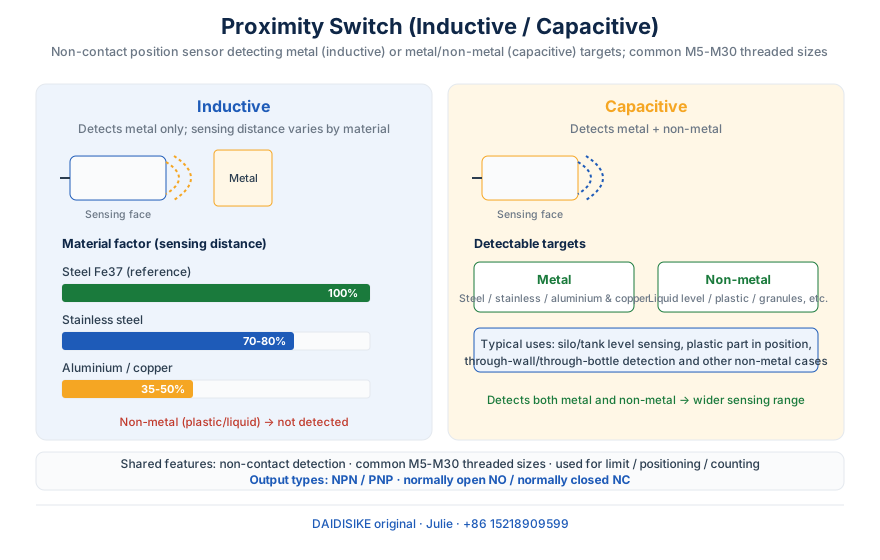
Quick answerA position sensor that detects, without contact, the approach of metal (inductive) or of metal and non-metal (capacitive); common thread sizes are M5–M30.
An inductive proximity switch detects metal only, referenced to standard Fe37 steel (100% sensing distance), with roughly 70–80% of that range for stainless steel and about 35–50% for aluminium/copper. A capacitive type can detect both metal and non-metal targets (liquid level, plastics, etc.). They are commonly used for limit, positioning and counting tasks. Output types are NPN/PNP and NO/NC.
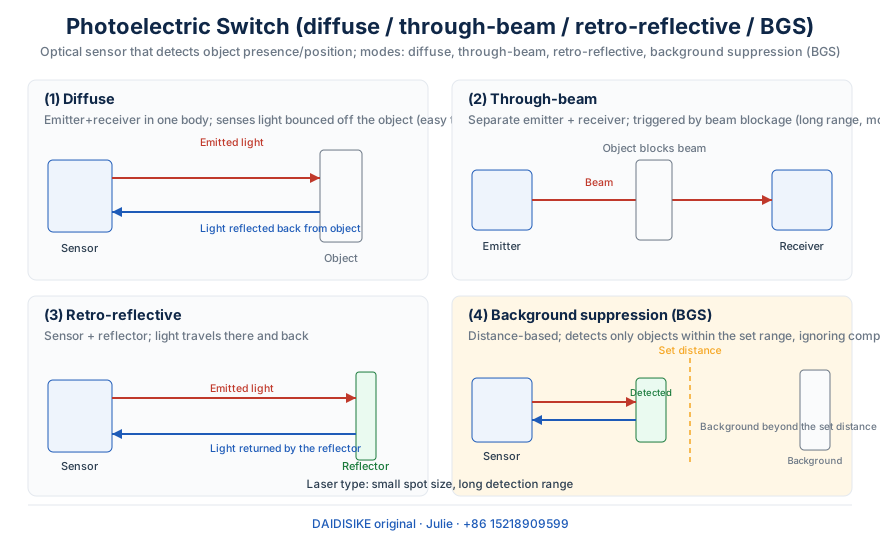
Quick answerA sensor that uses light to detect the presence/position of an object, classified by working mode into diffuse-reflective, through-beam, retroreflective, background-suppression (BGS) and others.
The diffuse-reflective type detects light reflected from the object and is simple to install; the through-beam type has separate transmitter and receiver, giving the longest range and the highest reliability; the retroreflective type uses a reflector plate; the background-suppression (BGS) type discriminates by distance and can detect only objects within a set distance against a complex background. Laser types have a small spot and a long detection range.
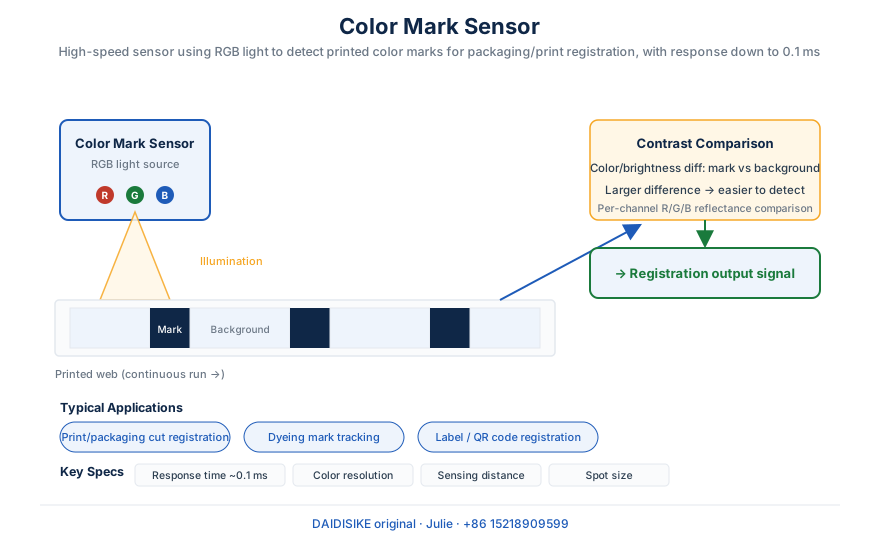
Quick answerA high-speed sensor that uses an RGB three-color light source to recognise printed registration marks for packaging/printing positioning, with response down to the 0.1 ms class.
A color mark sensor illuminates with red/green/blue light sources and compares the contrast between the mark and the background. It is used for register-cut positioning in printing and packaging, color-mark tracking in textile printing and dyeing, and label / QR-code position detection. Key indicators: response time, the color difference it can distinguish, detection distance and spot size.
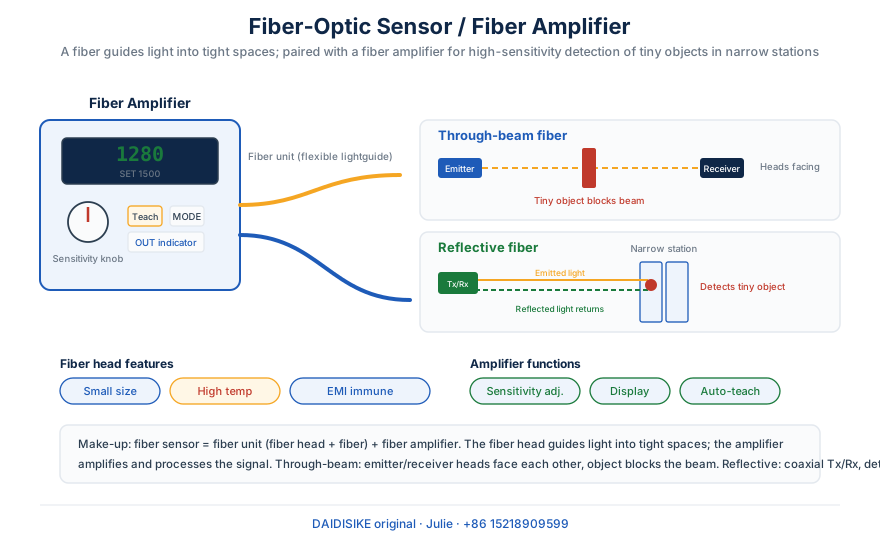
Quick answerA sensor that guides light through an optical fiber into tight spaces; paired with a fiber amplifier it achieves high-sensitivity detection of tiny objects in narrow stations.
A fiber-optic sensor consists of a fiber unit plus an amplifier. The fiber head is small, heat-resistant and immune to electromagnetic interference, suiting tight spaces and the detection of tiny objects; the amplifier provides sensitivity adjustment, a digital display, self-learning and similar functions. Fibers come in through-beam and reflective types.
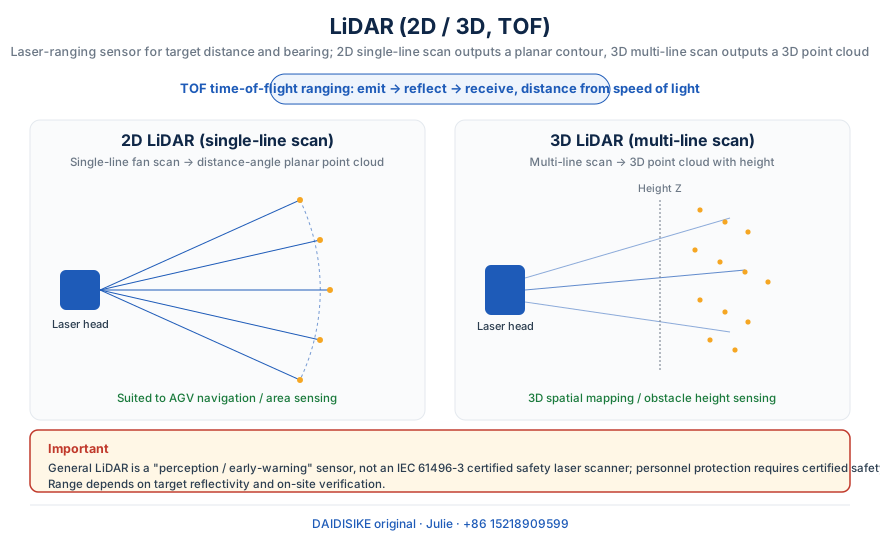
Quick answerA sensor that uses laser ranging to obtain the distance and bearing of targets; a 2D single-line scan outputs a planar profile, while a 3D multi-line scan outputs a three-dimensional point cloud.
LiDAR mostly uses the time-of-flight (TOF) method for ranging. A 2D (single-line) unit outputs a planar point cloud of distance versus angle, suitable for AGV navigation and area awareness; a 3D (multi-line) unit outputs a three-dimensional point cloud including height. Important honesty note: a general-purpose LiDAR is a perception / early-warning class sensor, NOT a safety laser scanner certified to IEC 61496-3; personnel safety protection must use a certified safety component. The maximum range depends on target reflectivity and on real on-site measurement.
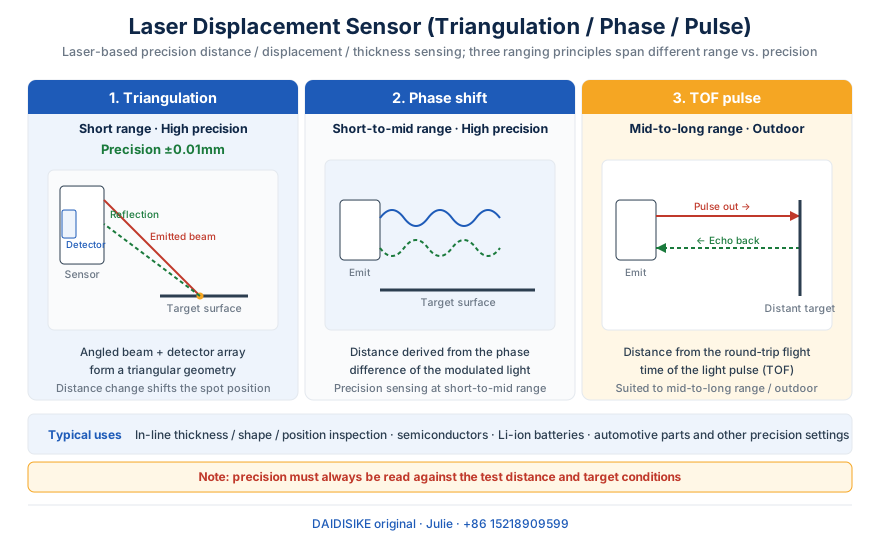
Quick answerA sensor that precisely measures distance/displacement/thickness with a laser; its three ranging principles cover different ranges and accuracies.
Triangulation ranging is used for short distances at high accuracy (e.g. ±0.01 mm); the phase method is used for short-to-medium distances at high accuracy; and the TOF pulse method is used for medium-to-long distances and outdoors. Applications include in-line thickness / shape / position inspection in semiconductors, lithium batteries, automotive components and other precision settings. Accuracy must always be read together with the test distance and target conditions.
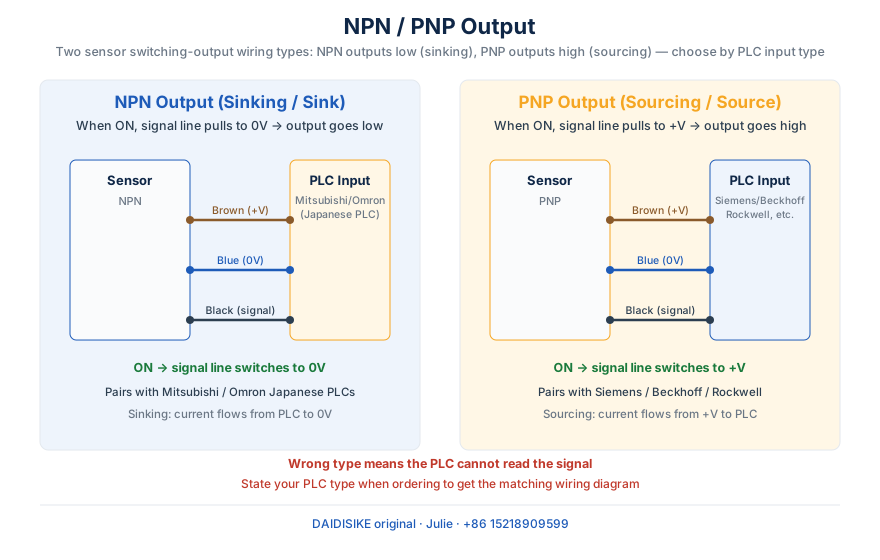
Quick answerThe two wiring types for a sensor's switching output: NPN outputs a low level (sinking), PNP outputs a high level (sourcing); choose by the PLC input type.
NPN (sinking) connects the output to 0 V when conducting and is commonly paired with Japanese PLCs such as Mitsubishi/Omron; PNP (sourcing) connects the output to +V when conducting and is commonly paired with Siemens/Beckhoff/Rockwell. Choosing the wrong type means the PLC cannot read the signal. State your PLC type when ordering and you will receive the matching wiring diagram.
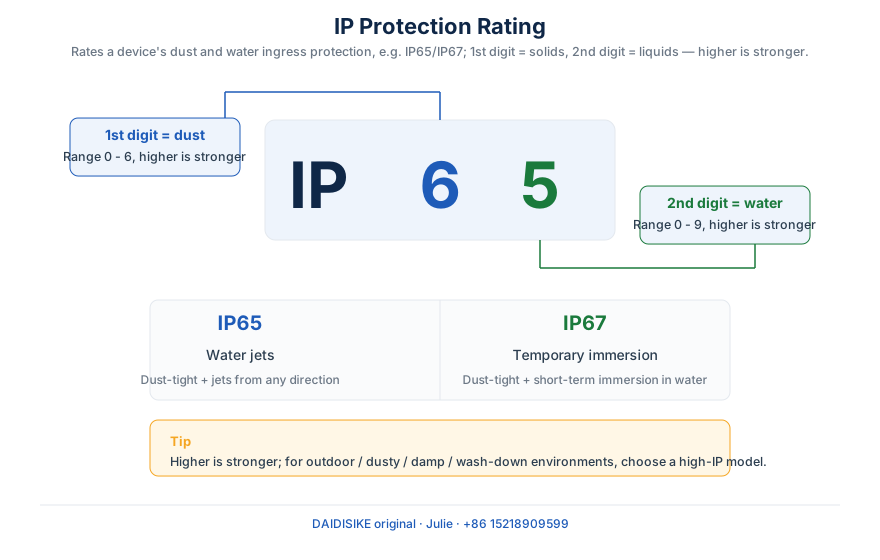
Quick answerA rating marking a device's dust- and water-resistance, such as IP65/IP67; the first digit is solids protection, the second is liquids protection — higher numbers mean stronger protection.
In the IP (Ingress Protection) rating, the first digit indicates dust protection (0–6) and the second indicates water protection (0–9). IP65 is protected against water jets; IP67 can withstand short-term immersion. For outdoor, dusty, humid or wash-down environments, choose a higher-IP model.
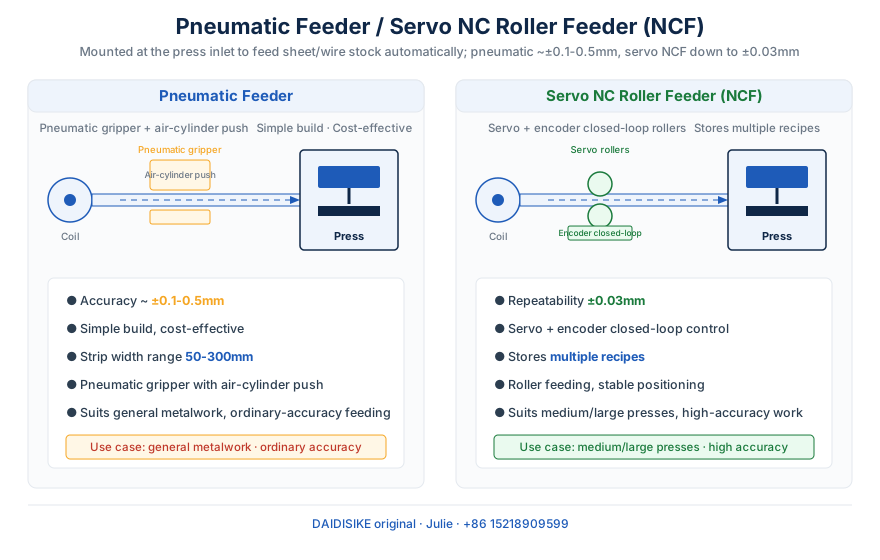
Quick answerEquipment mounted at the front of a press for automatic feeding of sheet or wire stock; the pneumatic version reaches about ±0.1–0.5 mm, while a servo NCF can reach ±0.03 mm.
A pneumatic feeder uses pneumatic grippers together with air cylinders to push material; it is simple in structure and cost-effective, suited to general-purpose metal-stamping at ordinary accuracy, and is graded by stock width across 50–300 mm. An NCF servo roller feeder uses a servo motor and encoder in closed loop, with ±0.03 mm repeatability and storage of multiple recipes, suited to medium-to-large presses and high-accuracy applications.
About this glossary. Published by Foshan DAIDISIKE Optoelectronics Technology Co., Ltd. as objective reference material, consistent with our standards & calculators resources. It is general guidance, not a substitute for a competent machine-safety risk assessment. For selection help, call +86 15218909599 or visit contact.