
Ultimate Guide to Industrial Proximity Switches: Selection, Wiring, and Troubleshooting
1. What is a Proximity Switch?
A Proximity Switch is an industrial sensor that detects the presence of objects without any physical contact and outputs a switching signal. It is an essential component in modern industrial control, widely used in automated production lines, material handling, and mechanical positioning.
As a leading brand in industrial sensors, DAIDISIKE offers a comprehensive range of products — from Inductive to Capacitive — covering M8, M12, M18, and M30 specifications to meet precision detection needs in various environments.
2. Inductive vs. Capacitive: A Deep Dive
Inductive Proximity Switches
Principle: Based on Electromagnetic Induction. The sensor head generates a high-frequency alternating magnetic field. When a metal object enters this field, Eddy Currents are induced within the object.
Feedback: These eddy currents consume energy from the sensor’s oscillation, causing it to weaken or stop. The detection circuit then triggers the output signal.
Representative DAIDISIKE Models:
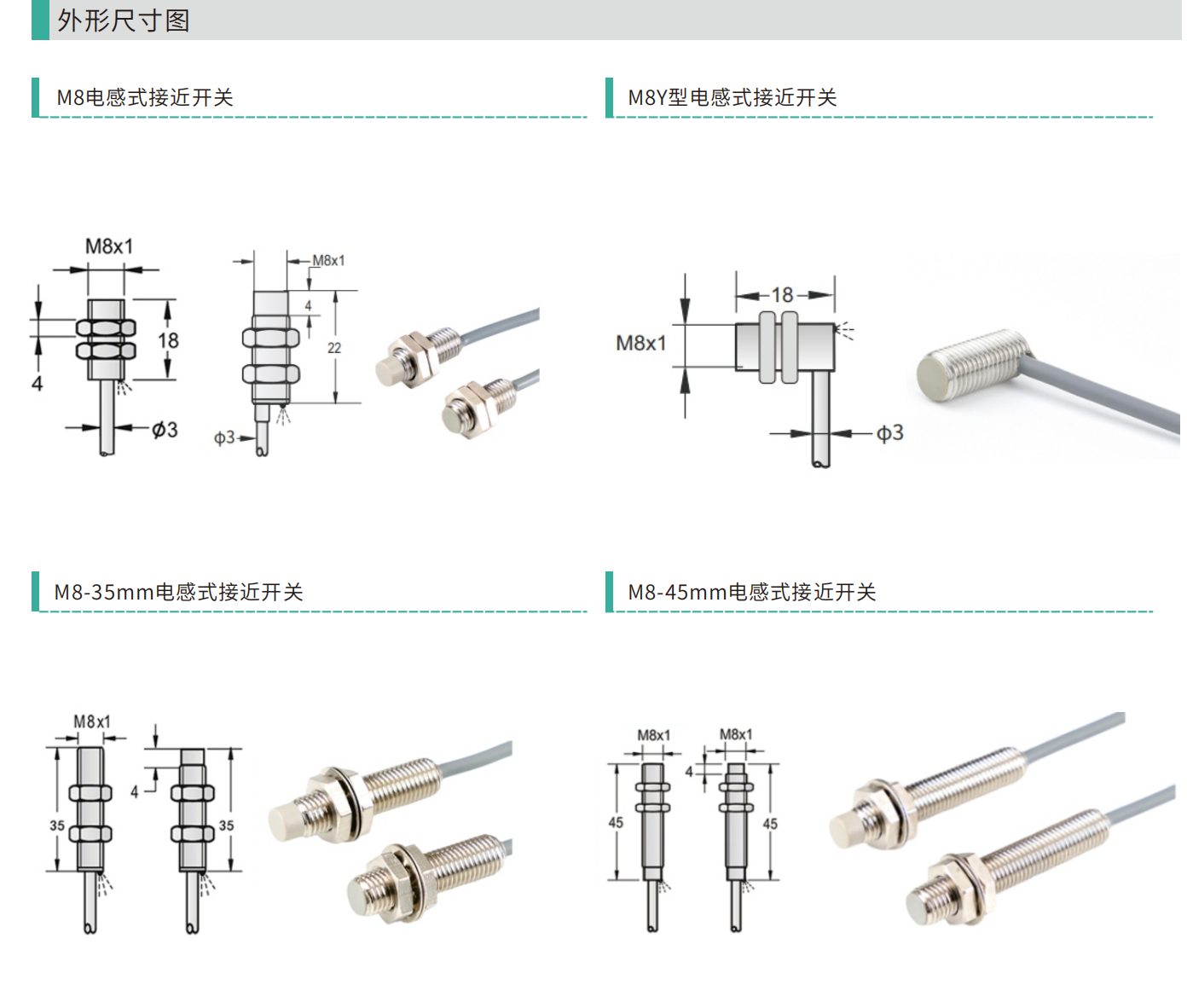
- M801N1P18: M8 Flush, 1 mm, NPN NO
- M1204N1P: M12 Flush, 4 mm, NPN NO
- M1808N1P: M18 Flush, 8 mm, NPN NO
Capacitive Proximity Switches
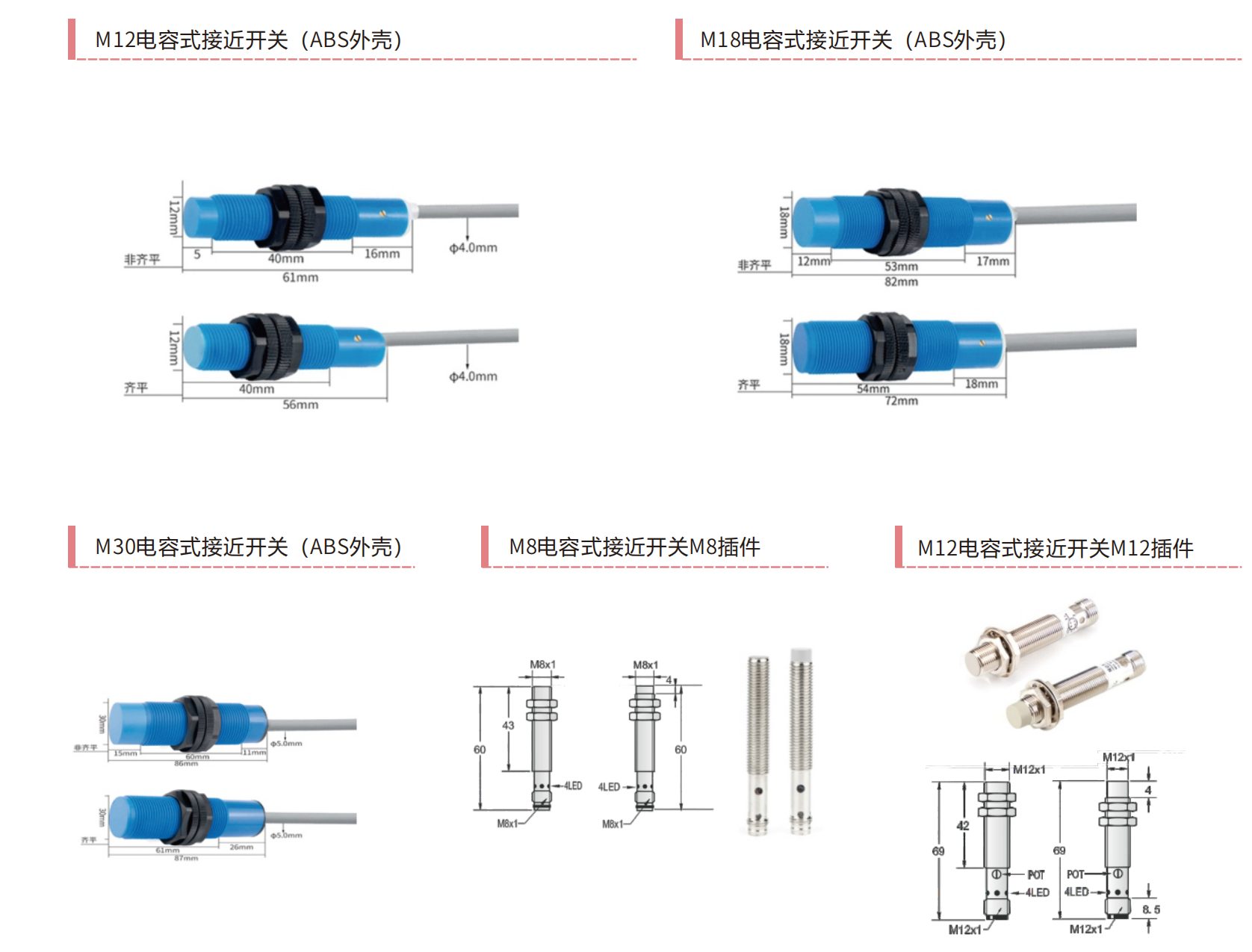
Principle: Based on Electrostatic Capacitance changes. The sensor face acts as one plate of a capacitor. When an object (metal or non-metal) approaches, the dielectric constant changes, altering the total capacitance.
Feedback: Once the capacitance reaches a pre-set threshold, the circuit is triggered to send a signal.
Representative DAIDISIKE Models:
- RS1202N1: M12 Flush, 1-2 mm Adjustable, NPN NO
- RS3010N1: M30 Flush, 2-10 mm Adjustable, NPN NO
Selection Table: Comparison at a Glance
| Feature | Inductive Switch | Capacitive Switch |
|---|---|---|
| Primary Target | Metals (Iron, Steel, Copper) | Liquids, Powders, Plastic, Wood |
| Sensing Distance | Short (typically 0-20 mm) | Long (up to 50 mm+) |
| Interference Resistance | High (unaffected by dust/oil) | Lower (sensitive to humidity/water) |
| Cost-Effectiveness | Very High | Moderate |
| DAIDISIKE Series | M8, M12, M18, M30 | RS12, RS18, RS30 |
3. NPN vs. PNP Wiring Explained
In industrial control systems (PLCs), choosing between NPN and PNP is crucial for compatibility.
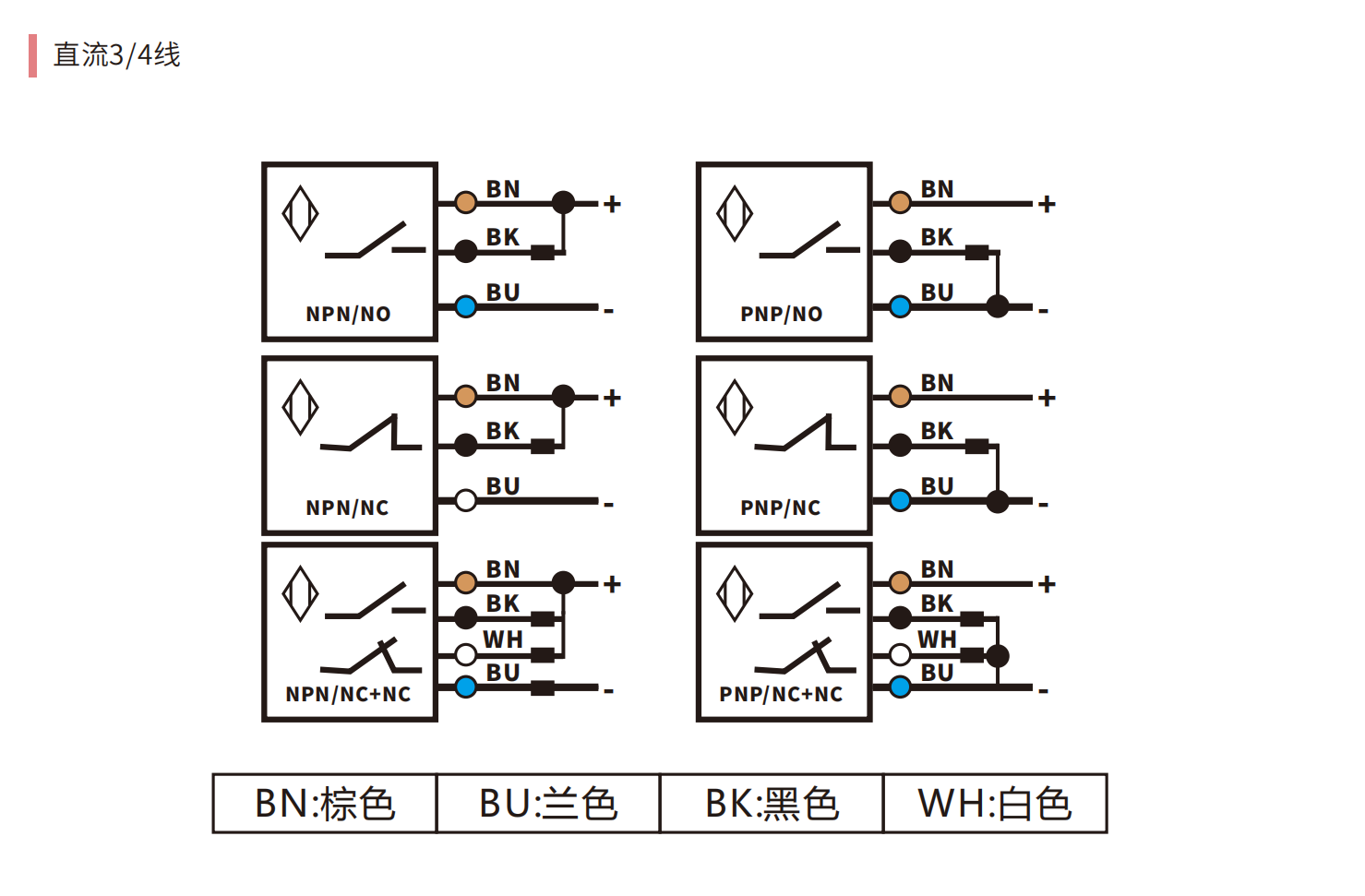
- NPN Type: Active-Low output (Output connects to negative/0V when triggered).
- PNP Type: Active-High output (Output connects to positive/24V when triggered).
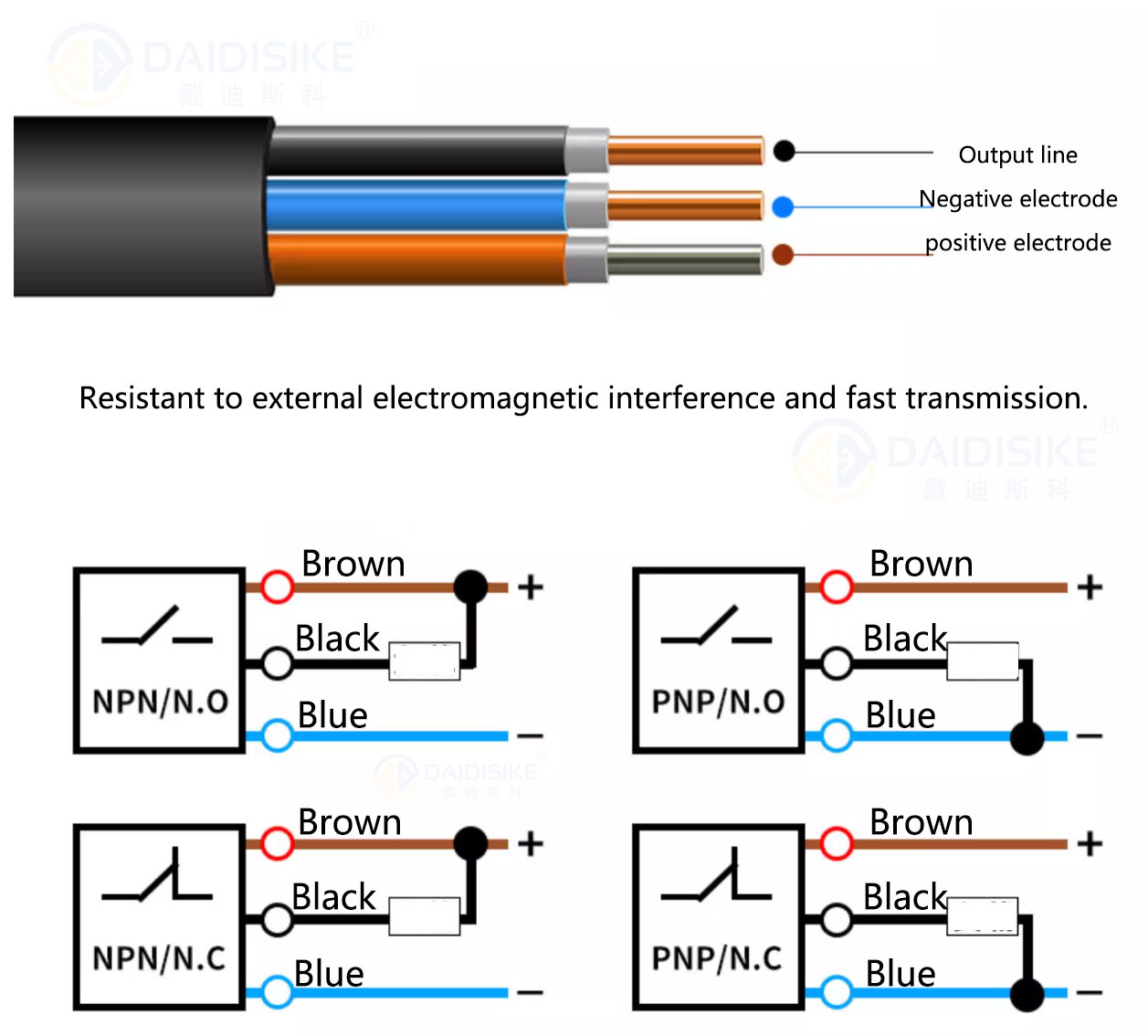
Typical Wiring (DAIDISIKE Standard)
Brown Wire: Positive Power (+24 V DC)
Blue Wire: Negative Power (0 V DC)
Black Wire: Output/Signal (Connects to PLC Input)
4. Troubleshooting & Maintenance
If your sensor is not responding, check the following:
- No Signal: Verify the power voltage (usually 10-30 VDC) and ensure the NPN/PNP type matches your PLC logic.
- False Triggers: For Capacitive sensors, check for extreme humidity or oil buildup on the sensor face.
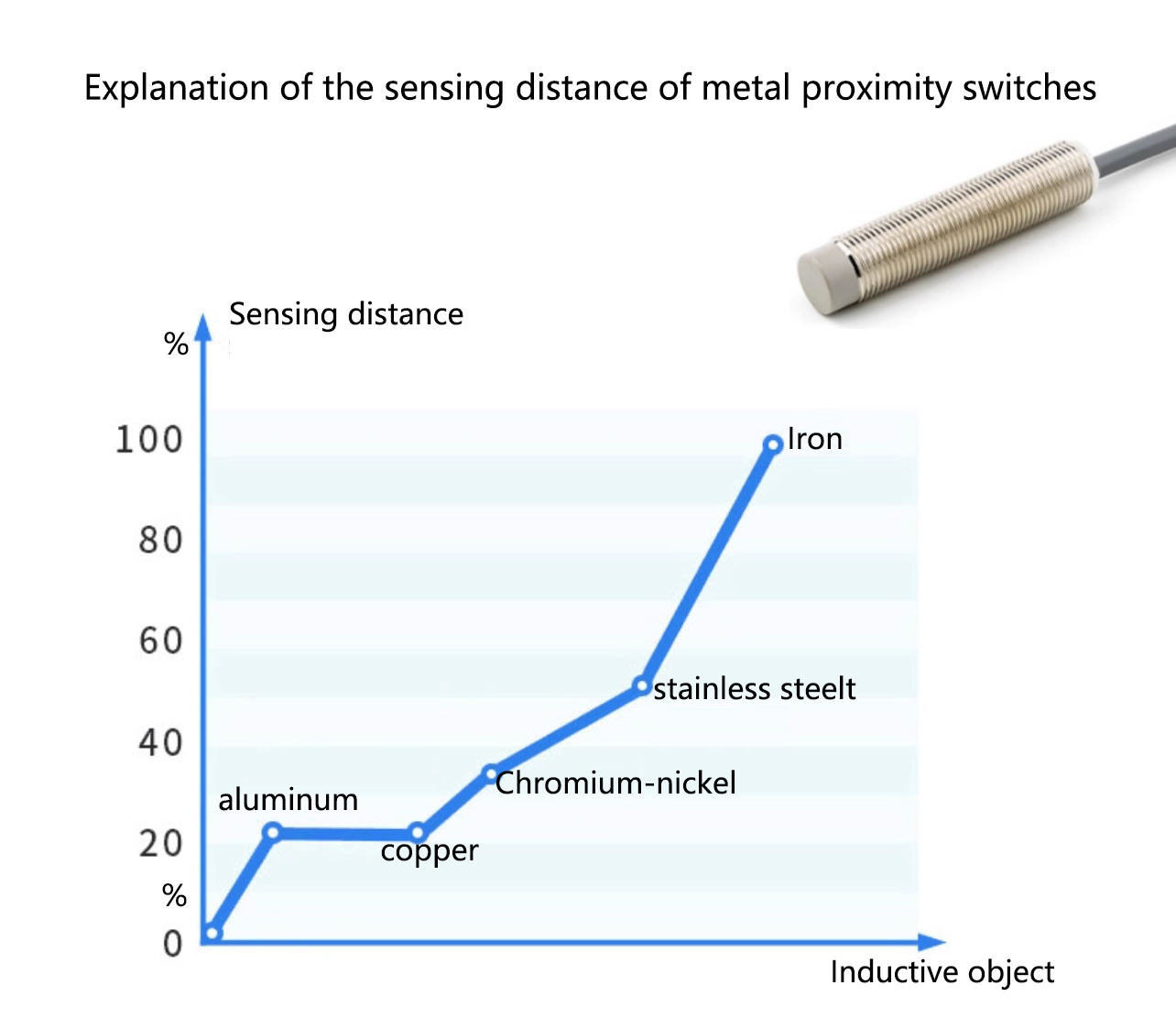
- Distance Decay: For Inductive sensors, non-magnetic metals like Copper or Aluminum will naturally reduce the sensing distance.
→ Learn More: For applications involving human safety, proximity sensors are often used alongside Safety Light Curtains. Check our guide for full machine guarding solutions.
Contact our technical team for 1-on-1 support.