
Keyence & Sick Safety Light Curtain Alternatives: A Buyer’s Guide to Quality Equivalents
We have all been there. A forklift backs into a robotic cell, or a heavy workpiece drops, and suddenly your safety light curtain is smashed. The machine is down. You call your local distributor for a replacement Keyence, Sick, or Omron sensor, and they hit you with the bad news: a steep replacement price and a lead time measured in weeks.
In modern manufacturing, waiting weeks for a sensor while a production line sits idle is simply unacceptable. This reality has forced maintenance managers and procurement teams to ask a critical question: Do we really need to pay a massive premium just for the brand name on the yellow aluminum housing?
The short answer is no. Finding a reliable Keyence safety light curtain alternative or a direct Sick equivalent sensor is easier — and much more affordable — than you might think, provided you know exactly which technical specs to look for.
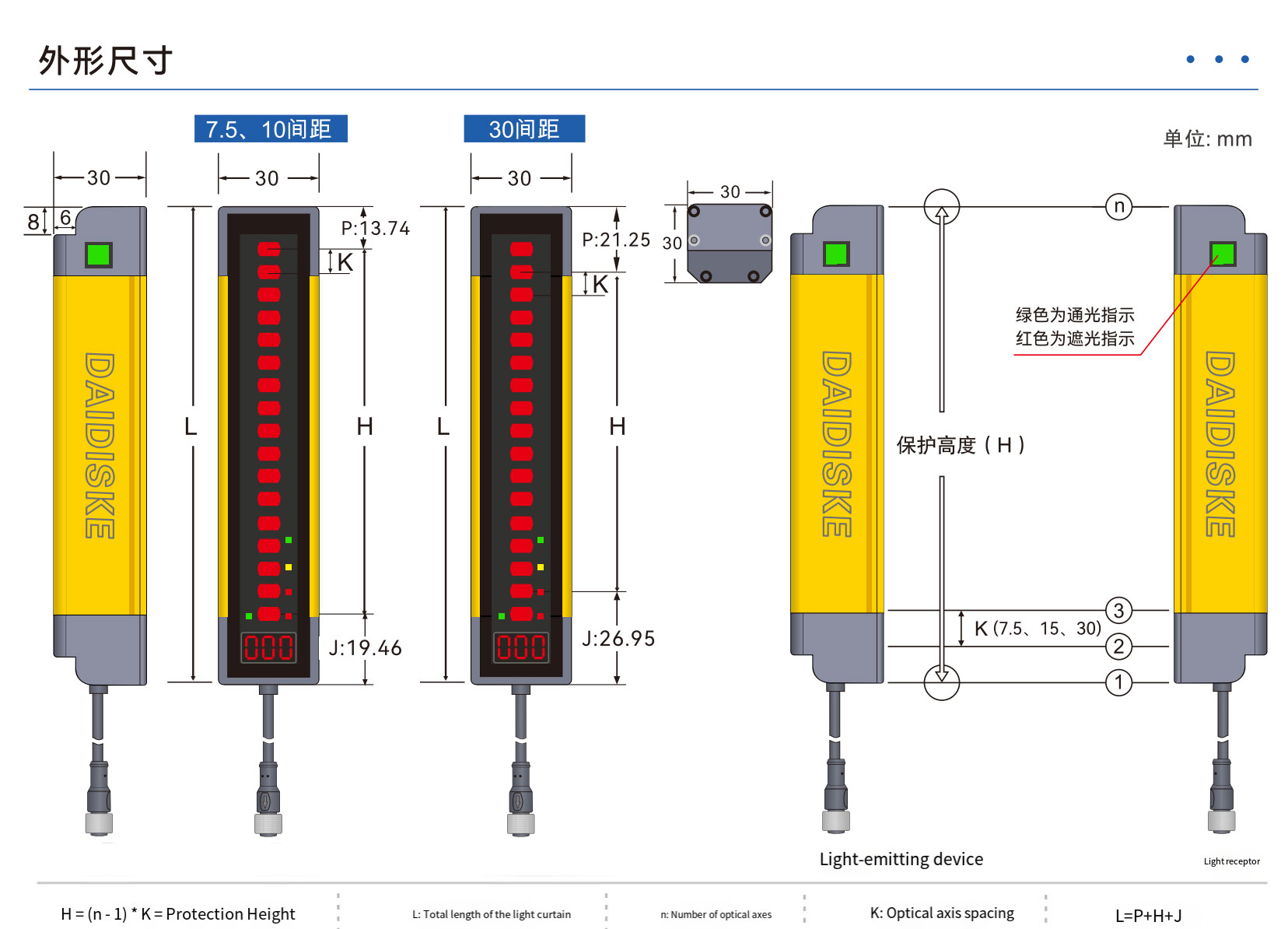
The Factory-Direct Sourcing Model
To be clear: top-tier brands make excellent products. Imported Tier-1 units typically reach end users through multi-tier distributor networks, which adds margin at each handoff between the factory and the buyer.
As a Chinese safety sensor manufacturer, DAIDISIKE operates a different channel. We own the factory, assemble the optical arrays, and ship directly to our industrial clients. You get a comparable level of optical precision and fail-safe logic through a factory-direct supply chain.
Head-to-Head: Matching the Specs That Matter
You cannot compromise on safety. If you are swapping out an Omron F3SG or a Sick deTec, the replacement must perform flawlessly. Here is how high-quality equivalents stack up against the big names:
- Response Time: A light curtain is useless if it reacts too slowly. Just like the premium brands, our safety sensors feature ultra-fast processing chips that deliver response times of ≤ 15 milliseconds, ensuring immediate machine shutdown.
- Resolution Options: Whether you need 14 mm resolution for finger protection on a press brake or 40 mm for body detection around a perimeter, equivalent manufacturers offer the exact same standardized optical pitch.
- Strict CE Certification: Never buy a safety device without verified certifications. Quality alternatives are rigorously tested and carry full EU CE certifications, meeting the strict IEC 61496-1/2 standards required for Type 4 safety devices.
- Durability: Factory floors are brutal. Equivalent sensors utilize heavy-duty extruded aluminum housings with IP65/IP67 ratings, making them fully resistant to dust, oil mist, and coolant splashes.
The Dealbreaker: Is it “Plug-and-Play”?
The biggest fear maintenance engineers have when switching brands is wiring. Nobody wants to spend hours rewriting PLC logic or rewiring a control cabinet just to install a new sensor.
That is why a true equivalent sensor is designed to be a drop-in replacement.
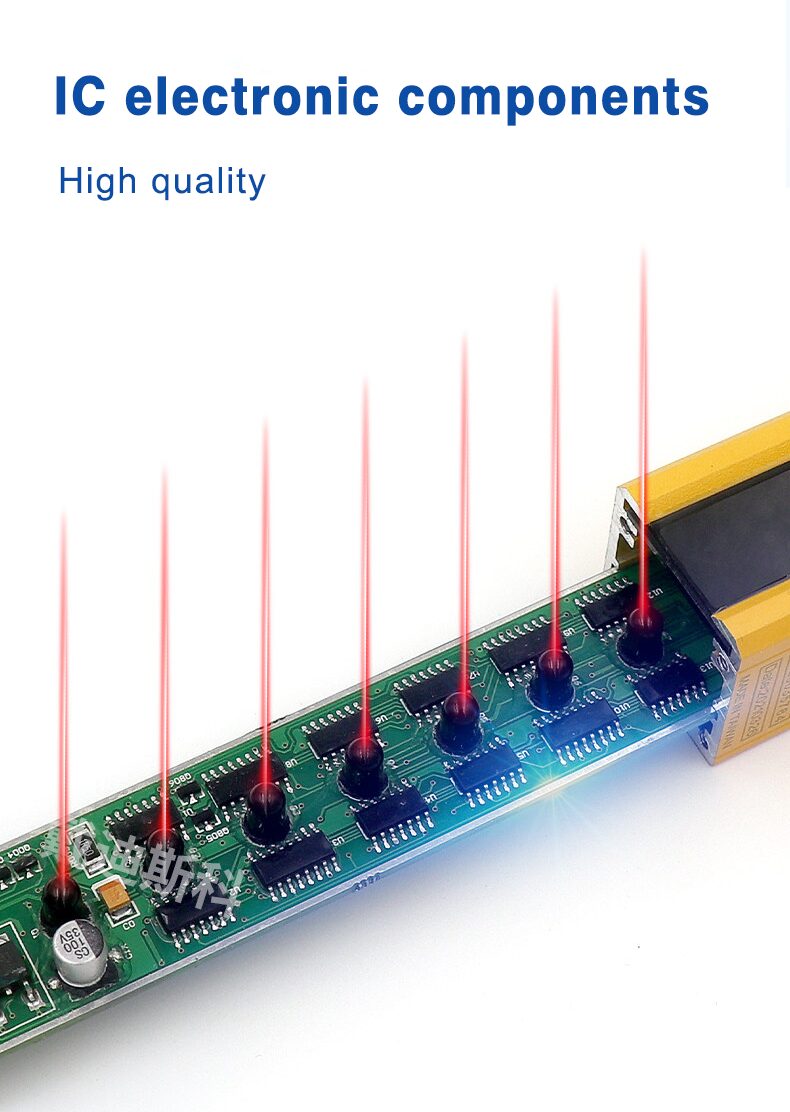
Standardized Connectors and Outputs
High-quality alternatives eliminate the integration headache by using industry-standard configurations:
- M12 / M8 Aviation Connectors: If your broken Sick sensor uses a standard 5-pin or 8-pin M12 quick-disconnect cable, you can simply unscrew the old one and plug the DAIDISIKE sensor right into your existing cable run.
- Universal OSSD Outputs: Our sensors output standard dual-channel PNP or NPN safety signals (OSSD1 and OSSD2). Your safety relays and Siemens / Allen-Bradley PLCs will read these signals exactly as they did with the OEM brand.
- Universal Mounting Brackets: We provide adjustable L-shaped and tubular brackets that make it incredibly easy to mount the new sensor into the existing physical footprint.
Stop Waiting. Start Running.
You don't have to accept outrageous quotes or month-long lead times to keep your factory safe and compliant. By choosing a factory-direct equivalent, you can dramatically cut your maintenance budget while getting your automated lines back up and running in days, not weeks.
If you have a broken sensor on your floor right now, contact the DAIDISIKE engineering team. Send us the part number of your current Keyence, Sick, or Omron unit, and we will immediately provide a spec-for-spec, plug-and-play alternative.