
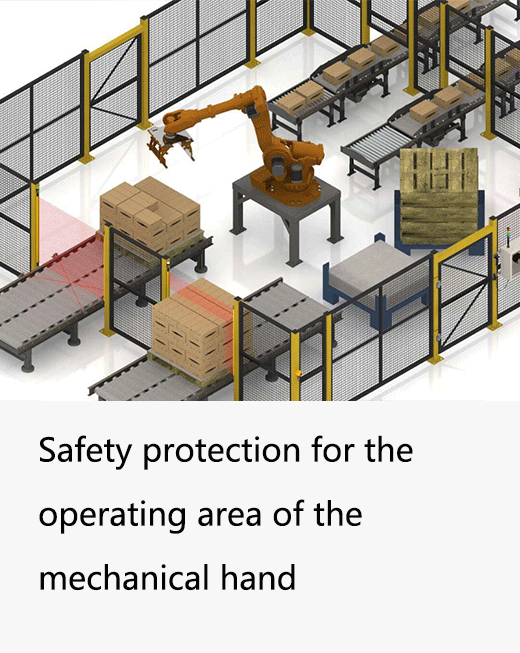
We wrote a broader piece last week on machine safety on EV battery manufacturing lines that walks the whole plant. This article goes one level deeper, on the pouch cell format specifically, because pouch is where most of the awkward process-safety conversations live. A prismatic winder or a 4680 cylindrical line has fewer manual touch points and a more enclosed front end. A pouch line has stacking, vacuum filling and degassing as separate stations, each with their own handling automation, and that adds guarding decisions a prismatic line simply does not have.
What follows is the walk-through we give a process engineer planning a new line, in the order the cells move. We call the stations by their real names — notcher, Z-folder, ultrasonic tab welder, vacuum filler, degassing chamber, formation shuttle, laser busbar welder, hi-pot tester — because the guarding answer depends on what the machine actually does, not on a generic “robotic cell” label.
Why pouch is its own guarding problem
Three things distinguish a pouch cell line from a prismatic or cylindrical one, and they all matter for safety design.
The cell is built sheet by sheet, not wound. A pouch cell stack is assembled by placing individual anode, cathode and separator sheets in a precise order, typically using a Z-fold of a continuous separator with discrete electrode sheets inserted from either side. A modern stacker can put down something like a hundred and twenty layers per cell at ten to thirty cells per minute, with electrode placement accuracy on the order of plus or minus 0.2 mm. The hazards are pick-and-place gripper axes, magazine load points, and the separator unwind tensioner — not a single rotating mandrel.
Electrolyte filling and degassing are separate, vacuum-based stations. Pouch cells are filled with electrolyte inside a vacuum chamber to wet the stack uniformly, then a second vacuum step after first charge removes formation gas before the final seal. Each chamber is a pressure vessel with an interlocked door — an electrical interlock plus a guard-locking device, because opening the door under vacuum or with raw electrolyte present is not acceptable.
Pouch cells are mechanically fragile. A pierced pouch is a small fire waiting for a moisture event. That shapes both the gripper design (vacuum cups, force-controlled axes) and the safeguarding philosophy: a nuisance-trip that stops the gripper mid-place can damage cells, which means the safeguarding has to be reliable enough that nobody is tempted to mute it for throughput reasons.
Walking the line, station by station
1. Notching and die-cutting
Coated electrode coils arrive at the notcher, which cuts the anode and cathode tab geometry from the coated foil. Two technologies dominate: mechanical die-cutting (a hard tool, fast and cheap, with consumable wear) and laser notching (no tool wear, less burr, but a Class 4 laser source). They are different safety problems.
A mechanical notcher is a press with a high-frequency stroke. The hazards are the in-running web nip and the tooling itself. Guarding is fixed enclosures around the cutting station with interlocked access doors, and a point-of-operation light curtain at the coil load and the offcut/scrap removal points. Resolution is 14–20 mm because operators do reach in. A laser notcher adds the laser-safety scope on top of the mechanical scope: the enclosure has to contain the beam to laser safety standards, and the door interlock has to drop the laser shutter, not just stop the axes. Two distinct safety functions, often sharing logic but not equivalent.
2. Z-fold stacking
This is the heart of a pouch line. A Z-fold stacker pulls a continuous separator web back and forth in a zig-zag while robotic vacuum grippers insert pre-notched anode and cathode sheets from the two sides. The build platform indexes down as layers accumulate. Vision systems verify alignment between every placement.
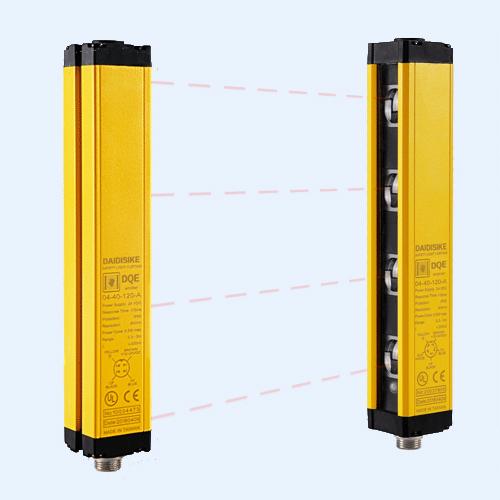
The mechanical hazards are the gripper axes (fast, repeatable, and not always trivially soft-stopped), the separator tensioner, and the magazine reload doors where operators replace empty electrode trays during running. The typical answer is a fully enclosed stacker frame with a 30 mm access-detection light curtain or a small safety laser scanner covering the magazine load face. Manual loading points get a 14 mm or 20 mm point-of-operation curtain. We deploy our DQC light curtain in this role often because it has the finger and hand resolutions and the immunity profile the dry room demands.
3. Tab welding
Once the stack is complete, the protruding anode and cathode current collectors are trimmed and welded to the cell tabs. Ultrasonic welding is the dominant method on pouch cells — it joins thin foils without melting them through, which matters for a stack of dozens of layers. The hazards are the ultrasonic horn, which is a serious crush and pinch source, and the trim knife, which is sharp by definition. Guarding is a hard enclosure with an interlocked access door, and a point-of-operation curtain on the operator face if there is manual loading. Ultrasonic tooling can also generate enough audible noise that hearing protection is part of the local PPE plan — that is not a light-curtain question, but it belongs in the same risk assessment.
4. Pouch packaging, electrolyte filling and pre-seal
The stack is dropped into a pre-formed aluminium-laminate pouch, three sides are heat-sealed, and the cell goes into a vacuum chamber for electrolyte filling. The fill is done under vacuum to draw electrolyte uniformly into the stack porosity. After fill, a pre-seal closes the cell with an electrolyte reservoir still attached.
The vacuum chamber is a pressure-cycled enclosure with an interlocked door, and the right component is a guard-locking interlock that physically prevents the door opening while the chamber is below atmospheric or while there is a fill cycle active. A safety light curtain is not the right primary device here — you want positive guard locking. A curtain has a role at the loading face of the upstream pouch former and at the downstream conveyor where filled cells exit. Electrolyte handling and any spill containment is a chemical-safety scope separate from the machine guarding.
5. Formation, aging and degassing — the scope warning
Pre-sealed cells go to a formation rack for their first charge. This is where the solid electrolyte interphase forms on the anode, and it is also where defective cells are most likely to vent or go into thermal runaway. After formation, cells are opened in a second vacuum chamber to release formation gas, then final-sealed.
We have to be blunt about scope here, because we see this confused on almost every project. The fire and thermal runaway risk is not a machine-safety problem. It is managed by gas detection (hydrogen, hydrogen fluoride, carbon monoxide), aerosol or water-mist suppression, rack compartmentalisation and air-handling design. A safety light curtain does nothing about it. What machine safety covers in the formation area is the handling automation — the stacker crane, shuttle, or rack-loading gantry that moves cell trays in and out. Those are heavy axes operating at speed and they get guarded like any other automated handling system.
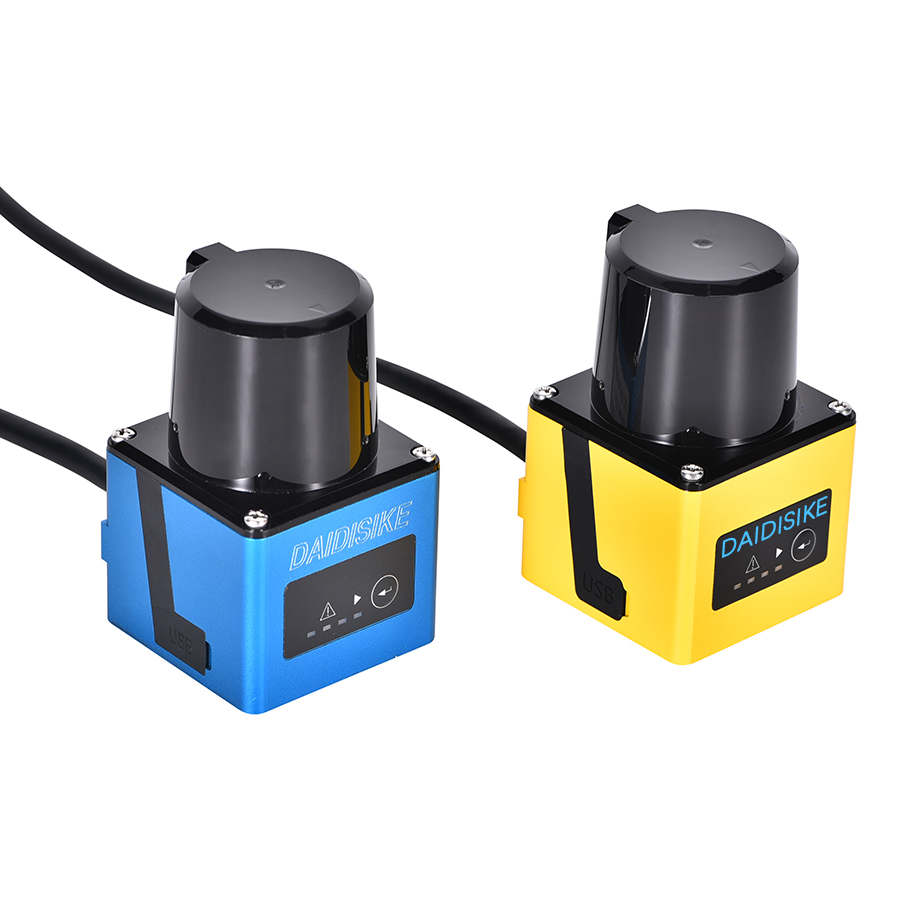
The right device on large formation handling envelopes is usually a safety laser scanner rather than a flat light curtain. A scanner can cover an irregular footprint around a moving gantry, with a defined protective field and a warning field for slow-down behaviour. Our SDLD-05A area scanner gets specified here regularly. For longer-range perimeter coverage around a whole formation hall section, the DLD20A5 or DLD30T-5N families extend the answer.
6. Aging, grading and capacity sort
Cells sit on aging shelves for days, then run through a capacity grading station that cycles them and bins them by performance. Mechanically this is a quiet area — the handling automation is similar to the formation racks, slower, with the same scope split between machine safety (handling) and process safety (any cell venting late in life). The guarding answer is the same as formation: scanners or curtains at the human-facing load/unload faces of the handling gear, and a process-safety system independently watching for vent events.
7. Module assembly — cell stacking, busbar welding, BMS install
Graded cells are stacked into modules, compressed in a fixture, and the cell tabs are joined to module busbars by laser welding. A typical module cell contains a robot for cell placement, a press for compression, a laser welder, and a BMS install station. This is the most visually obvious guarding job on the line and also the one with the worst nuisance-trip risk.
The standard answer is a hard-walled robot cell with a single controlled access point on the operator face and a conveyor pass-through for modules. The access point gets a 30–40 mm access-detection light curtain. The conveyor pass-through gets a muted section — usually four-sensor cross muting — so the module passes without tripping but a person walking alongside still triggers a stop. Muting is the single most common audit failure on these lines, because over-permissive muting becomes a hole an operator can step through. Get the muting design right; it is worth the engineering time.
The laser welder inside the cell creates a second concern: optical and EMC interference. Plume from the weld and stray reflections can interact with a poorly-immunised curtain, and the laser power supply throws fast switching noise that couples onto the safety I/O. Specify a curtain with strong interference rejection, keep the safety cabling shielded and physically routed away from the laser power leads, and position the curtain so its receivers do not face the welding flash. We have a deeper discussion of optical interference on our light curtain vs scanner page, which is the right next read if you are scoping the perimeter of a multi-robot module cell.
8. Pack assembly and end-of-line testing
Modules are joined into a pack frame, the cooling plate and BMS are installed, the pack is sealed, and it goes to end-of-line test. EOL includes hi-pot insulation resistance, sometimes a functional charge/discharge, and final marking.
Pack assembly stations have the same robot-cell pattern as module assembly, often larger because a pack is a heavy object. The palletiser at the very end of the line has its own response-time question because the robot is slow and the loads are large; the safety distance to a curtain has to reflect both. The hi-pot test station is the mixed-scope station we discuss in the FAQ — treat the electrical safety (test voltage) and the mechanical safety (door, probe-down axis, conveyor) as separate functions sharing an enable signal, not as a single merged function. A safety light curtain at the operator-facing opening of the test enclosure protects against access during the test cycle; the test-voltage isolation is a different safety function entirely.
Station-by-station guarding summary
| Station | Primary mechanical hazard | Recommended safeguard |
|---|---|---|
| Notching / die-cutting | Press stroke, web nip, (laser source if laser-notch) | Fixed enclosure + interlocked doors; 14–20 mm curtain at coil load and scrap-out; laser interlock on shutter |
| Z-fold stacking | Pick-and-place gripper axes, separator tensioner, magazine reload | 30 mm access curtain at gripper envelope; 14–20 mm point-of-operation curtain at manual reload |
| Ultrasonic tab welding | Welding horn crush, trim knife | Hard enclosure + interlocked door; point-of-operation curtain on operator face if manual load |
| Pouch forming + vacuum electrolyte fill | Pressure-cycled chamber, heat-seal jaws, electrolyte | Guard-locking interlock on chamber door (primary); curtain only on adjacent loaders |
| Formation & aging racks | Handling automation (stacker / shuttle / gantry). Fire risk is process-safety scope. | Safety laser scanner around handling envelope; curtain at human-facing load/unload faces; fire system entirely separate |
| Degassing & final seal | Second vacuum chamber, heat-seal jaws | Guard-locking interlock on chamber door; curtain on upstream/downstream conveyors |
| Capacity grading / sort | Tester handling gantry | Curtain or scanner at handling load face; process-safety system independently |
| Module assembly (laser busbar weld) | Robot envelope, compression press, laser welder | 30–40 mm access curtain + cross-muted conveyor pass-through; high-immunity device near laser; area scanner for irregular cells |
| Pack assembly | Robot envelope, fastening tools, lifting | Access curtain + muting; scanner for large irregular cells; consider response time on slow heavy axes |
| EOL test (hi-pot + functional) | Test enclosure door, probe-down axis, conveyor (plus electrical scope) | Access curtain at operator face tied to enable; electrical safety treated as separate function |
| Palletising | Palletising robot, heavy load placement | Access-detection curtain with verified response time and stopping distance |
This is a starting point for the conversation, not a specification. Every station still needs its own risk assessment, its own ISO 13855 safety-distance calculation and its own verification of the achieved Performance Level across the full safety function. The table tells you which family of device to reach for. It cannot tell you exactly where to mount it on your machine.
The recurring mistakes — pouch-specific edition
Treating the curtain at the formation rack as fire protection. We open with this because it is the most damaging misunderstanding on a pouch line. A safety light curtain stops a moving axis. It does nothing about a cell going into thermal runaway. Fire and gas detection belong to a separate system designed to a separate standard, and the two systems must not be conflated in the safety case.
Muting that lets an operator shadow a module. The conveyor pass-through into a module-assembly robot cell is where most muting failures happen. Two-sensor muting is rarely enough on a battery line; cross-muting with four sensors arranged so a person cannot replicate the muting pattern by walking alongside the module is the defensible answer. Time out the muting window. Audit the design with a small wooden tester before you trust it.
Underestimating laser-welder optical interference. A curtain that worked perfectly in a pre-shipment test will nuisance-trip three times a shift next to an active laser busbar welder if its immunity is weak. The fix has to be designed in — cable shielding, ferrites, physical separation, immunity spec on the curtain — not bolted on after first complaints. A bypassed safety curtain is the worst possible outcome, and that is what frustrated operators do when a line nuisance-trips.
Confusing device rating with function rating. A Type 4 light curtain is capable of supporting a PL e function. It does not, by itself, make the function PL e. The achieved Performance Level is dictated by the weakest link in the chain — curtain, safety logic, contactor. A common pattern on retrofit lines: a Type 4 curtain wired to a single non-monitored contactor that drags the whole function down to PL c. We unpack this in the EV battery overview piece linked below.
Speed-ups that quietly invalidate the safety distance. A pouch line commissioned at, say, eighteen cells per minute gets cranked to twenty-eight a year later because a customer wants more volume. Stopping time goes up. The safety distance calculated under ISO 13855 is now wrong, and nobody recalculates it. Any throughput change should trigger a re-validation, full stop.
Where DAIDISIKE fits, honestly
A straight answer, since you are reading this on our site. DAIDISIKE has shipped safety light curtains and laser scanners into electronics, automotive and battery lines over many years from our Foshan base. On pouch cell lines specifically, the DQC series covers point-of-operation guarding at stackers and tab welders, the DQSA area protection family covers larger module-assembly access points, and the DLD-series and SDLD safety scanners cover formation handling and irregular pack-cell footprints. For door interlocks on vacuum filling and degassing chambers, our DX-series guard locks are the right primary device, not a light curtain.
What we will not do is tell you that one part number covers a whole pouch line. It does not, and the auditors know it does not. If you are scoping a new line, our engineering team would rather walk the layout with you station by station than ship you a tidy bill of materials that comes back later as a punch list. Talk to us via the contact page.
The bottom line
Pouch cell lines reward engineers who keep the scope boundaries sharp. Machine safety stops moving things. Process safety handles thermal runaway and chemicals. Electrical safety handles test voltages. These are three different disciplines with three different standards, and they all live within a few metres of each other in a gigafactory aisle. Pick the right device for the actual hazard at the actual station, validate the safety distance after every line speed change, and treat the muting design at every conveyor pass-through as if an auditor will be looking at it — because eventually one will.