
IP68 Waterproof Safety Light Curtain DQR vs. IP65 Standard Protection MK
A practical selection & installation guide using two representative DAIDISIKE families.
DQR (IP68 waterproof) is built for harsh environments—it keeps working even when submerged or pressure-washed. With a smart anti-nuisance option—“dual-beam validate, single-beam ignore”—it dramatically cuts false trips in rain, spray, condensation, or oil mist.
MK (IP65 standard protection) is the compact, cost-effective choice for clean indoor machinery. Small footprint, straightforward wiring, reliable personnel protection.
Both families offer multiple beam pitches and heights, a typical ≤15 ms response, NPN/PNP outputs, and pairing with DQCA / DQCA2 controllers.
Rule of thumb: tough outdoors → DQR; regular indoors → MK. If droplets and splashes cause spurious stops, enable dual-beam validate.
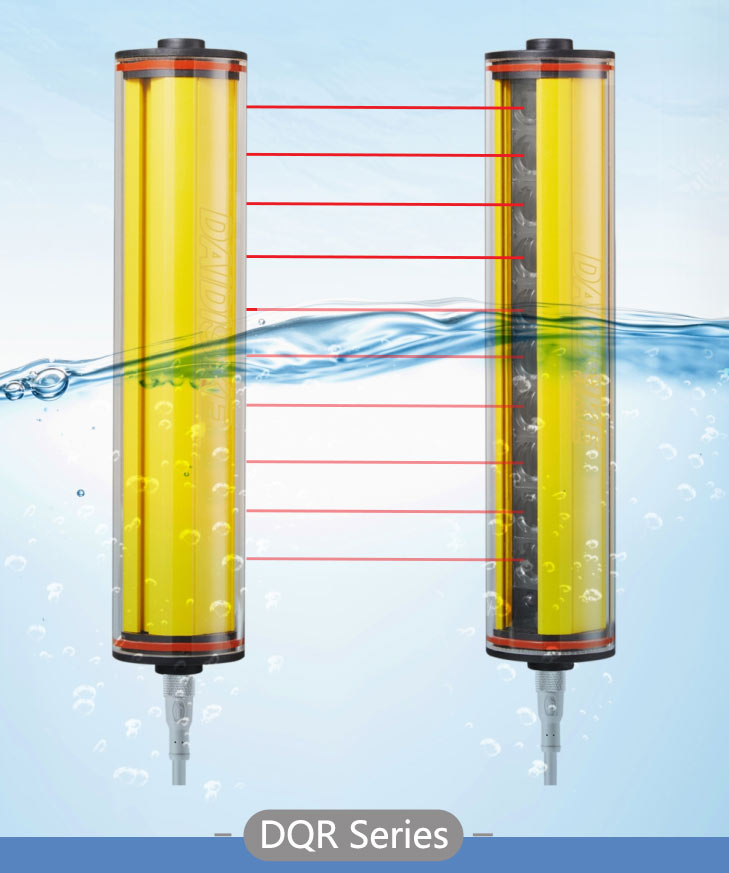
1) Why IP ratings and environment fit matter
- IP68: dust-tight and suitable for long-term immersion under specified conditions. Ideal for outdoor installs, pressure washing, splashing/standing water, condensation, and sun exposure.
- IP65: dust-protected and water-jet resistant. Suited to indoor lines without continuous immersion or heavy washdown.
- Takeaway: if your world involves water, mist, oil, outdoor sun, or strong reflections, choose DQR. For dry, ordinary indoor machines, MK is the economical pick.
2) DQR (IP68): a curtain that keeps working underwater
2.1 Construction & waterproofing highlights
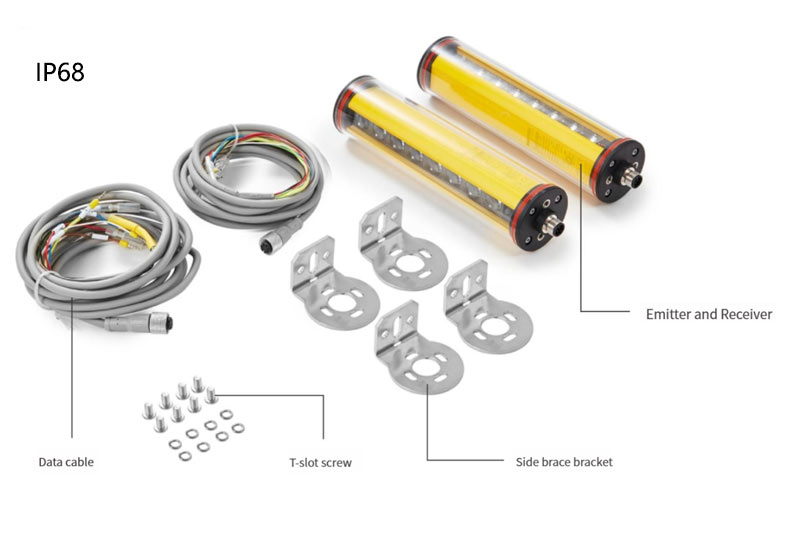
- Sealed and ruggedized: deep sealing around core electronics to block ingress and resist corrosion.
- Weather-resistant housing: aluminum body with reinforced end-caps; impact- and vibration-tolerant, built for sun and temperature swings.
- 304 stainless M12 waterproof connector: marine-grade threads for reliable plugging, fast field swaps.
- EMC & optical immunity: strong suppression against EMI, welding arcs, strobe lights, and bright backgrounds—stable even in direct outdoor light.
2.2 Core performance (typical)
Note: IP68 reflects the waterproof customization and positioning of the DQR family. Final shipped parameters follow the nameplate and order.
2.3 Outdoor / wet-area installation checklist
- Drip loop on cables: stop rainwater from tracking into the connector.
- Seal & torque: tighten M12 to the recommended torque; use gaskets where needed to avoid secondary ingress.
- Avoid mirror reflections: use light shields or tweak the angle to reduce retro-reflections from shiny surfaces.
- Mount & de-vibe: spring washers on brackets help avoid long-term wind-induced beam jitter.
- Drainage & waterline: if not intended for immersion, mount above pooling level; for immersion, ensure cables/connectors also meet immersion grade.
- Power & grounding: follow plant standards for PE/0V bonding to improve surge/Lightning immunity.
- Routine checks: in salt-spray/chemical atmospheres, inspect terminals and seals and replace wear parts on schedule.
- Mode choice: in rain/fog/spray conditions, enable dual-beam validate to reject droplet-induced single-beam breaks.
3) MK (IP65): the compact, value-driven indoor choice
3.1 Design notes
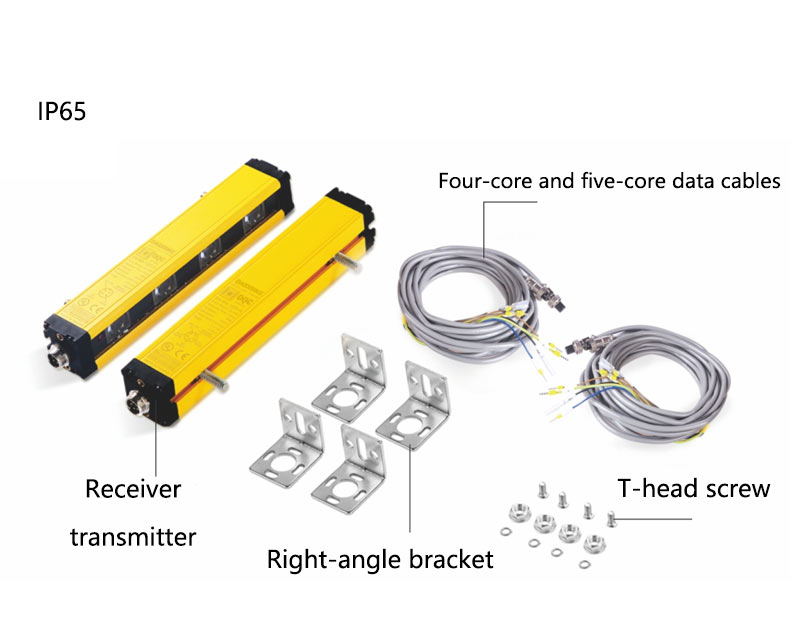
- Optical sync: no extra sync wire between transmitter/receiver—simpler wiring.
- Small cross-section: about 25 × 23 mm, easy to fit in tight enclosures.
- Easy to install & service: quick testing, tidy cabling, clean look, low upkeep.
3.2 Typical performance & where it fits
- IP65: dust-protected and water-jet resistant for most indoor lines without standing water.
- Response: ≤ 15 ms; wide coverage of beam pitches/heights similar to DQR.
- Outputs/indicators: NPN/PNP; multicolor LEDs for power/tx/rx/occlusion—very technician-friendly.
- Assembly and packaging cells, electronics, dispensing/labeling/sorting/testing—dry indoor duty.
- Cost-sensitive machines that don’t require heavy washdown but need reliable interlocking.
4) “Dual-beam validate, single-beam ignore”
4.1 What it does
Neighboring beams are grouped as one decision unit: the stop signal is issued only when both beams are broken; a single beam broken by droplets, small splashes, insects, or bubbles is ignored. Configure thresholds and delays in DAIDISIKE controllers (e.g., DQCA/DQCA2) or a safety PLC.
4.2 Why it helps
- Slashes nuisance trips in rain, fog, washdown, condensation, and oil-mist environments.
- Fewer unnecessary stops → better availability and OEE.
4.3 Boundaries
- Minimum detectable size increases: not suitable for “finger-protection” applications. If finger/hand protection is required, choose the appropriate resolution and validate per standards.
- Any logic change must be risk-assessed and verified before use.
5) Side-by-side specs & quick selection
| Aspect | DQR (IP68) | MK (IP65) |
|---|---|---|
| Protection | IP68 — immersion / heavy washdown / outdoor | IP65 — indoor dust + water jets |
| Environment & I/O | Weather-ready housing + stainless M12 connector | Standard connectors; indoor-first |
| Nuisance control | Dual-beam validate option for droplets/splashes | General-purpose; can emulate in controller |
| Form factor | More robust build, shock-tolerant | Smaller, easier placement |
| Common ground | ≤15 ms typical response; multiple beam pitches/heights; NPN/PNP; pairs with DQCA/DQCA2; diagnostic LEDs | |
Quick picks: rain/washdown/immersion/fog/outdoor → DQR; dry indoor → MK; plagued by false trips → DQR + dual-beam; very tight space → MK.
6) Safety distance & compliance essentials
- ISO 13855: compute S with S = K × T + C. Here T includes light curtain response (e.g., ≤ 15 ms) + controller/relay + machine stopping time; C depends on resolution.
- Control system: pair with a safety relay/PLC (or DQCA/DQCA2) aiming for PL d/e architectures.
- Validation & inspection: perform test-rod/plate checks, E-stop/interlock tests, and record stop time to verify S. Maintain routinely.
- EMC & grounding: follow plant grounding/shielding rules to improve surge immunity and stability.
7) Typical applications
Where DQR shines (IP68)
- Outdoor wash systems, car-wash bays, gates/barriers, fenced entry monitoring
- Food & beverage cleaning/filling, seafood, steam/condensation/heavy spray
- Machining/saw stations with coolant splash; mining/building-materials outdoors
Where MK is at home (IP65)
- Assembly/packaging cells, electronics, dispensing/labeling/sorting/testing
- Cost-sensitive indoor equipment requiring dependable interlocking
8) FAQ
Can it really run while submerged?
DQR is engineered for IP68 waterproofing with deep sealing and corrosion resistance, suitable for immersion, heavy washdown, and downpours. Ensure that selected cables/connectors also meet immersion grade; final capability follows the order/nameplate.
Does dual-beam validate affect safety level?
It reduces environmental false trips, but increases the minimum detectable object size—so it’s not for finger protection. For finger/hand protection, select the right resolution and validate per standards (or disable the feature).
What about bright sunlight outdoors?
DQR features strong immunity to bright backgrounds, strobes, and welding arcs. Angle the array, add shields, and follow proper grounding to minimize retro-reflections.
How can I shorten the safety distance?
Within regulatory bounds, reduce total system stop time T (including machine stopping time) and use a finer resolution. Decide based on braking capability and a documented risk assessment.
Will both families talk to my controller/PLC?
Yes. Both support NPN/PNP and work with common safety relays/PLCs. For the easiest wiring and mode setup, pair with DQCA/DQCA2.