
Cold-chain automation is having its moment. The market for AMRs in cold-chain warehousing reached USD 512.4 million in 2025 and is forecast at USD 585.7 million in 2026, on its way to USD 2,018.6 million by 2036 at a 13.2% CAGR (Fact.MR). The wider cold-storage market is projected to hit roughly USD 198 billion by 2030, led by Asia-Pacific and automation (Mordor Intelligence). When a robot vendor demos a smooth pick run in a comfortable showroom, that is the easy half. The freezer is the half that bites.
I have watched a perfectly compliant scanner — correct protective field, correct stopping-distance budget, certified device — throw nuisance stops every few minutes in a frozen-food aisle, and the integrator blamed the firmware. It was not the firmware. It was a film of frost on the emission window that nobody looked at because the device “was indoors.” A freezer is indoors. It is also a place the datasheet never promised to work.
How cold is a cold-storage warehouse, really?
Cold storage is not one temperature; it is a stack of them, and the coldest room sets your spec. Chilled rooms sit a few degrees above freezing. Frozen-storage rooms commonly run at or below 0 °F (−18 °C). Deep-freeze applications — ice cream, some seafood, certain pharmaceuticals — go down to about −30 °C; US tiers are often cited as freezer −10 to 14 °F and deep-freeze near −30 °C (MFWC, MIDCOM). The point for a scanner engineer is blunt: design to the coldest room the AMR enters, and to the temperature swing it sees crossing into ambient, never to an average. A device that is fine on a chilled dock can be a paperweight in the deep-freeze pick face two doors away.
Why does an ordinary indoor safety scanner fail below zero?
Two ways, and they compound. The first is the rating. Mainstream indoor safety laser scanners are specified for an ambient operating range of roughly −10 °C to +50 °C. SICK's microScan3 and nanoScan3 datasheets give exactly that — −10 °C to +50 °C, with an IP65 enclosure per IEC 60529. Drive an AMR carrying one of those into a −25 °C aisle and you are below the validated minimum. The safety function is no longer guaranteed by the manufacturer, response time can drift, and at some point the electronics or the motor simply stop behaving as tested.
The second way is water, and it is the one people underestimate. A safety laser scanner is, in standards terms, a Type 3 AOPDDR — an active opto-electronic protective device responsive to diffuse reflection — under IEC 61496, and it works by reading faint diffuse reflections of its own laser. Put frost or a condensation film on the emission window and those reflections are scattered or blocked. The device can no longer see targets, which means it can no longer reliably detect a person. Manufacturer guidance is explicit here: the optics window must be kept free of condensation, and the monitored area free of fog and vapour, or function may be impaired (SICK S300 instructions, ReeR). Operating humidity is typically specified up to about 95% RH — with no condensation permitted. That last clause is the whole problem in a freezer.
Where does the condensation actually come from?
From the robot doing its job. An AMR in a cold-chain building does not stay in one climate; it shuttles between a −25 °C freezer, a chilled staging area and a warm, humid dock. Every time it leaves the cold and enters warm moist air, the cold scan window is below the dew point of that air, and water condenses on it — the cold-drink-sweating-in-summer effect, on the one surface the scanner cannot afford to have wet. Back in the cold, that film freezes to frost.
This is not a fringe complaint. The buildup of condensation on sensor optics when robots move between cold and warm climates has been called a core unsolved challenge of cold-chain automation — enough that purpose-built multi-climate AMRs, designed specifically to handle freezer, chilled and ambient zones, have been recognised at industry innovation awards (ProMat). And the damage is not only optical: moisture that works its way inside a housing can corrode and short-circuit components over time, even on a sealed, IP-rated device (Barcoding, RMS Omega). A scanner that survives the cold can still die slowly of the water the cold creates.
Can a scanner see through freezer fog?
Not a standard indoor one — and the documentation says so plainly. Indoor safety scanners require the monitored area to be free of smoke, fog, vapour and air impurities. Fog is suspended water droplets that scatter the laser, and an ordinary scanner reads that scatter as either nothing or as phantom objects, giving you missed detections or a storm of nuisance trips. Freezer aisles fog readily wherever cold air meets warmer infiltration around doors and dock seals.
The outdoor-rated class is the existing answer to fog. SICK's outdoorScan3 — the first safety laser scanner certified to IEC/TS 62998 (and ISO 13849) for harsh conditions — uses HDDM measurement to detect and filter rain and snow and to keep detecting obstacles in fog down to roughly 50 m meteorological visibility, and it is rated −25 °C to +50 °C. It is not a freezer product per se, but it shows the principle: filtering airborne water needs measurement technology built for it, plus a temperature rating that does not quit at −10 °C. If your aisle genuinely fogs, that is the class of capability to look for, not an indoor unit pushed past its envelope.
What actually keeps the optics clear — heated windows
The front-line defence is heat on the glass. A heated scan window, or a heated holder surrounding the device, keeps the optical surface above the local dew point and above the frost point, so vapour never finds a cold surface to condense or freeze on. This is the established cold-storage approach, proven first in barcode hardware: cold-rated handheld and wearable scanners purpose-built for about −30 °C use heated windows and heated holders for exactly this reason — Zebra's RS6100 operates to −30 °C (−22 °F) with the extended battery, and Honeywell's cold-storage devices are built to around −30 °C using heated windows and holders to stop condensation and frost (Zebra, Honeywell/Renovotec). The same physics governs a safety laser scanner's emission window.
The engineering catch is the duty cycle. A heater that holds the glass clear while the robot sits in steady −25 °C can still lose the race in the few seconds after it bursts into warm, humid dock air — the condition where the most vapour hits the coldest glass. Heated optics have to be sized for that worst moment, not the average. Heating is the primary control; enclosure design and acclimatisation are the backups that make it reliable.
What else mitigates it — acclimatisation and zone discipline
For equipment that moves between climates only occasionally, the industry-standard trick is acclimatisation: let the device equalise to the new temperature gradually rather than slamming it across the gradient — for handheld kit, the cold-storage buyer's guides suggest sealing it in a bag and letting it acclimate for around 30 minutes to avoid condensation from a rapid swing (Netum 2026, MIDCOM). An AMR cannot pause 30 minutes at every door, so the same idea is engineered into the route and the building: transition airlocks or vestibules between climate zones, dwell logic that lets the heated window stabilise before the scanner is trusted again, and route planning that minimises needless cold-to-warm crossings. None of this replaces heated optics; it reduces how hard they have to work.
How do I read a scanner spec for a freezer job?
Read three things, in order, and do not let a glossy slide substitute for any of them.
- Operating temperature range. The minimum has to be at or below the coldest room the robot enters. An indoor −10 °C device does not cover a −25 °C aisle, full stop. Storage temperature is not the same as operating temperature — check the operating figure.
- Condensation and humidity clause. Almost every indoor scanner specifies up to ~95% RH with no condensation. In a freezer crossing climates, condensation is the default condition, so you must engineer it away with heated optics rather than assume it away.
- Fog and airborne-water behaviour. If the aisle fogs, you need a device whose measurement filters fog, not one whose manual forbids it.
The honest version of this advice cuts against easy selling, so I will say it directly: if a supplier quotes you a −30 °C number without a datasheet line and a stated test condition behind it, treat the number as marketing until proven otherwise. Cold ratings are validated, not asserted.
Where DAIDISIKE scanners fit — and where they need checking
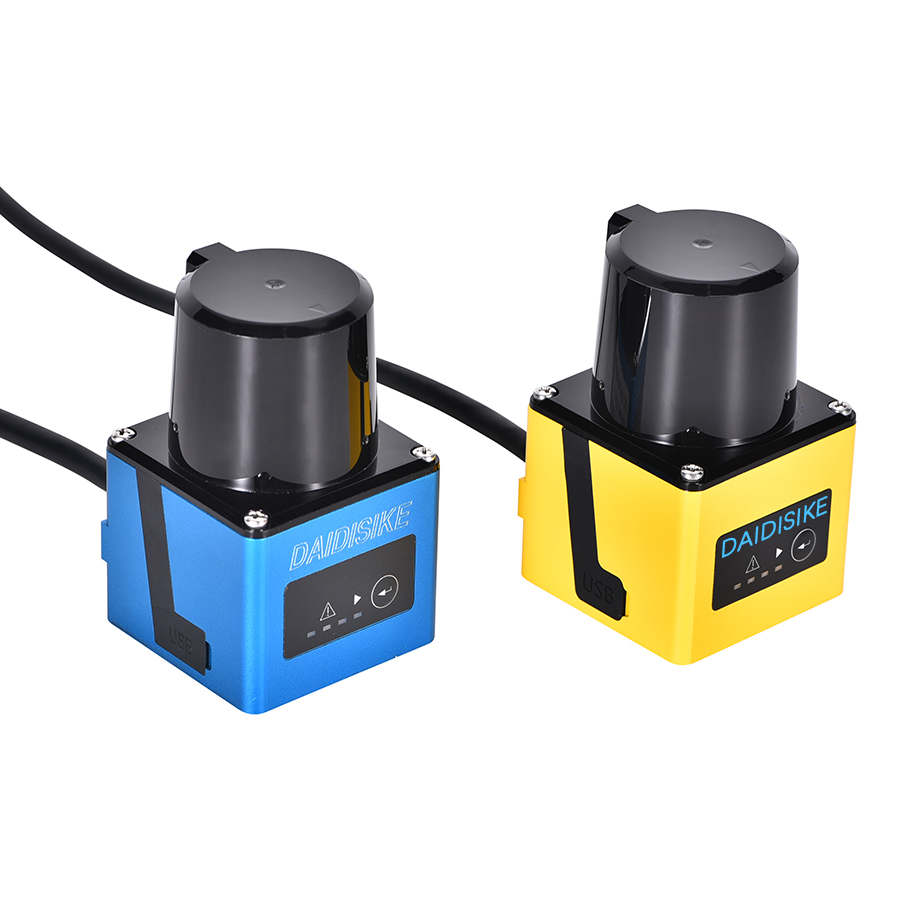
A straight answer, since you are on our site. DAIDISIKE builds the DLD-series scanning LiDAR — including the DLD30T-5N 40 m perimeter and obstacle-avoidance LiDAR and the SDLD-05A 14 m time-of-flight scanner — for obstacle avoidance and perimeter detection on AGVs and AMRs. For a freezer or cold-storage deployment, the operating temperature, IP rating and any heated-optics arrangement have to be confirmed against your actual coldest zone and the climate transitions the robot makes. I am not going to print a deep-freeze rating here that we have not validated for your duty cycle. Tell us the coldest room, the zone crossings and the cycle time, and we will tell you what is in spec and what would need a heated enclosure or a different device. That is the responsible way to specify cold-chain safety hardware, and it is how we would want our own line treated.
References & sources cited
- Fact.MR — AMRs for Cold Chain Warehousing Market 2026–2036 — USD 512.4 M (2025) to USD 2,018.6 M (2036), 13.2% CAGR.
- Mordor Intelligence (PR Newswire) — Cold storage market ~USD 198 B by 2030 — APAC- and automation-led, ~12.5% CAGR.
- ProMat Innovation Award — Multi-Climate Autonomous Mobile Robot — condensation on optics across climate zones as a core challenge.
- SICK microScan3 / nanoScan3 datasheet — indoor safety scanner −10 °C to +50 °C, IP65 per IEC 60529.
- SICK outdoorScan3 product information — IEC/TS 62998-certified, −25 °C to +50 °C, fog filtering via HDDM.
- ReeR safety guide — safety laser scanners (Type 3 AOPDDR, IEC 61496) — optics-window and air-clarity requirements.
- Zebra — freezer-rated scanner to −30 °C (heated-window approach) — heated optics in cold-storage scanning hardware.
- MIDCOM — cold-storage scanner guidance — cold-storage tiers, acclimatisation, heated holders.