
中文官网1688 店铺
GUIDE · 2026-05-22 · ~9-min read

Punch Press Feeding Systems — Air Feeder, NC Servo Feeder and 3-in-1 Coil Lines Compared

The feeder decides how fast, how accurately and how cheaply a stamping job runs. Pick the wrong type and you either throttle the press or pay for capability you never use. Here is how to choose between the three real options.

Automatic feeder mounted on a punch press for strip-material stamping
The feeder is the part of a stamping line that most directly sets throughput and part accuracy.
In short: There are three feeding systems for a punch press. A pneumatic air feeder grips and pulls the strip — simple, fast for short pitches, low cost, set by a mechanical stop. An NC servo roller feeder drives the strip between servo rollers with a digitally programmed pitch — precise, flexible, higher throughput. A 3-in-1 coil line integrates decoiler, straightener and servo feeder for volume coil-fed work. Choose by material size, feed pitch and accuracy, press speed, and budget.

Ask two stamping shops what feeder to put on a press and you will often get two confident, opposite answers. That is because the right answer genuinely depends on the job — and the cost of getting it wrong is real. An undersized or imprecise feeder caps the press speed and scraps parts; an oversized one ties up capital that the work never repays. This guide walks the three real options and the parameters that decide between them.

Option 1 — The pneumatic air feeder

The air feeder is the workhorse of simple stamping. It advances the strip with a pair of pneumatically actuated clamps: a gripper clamps the strip and pulls it forward by a set distance, a second clamp holds while the gripper returns, and an adjustable mechanical stop fixes the feed length. There is no servo, no controller — just air, valves and a stop.

What it is good at: low purchase cost, mechanical simplicity, easy maintenance, and genuinely fast cycling for short, fixed feed lengths. For a press running a single job with a modest, unchanging progression, an air feeder is often the correct and economical answer. Its limits are the flip side of that simplicity: the feed length is set by a physical stop, so every pitch change is a manual re-set; accuracy and repeatability are good but not servo-grade; and feed pitch, material width and thickness are all bounded.
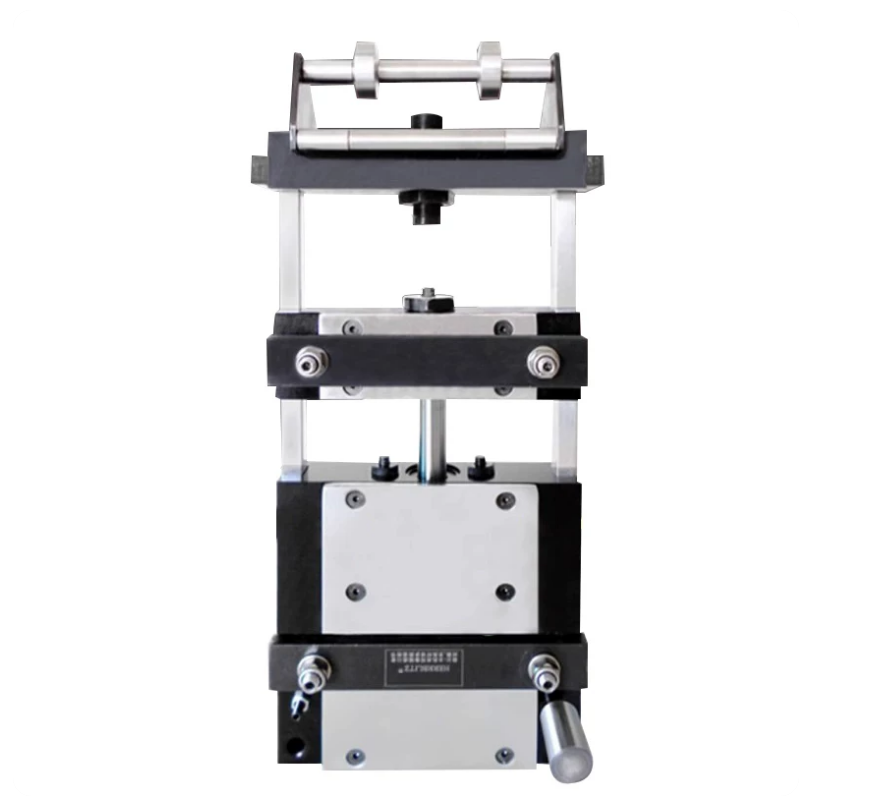
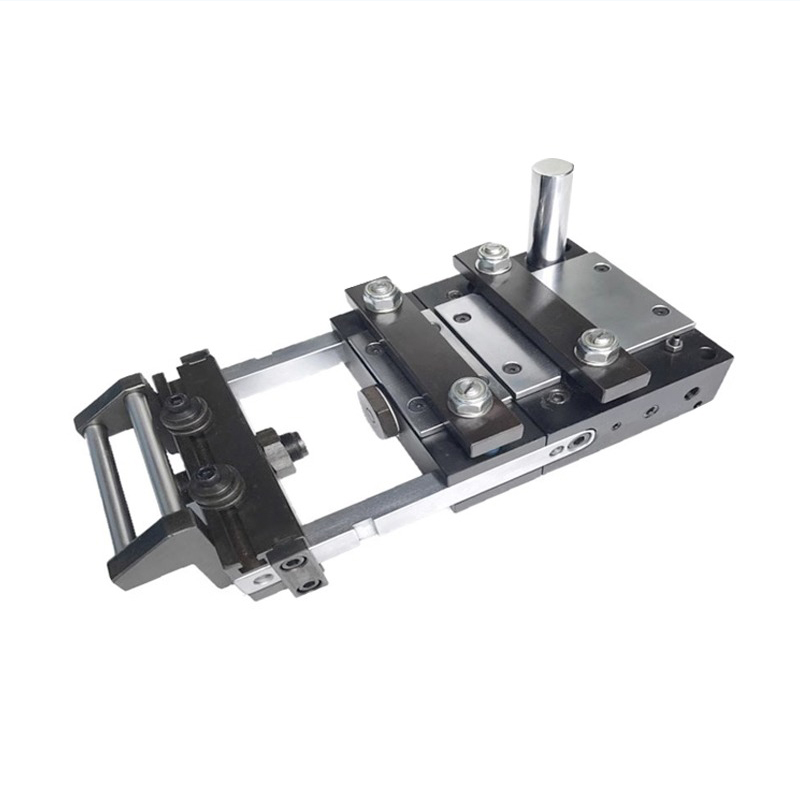
DAIDISIKE A50 / A100 / BX150 pneumatic automatic feeder for pressing machines
DAIDISIKE A50 / A100 / BX150 pneumatic feeders — the economical choice for short-progression stamping.

Option 2 — The NC servo roller feeder

The NC servo roller feeder advances the strip between a pair of servo-driven rollers. The feed pitch is entered digitally on a controller, the servo turns the rollers exactly that far, and the feeder takes a cam or encoder signal from the press so it feeds in the right window of the stroke. There is no mechanical stop to re-set — a job change is a number on a screen, or a stored recipe.

That is the whole case for it. Precision and repeatability are servo-grade, which matters for pilot-hole alignment on progressive dies. The feed pitch can be long and can vary part to part. Wider and thicker material is within reach. Job changeover is fast, which is decisive in a shop that runs many short jobs. The NC servo feeder is the right choice whenever accuracy, flexibility or throughput matter — which, for most modern stamping, is most of the time. The cost is real but it is repaid in scrap reduction, faster changeovers and higher sustainable press speed.
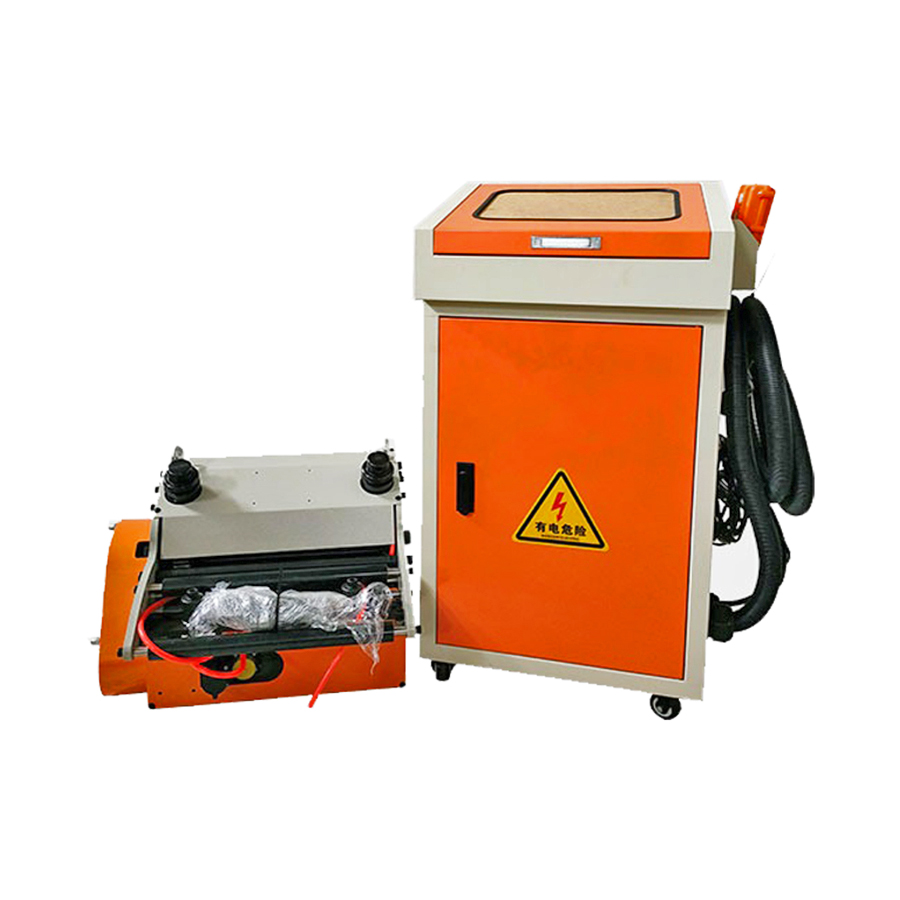
DAIDISIKE NCF servo roller feeder for precision punch press feeding
The DAIDISIKE NCF servo roller feeder — programmable pitch, servo-grade repeatability, fast job changeover.

Option 3 — The 3-in-1 coil line

When the press runs from coil rather than pre-cut blanks, the feeder is only one third of the problem. The coil also has to be unwound and it has to be flattened — coil stock carries a curve (coil set) that must be levelled out before the strip enters the die. The 3-in-1 coil line integrates all three functions: decoiler, straightener and NC servo feeder, built and controlled as one matched machine.

The reason to buy it as a unit rather than three separate machines is integration: one control system, guaranteed speed synchronisation between the decoiler, straightener and feeder, less floor space, and simpler wiring. For medium-to-high-volume coil-fed stamping it is the standard, and trying to assemble an equivalent from mismatched parts usually costs more in commissioning headaches than it saves.

The comparison at a glance

FactorAir feederNC servo feeder3-in-1 coil line
Feed pitch settingMechanical stop, manualDigital, programmableDigital, programmable
Pitch accuracyGood (fixed jobs)Servo-grade, highServo-grade, high
Job changeoverSlow (manual re-set)Fast (recipe)Fast (recipe)
Material rangeNarrow / thin, short pitchWide rangeWide range, coil-fed
Handles coil + straighteningNoFeeder onlyYes — integrated
Relative costLowestMediumHighest
Best fitSimple, fixed, short-run workPrecision, mixed jobs, blanks or coilVolume coil-fed production

How to actually choose — four parameters

Strip away the marketing and the decision comes down to four numbers, measured against the feeder’s rated capacity:

Our own rule of thumb: if the job is genuinely simple, fixed and short-pitch, an air feeder such as the DAIDISIKE A50 / A100 / BX150 is the honest, economical choice and we will say so. The moment accuracy, flexibility or throughput enter the picture, the NC servo feeder pays for itself — and for coil-fed volume production, the integrated 3-in-1 line is the right tool. Match the feeder to the job, not to the brochure.

Related reading

NCF Servo Feeder: Electric or Pneumatic Clamp

Choosing the clamp type on an NC servo roller feeder.

How a Pneumatic Air Feeder Works

The working principle of the gripper-style air feeder.

DAIDISIKE NCF Servo Roller Feeder

Programmable NC servo feeder for precision press feeding.

Frequently asked questions

What is the difference between an air feeder and an NC servo feeder?

An air (pneumatic) feeder advances strip material by gripping and pulling it with pneumatically actuated clamps; the feed length is set mechanically by an adjustable stop. It is simple, fast for short feed lengths and low cost. An NC servo roller feeder advances material between servo-driven rollers, with the feed pitch programmed digitally on a controller. The servo feeder is far more precise and repeatable, handles longer and more variable feed pitches, copes with wider and thicker material, and integrates cleanly with the press through an encoder or cam signal. The trade-off is cost and complexity: an air feeder is the economical choice for simple short-progression work, a servo feeder for precision, flexibility and higher throughput.

What is a 3-in-1 coil line?

A 3-in-1 coil line combines the three coil-handling functions into one integrated machine: a decoiler that holds and unwinds the coil, a straightener (leveller) that removes the coil set so the strip enters the die flat, and an NC servo feeder that advances the strip into the press by a programmed pitch. Buying the three as one matched unit saves floor space, simplifies wiring and control, and guarantees the decoiler, straightener and feeder are speed-synchronised. It is the standard answer for medium-to-high-volume stamping that runs from coil rather than from pre-cut blanks.

How do I size a feeder for my punch press?

Four parameters drive the choice. Material width and thickness set the mechanical capacity of the rolls or grippers. Feed pitch — the length advanced per stroke — and the required pitch accuracy decide whether a mechanical stop (air feeder) is good enough or you need programmable servo control. Press speed in strokes per minute (SPM) sets how fast the feeder must complete each advance and settle. And the feed window — the angular slice of the press cycle available for feeding — must be long enough for the feeder to move and stop the material before the tooling descends. Get those four right against the feeder's rated capacity and the selection is straightforward; guess at them and you will either stall the line or buy far more feeder than the job needs.

Is a pneumatic feeder accurate enough for progressive dies?

For short, fixed feed lengths and looser tolerances, yes — a well-set air feeder with a solid mechanical stop is repeatable and has run progressive work for decades. But as the feed pitch gets longer, the tolerance gets tighter, or the job changes often, the mechanical stop becomes the limit: every pitch change is a manual re-set, and accumulated play shows up as pilot-hole misalignment. Precision progressive dies, multi-pitch parts and frequent job changes are where the NC servo feeder earns its cost — digital pitch entry, tight repeatability, and a stored recipe per job.

Do feeders need their own safety guarding?

Yes. A feeder is a powered machine with its own hazards — pinch points at the rollers or grippers and a moving strip — and it does not remove the need to guard the press itself. The press point of operation still needs its safety light curtain sized to ISO 13855, and the feeder's own nip points should be guarded or placed out of reach. On an integrated coil line the safety design should treat the decoiler, straightener, feeder and press as one system with a coordinated stop, not four machines each guarded in isolation.

Can an existing punch press be retrofitted with a modern feeder?

In most cases yes, and it is one of the most cost-effective upgrades for an older press. A mechanical or hydraulic press in good structural condition can be fitted with a servo roller feeder and, if it runs from coil, a matched decoiler and straightener — turning a manually fed press into an automatic line. The feeder takes a cam or encoder signal from the press to know when to feed. The retrofit is also the right moment to bring the press guarding up to current standards, since adding automation changes the risk picture and can count as a substantial modification.

About DAIDISIKE: Foshan-based industrial safety and automation manufacturer since 2006. DAIDISIKE builds press peripherals — the A50 / A100 / BX150 pneumatic feeders, the NCF servo roller feeder, levellers and 3-in-1 coil lines — alongside its safety light curtain and sensor range. Planning a press line or a feeder retrofit? Talk to our engineering team or browse the punch press peripheral equipment range.

inXfrWA✉︎PTG

Leave your message