A safety engineer asked us last month whether the team should replace a perimeter light curtain on a pack-assembly cell with a vision-AI system that “detects a person better.” The answer was no — not because vision AI is useless on that line, but because nothing in the current regulatory and standards framework lets a learned model be the only thing standing between an operator and a robot. Two years from now the picture will be a little different. Five years from now, probably more different again. But 2026 is a specific moment, and the question is best answered in 2026 terms.
This article walks through the four pieces of the framework — Regulation (EU) 2023/1230, ISO/IEC TR 5469:2024, the EU AI Act, and the existing ISO 13849-1 / IEC 62061 functional-safety stack — and explains what each one actually permits. It is not a hype piece, and it is not a debunking piece. It is the conversation we have when an engineer asks us to scope an AI safety function for a machine that has to be CE-marked in 2027.
The four pieces of the framework
A surprising number of conversations about AI in machine safety conflate things that are different documents with different legal force. So before anything else, the map.
- Regulation (EU) 2023/1230 — the new Machinery Regulation. Replaces Machinery Directive 2006/42/EC. Becomes applicable on 20 January 2027. Sets the essential health and safety requirements (Annex III) and the conformity routes (Annex I categorises certain higher-risk machinery, including safety components with self-evolving behaviour, that may require notified-body involvement). Legally binding across the EU.
- ISO/IEC TR 5469:2024 — Artificial intelligence, Functional safety and AI systems. A Technical Report from ISO/IEC JTC 1/SC 42, published January 2024. Industry- agnostic, references the functional-safety stack (IEC 61508, ISO 13849, IEC 62061, ISO 26262, IEC 61511). Not normative — you cannot certify against it directly — but it is the most concrete technical framework available today.
- Regulation (EU) 2024/1689 — the EU AI Act. Horizontal AI regulation. Article 6 classifies an AI system as high-risk when it is intended as a safety component of a product covered by Annex I Union harmonisation legislation — which includes the Machinery Regulation — if that product requires third-party conformity assessment. The main body of obligations applies from 2 August 2026.
- ISO 13849-1 and IEC 62061 — the existing functional-safety stack. The standards we still actually certify safety functions against. ISO 13849-1 with Performance Levels (PL a through PL e), IEC 62061 with SIL 1 through SIL 3. Both written around deterministic architectures with quantifiable failure metrics. Neither has been rewritten for AI.
Treat these as four overlapping layers. The Machinery Regulation tells you the legal obligation. The AI Act adds horizontal obligations on top when the safety component is AI. ISO/IEC TR 5469 tells you how to think about the engineering. ISO 13849 and IEC 62061 are the standards you still have to demonstrate compliance to for the actual safety function. They are not alternatives.
What the new Machinery Regulation actually says about AI
The most-cited fact about Regulation (EU) 2023/1230 is that it mentions AI at all. That is correct but underwhelming on its own. The substance is in Annex III — the essential health and safety requirements — and in Annex I, which lists categories of machinery subject to specific conformity-assessment routes.
Annex III has been expanded in several places relevant to AI. Clause 1.1.6 on ergonomics now requires the designer to consider how operators interact with machinery that has fully or partially self-evolving behaviour. The clauses on control systems require that safety functions remain effective even when the machine learns or adapts — that is, the act of learning must not be allowed to degrade the safety function below its required performance. Cybersecurity and software-update clauses sit alongside, because an AI safety component is also a connected, updatable piece of software.
The phrase that matters most is the one about safety components with “fully or partially self-evolving behaviour using machine learning ensuring safety functions.” That phrase flags such components in Annex I as a category where the standard internal-conformity assessment under Module A is not available, and a notified-body route is required. In other words: you can put machine learning in a safety function, but not quietly — a notified body must be involved.
The application date is 20 January 2027. Machinery placed on the market from that date is CE-marked against the Regulation, not the old Directive. 2026 is the year to scope, design and pre- assess.
ISO/IEC TR 5469: the technical map
The Machinery Regulation tells you that an AI safety function needs notified-body involvement; it does not tell you how to build one. ISO/IEC TR 5469:2024 is the most coherent attempt yet to answer that question. It is worth reading not because you certify against it — you do not — but because it gives you the vocabulary the notified body and your safety case will use.
TR 5469 identifies three distinct patterns of AI involvement in functional safety, and the requirements differ for each:
- AI inside a safety function. A learned model participates directly in detecting a hazard or commanding a safe state. This is the case the Machinery Regulation flags as higher-risk, and the case TR 5469 spends most of its pages on.
- Non-AI safety functions used to ensure the safety of AI- controlled equipment. The machine itself has AI in the control path, but the safety stop is implemented entirely by conventional certified devices. This is the architecture most machine builders will live in for years.
- AI used to design or develop a safety function. A model is used at engineering time — for hazard identification, test generation, or code synthesis — but does not run on the deployed machine. Different problem: the evidence the AI produced has to be checked by humans against the same standards.
The Technical Report then crosses two axes — AI technology class (essentially, how analysable the model is) and usage level (how much of the safety decision rests on the AI) — and gives a qualitative view of where the combined functional-safety risk sits. The honest summary is that the green squares in that matrix are small. A glass-box, well-bounded model used as one of several channels is doable. A deep-learning model used as the sole safety channel is not, today, a place TR 5469 will lead you.
Why ISO 13849 and IEC 62061 still bound the conversation
For a safety function to count, it has to meet a Performance Level under ISO 13849-1 or a Safety Integrity Level under IEC 62061. Those numbers are not aesthetic; they come from a calculation that requires inputs — Category, MTTFd, Diagnostic Coverage, Common Cause Failure — that assume a deterministic system whose failure modes can be enumerated and quantified.
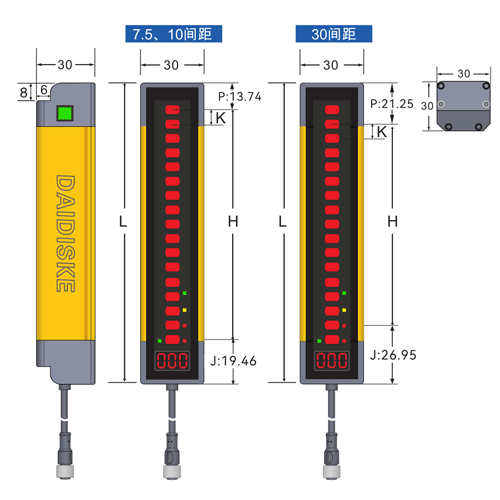
A Type 4 light curtain has those numbers. A certified safety laser scanner has those numbers. A safety relay has those numbers. The whole chain is analysable, and the PL or SIL of the combination is calculated, not asserted.
A trained neural network does not have those numbers in the same sense. Its “failure modes” are statistical — a confusion matrix on a validation set — and bounded by assumptions about the deployment distribution that are very hard to certify against. This is not a complaint about neural networks; it is the reason TR 5469 and the Machinery Regulation push so hard toward architectures where a deterministic, certified channel either contains the AI or runs independently of it.
The practical consequence in 2026: when a notified body audits your safety function, the PL or SIL number on the certificate will still come from the conventional safety chain. AI may be present in the wider machine, may even improve overall safety outcomes by spotting things humans miss, but the certified number is earned by the certified hardware. That is not regulatory conservatism for its own sake; it is the only way the current standards know how to add up.
The EU AI Act adds a second layer of obligations
If your machine has an AI safety component and is CE-marked machinery, you are not just complying with the Machinery Regulation. You are also, under Article 6 of Regulation (EU) 2024/1689, the provider of a high-risk AI system. That triggers a second set of obligations: a documented risk-management system across the AI lifecycle, data and data-governance requirements, technical documentation specific to the AI system, automatic logging of events, transparency and information to deployers, human oversight, and accuracy, robustness and cybersecurity requirements.
The two regulations are designed to interlock rather than overlap. Where the AI safety component is part of a product already subject to third-party conformity assessment under a listed harmonisation regulation — like the Machinery Regulation — the AI Act expects the requirements to be addressed inside that conformity assessment, by the same notified body. Practically, that means one technical file that covers both, not two parallel submissions. But the substance of the AI Act obligations still has to be there.
Most of the AI Act obligations apply from 2 August 2026, with some high-risk-system provisions phased in on a slightly later timeline. By the time the Machinery Regulation becomes applicable in January 2027, both frameworks are live.
The four frameworks at a glance
| Instrument | Type | Applies from | Role re: AI in safety |
|---|---|---|---|
| Regulation (EU) 2023/1230 | EU regulation (binding) | 20 Jan 2027 | Names AI safety components; notified-body route required for ML-based safety functions |
| Regulation (EU) 2024/1689 (AI Act) | EU regulation (binding) | Main body 2 Aug 2026 | Classifies machinery AI safety components as high-risk; horizontal obligations |
| ISO/IEC TR 5469:2024 | Technical Report (non-normative) | Published Jan 2024 | Engineering framework: three usage patterns, AI class × usage-level risk view |
| ISO 13849-1 / IEC 62061 | Harmonised standards | In force (current editions) | Still calculate the PL / SIL; assume deterministic, analysable architectures |
The table is the answer to a question we get a lot: which of these do I have to comply with? The short answer is all four, in their respective roles. None of them releases you from the others.
What is permitted, in plain language
Permitted today, with care
- AI used to monitor a machine and raise warnings — predictive maintenance on a safety device, drift detection on an OSSD signal, anomaly detection on cycle data — provided the safety function itself remains in the conventional chain.
- AI used at design time for risk identification, test case generation, or assistance with technical documentation, provided the outputs are reviewed and signed off by competent humans against the relevant standards.
- AI used alongside a certified safety chain to improve productivity — for example, smart muting confirmation where the AI vote is one input but the certified muting sensors and light curtain still bound the function.
Permitted, but only via the notified-body route
- A safety component with fully or partially self-evolving behaviour using machine learning that provides a safety function, under Regulation (EU) 2023/1230, requires conformity assessment through a notified body. This is permitted in principle, but it is also, in 2026, an expensive and slow path with a small pool of qualified assessors.
Not permitted, in practice
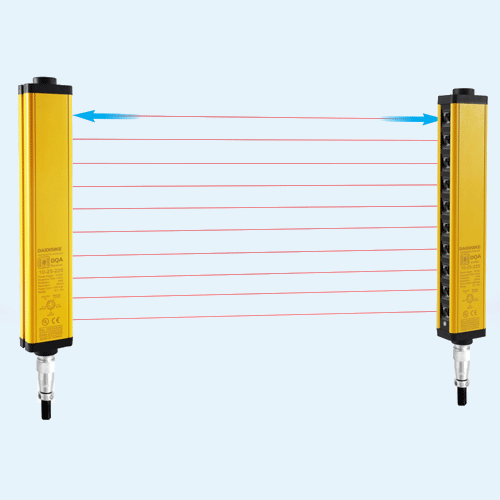
- Replacing a certified Type 4 light curtain or safety laser scanner with an uncertified vision-AI as the sole protective device on a hazard. The existing standards have no path to assign PL e / SIL 3 to such an arrangement, and the notified body will not sign it off.
- A self-evolving safety function that continues to learn in the field without bounding. The Regulation explicitly requires that self-evolving behaviour not be allowed to degrade the safety function — in practice that means learning has to be constrained, validated and re-evaluated, not continuous and unsupervised.
- Claiming a Performance Level from a machine-learning component on the basis of statistical validation alone. ISO 13849-1 does not currently support that calculation.
What notified bodies are publishing
TÜV Rheinland was formally recognised by the European Commission as a Notified Body under the new Machinery Regulation in 2025 and publishes a growing body of guidance on AI in industrial machinery conformity. DEKRA was accredited by the Dutch Accreditation Council (RvA) as a conformity assessment body for high-risk AI systems under the AI Act, initially with a focus on biometric systems but with the scope to extend to other Annex I categories including machinery components. Bureau Veritas and other large notified bodies have similar programmes building.
The realistic 2026 reading: notified bodies are technically capable of assessing an AI safety component, and the regulatory authority exists. What is scarce is the time of assessors who can credibly review such a component against both Regulation (EU) 2023/1230 and the AI Act in one coherent file. If you are planning to use the notified-body route for an ML-based safety function on a 2027 launch, budget for an unusually long lead time and engage the notified body early — before the design is frozen.
How DAIDISIKE thinks about this, plainly
Since you may be reading this on the site of a safety-sensor manufacturer, the honest position. We build deterministic safety devices — Type 4 light curtains in the DQT4 and DQA families, area light curtains in the DQSA family, safety laser scanners in the DLD series, plus safety relays and proximity switches — and they ship to OEMs across automotive, electronics, battery and general automation. Those devices are exactly the kind of analysable, certified components the current standards still require as the backbone of a CE-marked safety function.
We are also genuinely interested in where AI helps the surrounding machine. Predictive diagnostics on safety devices, smarter muting validation, ergonomics monitoring on the operator side — these are good places to invest engineering time in 2026. What we will not do, and will not recommend, is dressing up an uncertified ML model as a replacement for a certified safety chain. The regulations do not allow it. The standards do not support it. And if we are honest, the engineering does not yet warrant it. That may change. It has not changed yet.
What to do in 2026
- Read the AI-relevant clauses of Regulation (EU) 2023/1230, specifically the parts of Annex III on ergonomics, control systems and safety functions, and the safety-component categorisation in Annex I.
- Get ISO/IEC TR 5469:2024 in front of the safety lead, even though you cannot certify against it. The vocabulary will appear in every notified-body conversation.
- Map any planned AI feature against the TR 5469 usage levels. If it sits in pattern 1 (AI inside a safety function), expect a notified-body route and a high evidence burden. If it sits in pattern 2 (AI in the machine, certified chain handles safety), the existing standards already work.
- For 2027 launches, engage a notified body early. The pool of assessors who can handle an integrated Machinery Regulation + AI Act file is small, and the lead time is not predictable.
- Keep specifying certified deterministic safety devices for the actual safety function. The Type 4 light curtain, the safety laser scanner, the safety relay — these are not legacy choices, they are still the only path to a calculable PL e / SIL 3 in 2026.
The bottom line
Regulation (EU) 2023/1230 has done something genuinely useful: it has named AI in machinery safety law for the first time, and put a fence around what self-evolving safety components are allowed to do. ISO/IEC TR 5469:2024 has given engineers a vocabulary for the design conversation. The EU AI Act has added a second, horizontal layer of obligations. The result is a framework — narrow, conservative, but real — under which AI in safety functions is permitted in 2026, with conditions.
What none of this says is that AI replaces the certified safety chain. The Performance Level on the certificate still comes from deterministic hardware. The notified body still wants to see a Type 4 light curtain or a certified safety laser scanner at the point of operation. The honest read of the rules, in 2026, is that AI makes the machine smarter; it does not, yet, make the safety function. Build accordingly.
Related reading
EU Machinery Regulation 2027
What machine builders must change before the 20 January 2027 application date.
PL vs SIL
Performance Level under ISO 13849-1 and SIL under IEC 62061 — where AI fits, and where it doesn't.
The Future of AI-Integrated Safety Sensors
Where machine learning genuinely improves safety sensing, and where it adds risk.