
UKCA Marking for Safety Light Curtains and Safety Laser Scanners — A Post-Brexit Export Guide
Shipping a safety light curtain or safety laser scanner into Great Britain in 2026 means UKCA marking under the Supply of Machinery (Safety) Regulations 2008. ESPE devices are Annex 4 products, so a UK Approved Body must be in the conformity-assessment chain or the UK Designated Standards must be fully applied. The underlying type test against BS EN IEC 61496-1, -2 and -3 is identical to the CE route; what changes is the mark, the Body number beside it, the Declaration of Conformity template and the technical-file pointer language. Northern Ireland follows the EU CE route under the Windsor Framework — UKNI is not normally used.
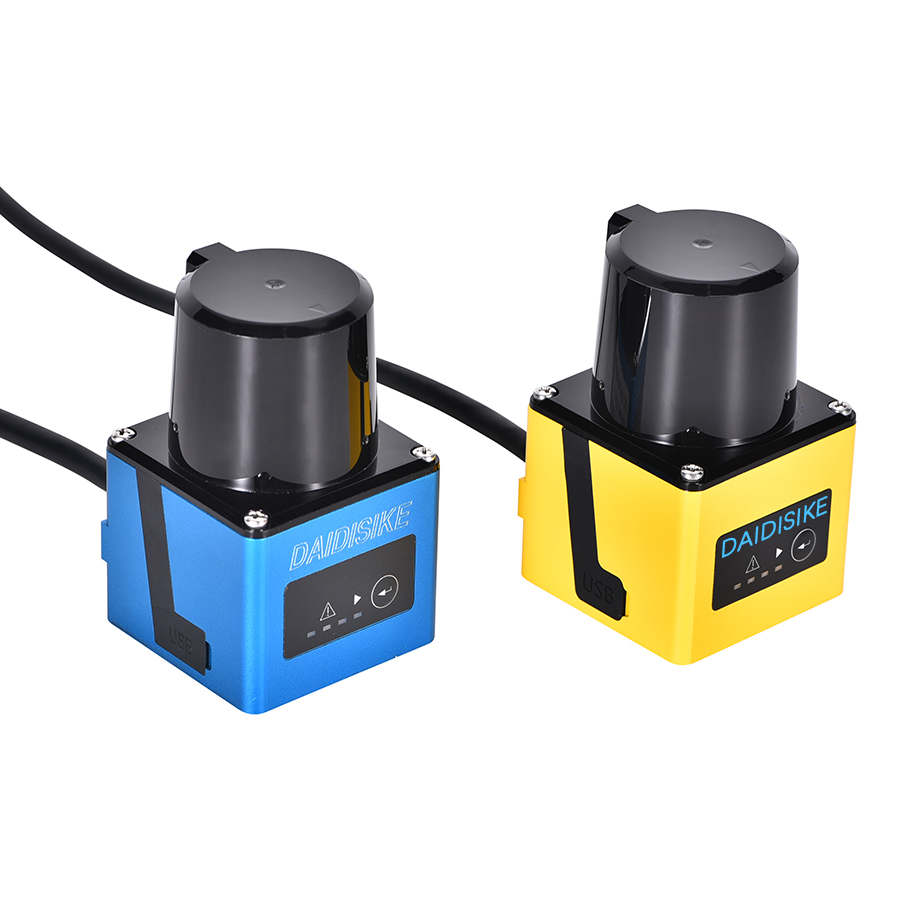
UKCA marking is the most common single subject we are asked about by machine builders shipping into the UK, and the area where the most confident misinformation circulates. The CE-acceptance deadline has been pushed back so many times that some manufacturers stopped tracking it; others did the UKCA paperwork once in 2021 and have not looked at it since. Neither position is safe for a product class like ESPE safety devices, where market surveillance is active and a missing Approved Body number on the label is enough on its own to stop a shipment at the importer's goods-in.
This guide is written for the engineer or export manager who already understands CE marking under the EU Machinery Directive and now has to add or maintain UKCA. It covers what actually changed at the legal layer, the UK Designated Standards a safety light curtain or safety laser scanner is tested against, the role of the UK Approved Body, the conformity-assessment modules that apply to Annex 4 devices, label and Declaration of Conformity requirements, the Northern Ireland exception, and a twelve-item checklist for the last working day before a shipment leaves the factory.
1. What changed at the legal layer
The European Communities Act 1972 — the route by which EU directives became binding in the UK — was repealed on the day the UK left the European Union. To prevent a regulatory vacuum, the European Union (Withdrawal) Act 2018 retained the existing UK statutory instruments that had previously transposed EU directives. For machine-safety devices that means the Supply of Machinery (Safety) Regulations 2008 (SMSR 2008) continued in force, unchanged in substance from the day before Brexit.
The Product Safety and Metrology etc. (Amendment etc.) (EU Exit) Regulations 2019 then layered the UK-specific machinery on top: the UKCA mark replaced the CE mark as the conformity mark for products placed on the Great Britain market; UK Designated Standards replaced EU harmonised standards as the route to a presumption of conformity; and the new category of UK Approved Body replaced the EU Notified Body for products that cannot self-declare. The Designated Standards list is published and maintained by the Office for Product Safety and Standards (OPSS), which sits inside the Department for Business and Trade.
For ESPE safety devices specifically, three points matter. First, Annex IV of the old Machinery Directive became Schedule 2 Part 4 of SMSR 2008 — same list of high-risk products, including ESPE devices and certain interlocking guards. Second, the harmonised EN IEC 61496 series became BS EN IEC 61496 — identical text, re-published by the British Standards Institution under a BS prefix. Third, the four-digit Notified Body number that previously appeared beside CE was replaced by a four-digit Approved Body number beside UKCA, drawn from a different register kept by the Secretary of State.
2. UKCA vs CE — where they actually differ
The single most common misunderstanding is that UKCA is a different technical regime. It is not. The substantive requirements — the essential health and safety requirements, the type-test programme, the environmental immunity tests, the response-time and detection- capability rules — are the same. What changes is the legal jurisdiction and a small set of documents that have to be re-issued with UK-specific references.
| Item | EU / CE route | UK / UKCA route |
|---|---|---|
| Statute | Machinery Directive 2006/42/EC (being replaced by Machinery Regulation 2023/1230) | Supply of Machinery (Safety) Regulations 2008, as amended |
| Standards prefix | EN IEC 61496-1, -2, -3 (harmonised) | BS EN IEC 61496-1, -2, -3 (designated) |
| Third-party body | Notified Body (4-digit number, EU NANDO register) | Approved Body (4-digit number, UK Secretary of State register) |
| Conformity mark | CE, ≥ 5 mm tall | UKCA, ≥ 5 mm tall |
| Declaration title | EU Declaration of Conformity | UK Declaration of Conformity (UKDoC) |
| EMC overlay | Directive 2014/30/EU | Electromagnetic Compatibility Regulations 2016 |
| RoHS overlay | Directive 2011/65/EU (RoHS 2) | Restriction of the Use of Certain Hazardous Substances in Electrical and Electronic Equipment Regulations 2012, as amended |
| Authorised Representative | Mandatory for non-EU manufacturers | Not legally required; UK Responsible Person is voluntary |
| Market-surveillance authority | Member-state authority (e.g. BAuA in Germany, INRS in France) | Office for Product Safety and Standards (OPSS); Health and Safety Executive (HSE) for workplace enforcement |
The practical implication is that the technical file you compiled for CE marking can be re-used almost in full for UKCA. The type-test report from the Notified Body is recognised by most UK Approved Bodies as evidence — many of them were the same organisations before Brexit and run the same labs. The Declaration of Conformity has to be re-written on a UKDoC template citing UK statutory instruments and BS-prefixed standards, and the label has to be re-printed with the UKCA mark and the new Body number. Everything else stays.
3. UK Designated Standards for safety light curtains and laser scanners
The OPSS Designated Standards list is the document to cite in the UKDoC. For ESPE safety devices the core entries are:
- BS EN IEC 61496-1 — Safety of machinery. Electro-sensitive protective equipment. General requirements and tests. This is the umbrella document covering Type 2, Type 3 and Type 4 architectures, dual OSSD output, self-monitoring, environmental immunity, and the type-test procedure.
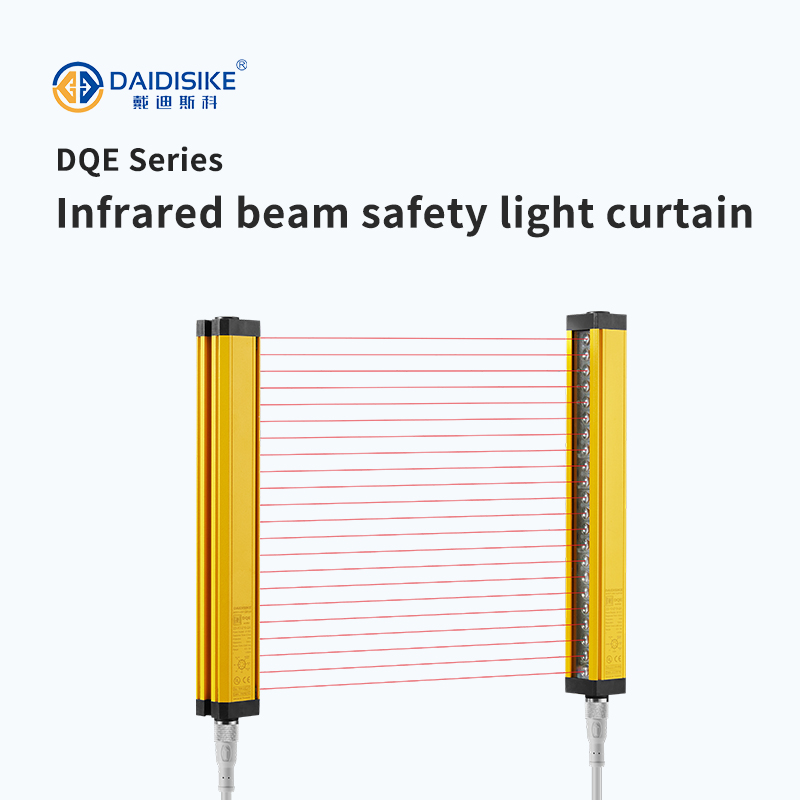
- BS EN IEC 61496-2 — Particular requirements for equipment using active opto-electronic protective devices (AOPDs). The light-curtain and single-beam light-grid standard.
- BS EN IEC 61496-3 — Particular requirements for active opto-electronic protective devices responsive to diffuse reflection (AOPDDR). The safety laser scanner standard.
- BS EN ISO 13849-1 — Safety-related parts of control systems. The Performance Level (PL a–e) framework that an ESPE device's output stage and a safety relay or safety PLC are evaluated against.
- BS EN ISO 13849-2 — Validation, including fault-list reasoning for safety functions.
- BS EN ISO 13855 — Positioning of safeguards with respect to the approach speeds of parts of the human body. The standard that determines the minimum distance S from the danger zone for a given response time and resolution.
- BS EN ISO 12100 — Safety of machinery. General principles for design. Risk assessment and risk reduction.
- BS EN IEC 62061 — Functional safety of safety-related electrical, electronic and programmable electronic control systems (SIL framework, often applied in parallel with ISO 13849-1).
- BS EN IEC 61000-6-2 and BS EN IEC 61000-6-4 — Generic EMC immunity and emission standards for industrial environments, applied for the EMC overlay.
Every entry on this list is functionally identical to its EN IEC counterpart. The BS prefix is a publishing artefact; the technical content is unchanged from the international IEC or ISO base document. A type-test report referencing EN IEC 61496-1:2020 will be accepted as evidence of conformity to BS EN IEC 61496-1:2020 by any UK Approved Body, because the documents are word-for-word the same.
4. The UK Approved Body — who can certify for the UK market
A safety light curtain or safety laser scanner is an Annex 4 product. Self-declaration is not an option. The manufacturer must either fully apply the Designated Standards listed above and use a Module B-equivalent type examination performed by a UK Approved Body, or skip the Designated Standards and run the full technical-construction-file route with the Approved Body throughout. Both routes end with an Approved Body number beside the UKCA mark on the label.
The list of designated UK Approved Bodies is maintained on GOV.UK and updated as new bodies are designated or existing ones lose scope. Several bodies that operated UK testing laboratories before Brexit — running CE type tests under EU notification — were redesignated as UK Approved Bodies, so the same lab and the same engineers may issue both EU and UK certificates. Their four-digit numbers, however, are different. A Notified Body number used beside CE cannot legally appear beside UKCA.
For a manufacturer with an existing CE certificate from a body that has both EU notification and UK designation, the typical path is a "transfer" or "re-issue" application: the Approved Body reviews the original type-test report, confirms the standards referenced are on the UK Designated list, and issues a UK certificate referencing its UK number. Fees and lead time are markedly lower than a fresh type test. For a manufacturer whose original Notified Body has no UK presence, the type test does not usually need to be repeated — a UK Approved Body can accept the report as evidence under a transfer arrangement, although this is at each Body's discretion and should be confirmed in writing before relying on it.
5. Conformity-assessment modules for ESPE devices
SMSR 2008 inherits the Machinery Directive's conformity-assessment modules. For Annex 4 products the routes are:
- Module B (UK type-examination) plus internal production control: the Approved Body issues a type-examination certificate against the BS EN IEC 61496 standards and the manufacturer maintains internal production control with periodic batch testing. This is the route most safety-sensor manufacturers use.
- Full quality assurance: a Module H-style route where the Approved Body audits the manufacturer's quality system (ISO 9001 plus product-specific design controls) and issues a quality-system approval. This route is more common for very large product families.
- Fully applied Designated Standards: if every essential health and safety requirement is covered by a Designated Standard on the OPSS list and the manufacturer can demonstrate full compliance, an Approved Body type examination is not strictly required by the regulations. For ESPE devices this route is rarely used because the standards do not cover every aspect of the manufacturer's specific architecture and a competent Approved Body opinion is the safer evidence trail.
In practice almost every safety light curtain and safety laser scanner on the UK market reaches it via Module B plus internal production control. The technical file the Approved Body wants to see typically contains the design risk analysis against EN ISO 12100, the architecture description (Category and PL claim under EN ISO 13849-1, and SIL claim under EN IEC 62061 where relevant), the type-test report against EN IEC 61496-1/-2 or -1/-3, the EMC and environmental test reports, the production-control plan, the user manual, and the technical drawings to a sufficient level of detail to identify the product.
6. UKCA label requirements
UKCA labelling rules are set out in the Product Safety and Metrology Regulations 2019 and reinforced in SMSR 2008 for machinery products. The mark itself follows a defined glyph — stylised "UKCA" letters — and must be at least 5 mm tall by default. It may be scaled up but never below 5 mm unless the product is too small to accommodate it, in which case the mark can appear on the packaging and on the accompanying documents.
For a typical safety light curtain with a 30 × 30 mm or 25 × 30 mm extruded aluminium housing, the long face of the receiver carries the label. The information that must appear near the UKCA mark, per SMSR 2008 Schedule 1 paragraph 1.7.3, includes:
- Manufacturer's name and full registered address (a website is not sufficient on its own).
- Model designation and any series or variant designation.
- Serial number and date of manufacture (year and month at minimum).
- The UKCA mark.
- The four-digit Approved Body number, placed beside the UKCA mark, when Module B was the conformity route.
- The supply voltage, frequency range and power consumption.
- Type designation under the relevant standard — "Type 4 ESPE" for a Type 4 light curtain, "Type 3 AOPDDR" for a Type 3 safety laser scanner.
The UKCA mark and the Approved Body number must remain legible and indelible for the expected service life of the product. Inkjet marking on the housing is usually not acceptable for safety devices because it can be wiped off with solvent during cleaning; laser engraving on the metal housing or a permanent adhesive label rated for the environment is the standard solution.
7. The UK Declaration of Conformity
Schedule 8A of SMSR 2008 sets out the mandatory content of the UK Declaration of Conformity. The structure is close to the EU DoC but the cited instruments and the title differ. A compliant UKDoC for a safety light curtain contains:
- Title: "UK Declaration of Conformity" or "UKCA Declaration of Conformity".
- Manufacturer's full registered name and address.
- UK Responsible Person's name and address, if one has been appointed (optional).
- Product description and identification: trade name, model, type, serial-number range, photo or drawing reference if useful.
- Statement that the declaration is issued under the sole responsibility of the manufacturer.
- List of UK statutory instruments the product complies with — for an ESPE safety device, SMSR 2008 and the Electromagnetic Compatibility Regulations 2016 at minimum, plus the RoHS Regulations 2012 if the product is within scope.
- List of UK Designated Standards applied, with full BS reference and date — for example "BS EN IEC 61496-1:2020", "BS EN IEC 61496-2:2020", "BS EN ISO 13849-1:2023".
- If a UK Approved Body was involved: its name, registered address, four-digit number, the type-examination certificate reference and its date of issue.
- Place and date of issue of the DoC.
- Name, function and signature of the person empowered to draw up the DoC on behalf of the manufacturer.
A separate UKDoC is recommended for each model or series so the document remains valid and traceable. Some manufacturers issue a combined EU and UK DoC on the same A4 sheet — this is acceptable provided every required item is unambiguously present for each jurisdiction, but a single-jurisdiction DoC is the cleaner format and harder to challenge during market surveillance.
8. The Northern Ireland exception — UKNI and the Windsor Framework
The Windsor Framework, which superseded the original Northern Ireland Protocol in 2023, keeps Northern Ireland inside the EU single market for goods. The practical implication for a safety- sensor manufacturer is that products placed on the NI market continue to need CE marking under the EU Machinery Directive route. UKCA alone is not sufficient for NI.
The UKNI mark is a narrow exception. It is required when, and only when, a UK Approved Body was used for the conformity assessment of a product destined for the NI market. In that specific case the product carries both CE and UKNI marks together, with the Approved Body's UK number beside UKNI and not beside CE. This is an uncommon configuration for safety devices because most manufacturers shipping to NI go through an EU Notified Body and apply CE alone.
A practical pattern for a manufacturer who supplies the whole British Isles is: CE marking with an EU Notified Body number for the EU market and for Northern Ireland; UKCA marking with a UK Approved Body number for the Great Britain market. Two type- examination certificates from the same lab — one EU-issued, one UK-issued — sit in the technical file, and two DoCs are issued.
9. Twelve-item pre-shipment checklist
The most common reasons a UK-bound safety device is rejected by the importer or held up at goods-in are administrative, not technical. This twelve-item checklist captures the items that actually cause shipments to stop, in the order an operations team typically encounters them.
| # | Item | What to check |
|---|---|---|
| 1 | UKCA mark present | On the product itself, ≥ 5 mm tall, legible, indelible. |
| 2 | Approved Body number | Four digits, placed beside UKCA, drawn from the current UK register — not a former Notified Body number. |
| 3 | Manufacturer details | Full registered name and address on the label and in the manual. A website URL alone is not sufficient. |
| 4 | Model and serial | Both physically present on the housing, matched to a record in the technical file. |
| 5 | ESPE type designation | "Type 4 ESPE" or "Type 3 AOPDDR" stated clearly on the label, matching the type-examination certificate. |
| 6 | UKDoC accompanies the product | Printed copy in the box or a digital DoC with a QR code or URL pointing to a stable manufacturer-controlled location. |
| 7 | UKDoC content | Title says "UK Declaration of Conformity", references SMSR 2008 and EMC Regs 2016, lists BS-prefixed standards, names the UK Approved Body with its UK number and certificate reference. |
| 8 | User manual in English | Original-language manual in English (or English translation alongside the original) covering installation, alignment, response-time data, the test-rod acceptance procedure and the muting limits. |
| 9 | Type-examination certificate | UK Approved Body certificate available on request — keep a PDF copy ready for the importer. |
| 10 | Technical file location | Held by the manufacturer or the appointed UK Responsible Person, available for inspection by OPSS or HSE for at least ten years after the last unit of the model was placed on the market. |
| 11 | Importer details | The importer's name and address added to the packaging, or on a separate label, per the Product Safety and Metrology Regulations 2019. |
| 12 | NI shipment routing | If any part of the order is destined for Northern Ireland, route through the CE-marked stock — UKCA-only product is not lawful on the NI market. |
10. Common pitfalls
Reusing the Notified Body number beside UKCA
A Notified Body number is an EU register entry; an Approved Body number is a UK register entry. They are different even when the underlying lab is the same physical organisation. Putting the wrong number beside UKCA is the single most common label defect we see — usually because somebody copied the CE label artwork and substituted only the mark glyph. Always pull the four-digit number from the current GOV.UK Approved Bodies list before finalising label artwork.
Citing harmonised standards in the UKDoC
A UKDoC cites BS-prefixed Designated Standards. An EU DoC cites EN harmonised standards. The text is identical but the reference format must match the jurisdiction. A DoC that mixes the two — for example claiming compliance with "EN IEC 61496-1:2020" under SMSR 2008 — is technically defective and will be flagged by competent market-surveillance staff.
Assuming the CE certificate transfers automatically
A CE type-examination certificate from an EU-only Notified Body is not in itself a UK certificate. Most UK Approved Bodies will accept it as evidence under a transfer arrangement, but the transfer is an active step — the manufacturer applies, the Approved Body reviews the report against the BS-prefixed standards on the current UK list, and issues a UK certificate with a UK number. Until that happens the product cannot bear an Approved Body number beside UKCA.
Forgetting the EMC overlay
ESPE safety devices fall under the EMC Regulations 2016 in addition to SMSR 2008. The UKDoC must cite both. A DoC that claims SMSR 2008 conformity only and omits the EMC overlay is incomplete — even though the EMC test results are usually in the same Approved Body certificate as the safety-function tests for an integrated ESPE device.
Stale CE-acceptance assumption
The UK government has extended the deadline for CE acceptance on the GB market several times since 2021. Each extension comes with its own scope and end date, and the safest position for a manufacturer of safety-critical products is to be UKCA-ready and UKCA-labelled regardless of the current deadline. The cost of the conformity-assessment work has already been paid through the CE programme; the incremental cost of UKCA is administrative, and the cost of being caught short by a deadline change is a shipment held at port.
11. The DAIDISIKE safety device family — brief and neutral
Since this is the DAIDISIKE site, a short note for engineers comparing options. Our ESPE product family — the DQE, DQC, DQO, DQT and DQR series safety light curtains and the DLD safety laser scanner series — is designed against the BS EN IEC 61496 family of standards and the BS EN ISO 13849-1 architectural requirements. We supply manufacturers exporting into the UK with the type-examination report references, the BS-prefixed standards list and a UKDoC template that an importer can sign off without redrafting. Where a UK Approved Body number is required on the label, we work to the Body designated for the relevant standard category.
If you are evaluating an upgrade for a Great-Britain-bound machine line and want to align the BS EN ISO 13849-1 PL architecture across the safety chain before placing a quotation request, our engineering team can walk through the standards mapping. Open a conversation at our contact page or browse the safety light curtain family and safety laser scanner family to see the product range that has been used on UK-bound shipments.
12. Frequently asked questions
Is UKCA marking mandatory for safety light curtains and laser scanners sold into Great Britain in 2026?
Yes for products placed on the Great Britain market on or after the cut-off announced by the UK Office for Product Safety and Standards. The CE marking acceptance window has been extended several times since 2021 — the most current cut-off should always be checked on GOV.UK before a shipment, because it has slipped more than once. For ESPE safety devices — safety light curtains under BS EN IEC 61496-1 and -2, and safety laser scanners under BS EN IEC 61496-1 and -3 — both UKCA and CE marking are accepted today, but only UKCA is forward-safe and the underlying technical file work is the same.
What is the UK equivalent of the EU Machinery Directive for safety sensors?
The Supply of Machinery (Safety) Regulations 2008, as amended (SMSR 2008). This statutory instrument transposed the original EU Machinery Directive 2006/42/EC into UK law and was retained after Brexit. Safety light curtains and safety laser scanners are Annex 4 products under SMSR 2008 — exactly as they were Annex IV products under the Machinery Directive — which means a self-declaration route is not available. A UK Approved Body must be involved in the conformity assessment, or a fully applied Designated Standard route must be followed.
What is the difference between an EU Notified Body and a UK Approved Body?
Functionally they do the same job — third-party conformity assessment for products that cannot self-declare. The legal difference is jurisdiction. A Notified Body is designated under EU regulations and its number appears beside the CE mark. A UK Approved Body is designated by the Secretary of State under SMSR 2008 and the Product Safety and Metrology etc. (Amendment etc.) (EU Exit) Regulations 2019, and its four-digit number appears beside the UKCA mark. The UK government maintains the current list of Approved Bodies on GOV.UK; a body that was a Notified Body in the UK before Brexit was generally redesignated as an Approved Body but the number changed.
Can a Chinese OEM manufacturer apply for UKCA marking directly, or is an Authorised Representative required?
A manufacturer outside the UK can apply for UKCA marking directly and sign the UK Declaration of Conformity. There is no equivalent of the EU Authorised Representative requirement in current UK law for most product categories. However, the importer placing the product on the GB market — typically the UK distributor or end-customer — has separate legal duties under SMSR 2008, including verifying that the UKCA mark and DoC are present and that the technical file can be produced on request. Many Chinese manufacturers contract a UK Responsible Person voluntarily to handle market-surveillance queries efficiently.
What size and where does the UKCA mark have to go on a safety light curtain?
UKCA must be at least 5 mm tall, legible and indelible, and applied to the product itself when reasonably practical. Where the product is too small or the surface unsuitable, UKCA can go on the packaging and on the accompanying documents. For a typical safety light curtain with a 30×30 mm or 25×30 mm housing, the mark goes on the long face of the receiver, near the manufacturer's name and the conformity year. The Approved Body's four-digit number must appear directly beside the UKCA mark when third-party conformity assessment was used.
Is UKNI marking needed for safety devices going to Northern Ireland?
Northern Ireland sits inside the EU single market for goods under the Windsor Framework, so CE marking is the route for the NI market. UKNI is a niche mark used only when a UK Approved Body was involved in the conformity assessment of a product destined for NI — in that narrow case the product carries both CE and UKNI. For most safety light curtains and laser scanners shipped to NI, plain CE marking is the correct route and UKNI is not used.
Does UKCA require different testing than CE for ESPE safety devices?
No — the underlying type test is the same. The UK Designated Standards for ESPE safety devices are BS EN IEC 61496-1 (general requirements), BS EN IEC 61496-2 (active opto-electronic protective devices, that is light curtains and light grids) and BS EN IEC 61496-3 (active opto-electronic protective devices responsive to diffuse reflection, that is safety laser scanners). These are word-for-word the same documents as the harmonised EN IEC 61496-1, -2 and -3 used for CE conformity. The same applies to BS EN ISO 13849-1 and BS EN ISO 13855. The technical file and type-test reports can be reused. What changes is the mark on the product, the Body number beside it, and the Declaration of Conformity template.
What goes in a UK Declaration of Conformity for a safety light curtain?
Per Schedule 8A of SMSR 2008, a UK DoC must contain: the manufacturer's name and address; the name and address of the UK Responsible Person if one is appointed; the product description and identification (model, serial-number scheme, photo or drawing reference); the UK statutory instruments the product complies with — for an ESPE safety device this is SMSR 2008 plus the Electromagnetic Compatibility Regulations 2016; the UK Designated Standards applied with their full reference numbers and dates; the Approved Body name, number and the certificate reference; the place and date of issue; and the signature, name and function of the person empowered to sign for the manufacturer. The DoC must accompany the product or be available digitally to the buyer.
Is CE marking still accepted on the Great Britain market in 2026?
For many product categories the UK government has extended the deadline for CE acceptance on the GB market several times since 2021, and each extension comes with its own scope and end date. Because those dates have moved repeatedly, the safest position for a manufacturer of safety-critical products such as light curtains and laser scanners is to be UKCA-ready and UKCA-labelled regardless of the current deadline. The cost of holding a UKCA file is small; the cost of being caught short by a deadline change — with stock that is no longer compliant to sell into GB — is a stopped shipment and a scramble. Treat continued CE acceptance as a grace period, not a permanent route, and confirm the current scope and end date for machinery on the OPSS guidance before relying on it.
Can I reuse my CE technical file and Notified Body type-test report for UKCA?
Largely yes, which is what makes UKCA far less work than people fear. The underlying technical type is identical, so the technical file built for CE marking can be re-used almost in full for UKCA. The type-test report from your EU Notified Body is recognised as evidence by most UK Approved Bodies — many of them were the same organisations before Brexit and run the same test labs against word-for-word identical standards (the UK Designated Standards are the same EN standards under a UK reference). What does change is the paperwork at the surface: a separate UK Declaration of Conformity referencing SMSR 2008, and a label re-printed with the UKCA mark and the four-digit UK Approved Body number in place of the CE mark and the EU Notified Body number.
What are the most common reasons a UKCA safety-device shipment gets stopped at UK goods-in?
Three recur. First, a stale CE-acceptance assumption — shipping CE-only stock on the belief that CE is still accepted, when the relevant extension's scope or end date has moved. Second, a missing Approved Body number on the label: for an Annex 4 / Schedule 2 Part 4 product like an ESPE safety device the four-digit UK Approved Body number must appear beside the UKCA mark, and its absence alone is enough to stop a shipment at the importer's goods-in. Third, paperwork done once and never maintained — a UK DoC drafted in 2021 that no longer cites the current Designated Standard references or the correct Approved Body certificate. The twelve-item pre-shipment checklist in this guide is built to catch all three before the goods leave, not after they are held.
Related reading
EU Machinery Regulation 2027 — what changes
The CE-route successor to 2006/42/EC and how it shifts the work for safety devices.
IEC 61496-3 demystified
The standard at the centre of any UKCA file for a safety laser scanner.
PL vs SIL — ISO 13849-1 and IEC 62061
The architectural standards cited on the UKDoC alongside BS EN IEC 61496.
References
- GOV.UK — Using the UKCA marking — Official guidance on UKCA scope, deadlines and exceptions.
- Supply of Machinery (Safety) Regulations 2008 (SI 2008/1597) — Primary UK machinery legislation, with Schedule 2 Part 4 listing Annex 4 products.
- GOV.UK — UK Designated Standards — The Office for Product Safety and Standards list of designated standards by regulation.
- GOV.UK — UK Approved Bodies for product safety — Current register of designated UK Approved Bodies and their numbers.
- Product Safety and Metrology etc. (Amendment etc.) (EU Exit) Regulations 2019 (SI 2019/696) — The instrument that introduced UKCA and the UK Approved Body designation system.
- Electromagnetic Compatibility Regulations 2016 (SI 2016/1091) — The EMC overlay cited on every UKDoC for an electrical product.
- GOV.UK — The Windsor Framework — Northern Ireland trading arrangements and the CE/UKNI rules.
- HSE — Work equipment and machinery — UK workplace-enforcement guidance referencing PUWER 1998 and SMSR 2008.
- IEC 61496-1:2020 — Safety of machinery. Electro-sensitive protective equipment. General requirements and tests — Source document for BS EN IEC 61496-1.
- IEC 61496-2:2020 — Particular requirements for AOPDs — Source document for BS EN IEC 61496-2 (light curtains).
- IEC 61496-3:2018 — Particular requirements for AOPDDRs — Source document for BS EN IEC 61496-3 (safety laser scanners).
- ISO 13849-1:2023 — Safety-related parts of control systems — Source document for BS EN ISO 13849-1, the PL framework.
- ISO 13855:2024 — Positioning of safeguards with respect to the approach speeds of parts of the human body — Source document for BS EN ISO 13855, the minimum-distance standard.
This article is general engineering and regulatory guidance, not a substitute for the legal texts themselves or for a qualified conformity-assessment opinion. Always work from the current published text of SMSR 2008, the current OPSS Designated Standards list, the current GOV.UK Approved Bodies register, and the published BS EN IEC and BS EN ISO standards applicable to your specific product. The deadlines for CE acceptance on the GB market have changed several times — verify the current cut-off on GOV.UK before relying on it.