DAIDISIKE AC 2-wire inductive proximity sensors (M12/M18/M30) detect iron, steel, and aluminum without contact, powered by AC two-wire. IP67 nickel-plated brass housing resists moisture, dust, and vibration. Sensing range 2–15 mm, LED indicator, NO/NC output, short-circuit and reverse-polarity protection, CE/RoHS compliant. Choose 2 m cable or M12 connector, flush or non-flush mount. Cost-effective, rugged, ideal for machinery, assembly lines, robotic arms, and conveyors.
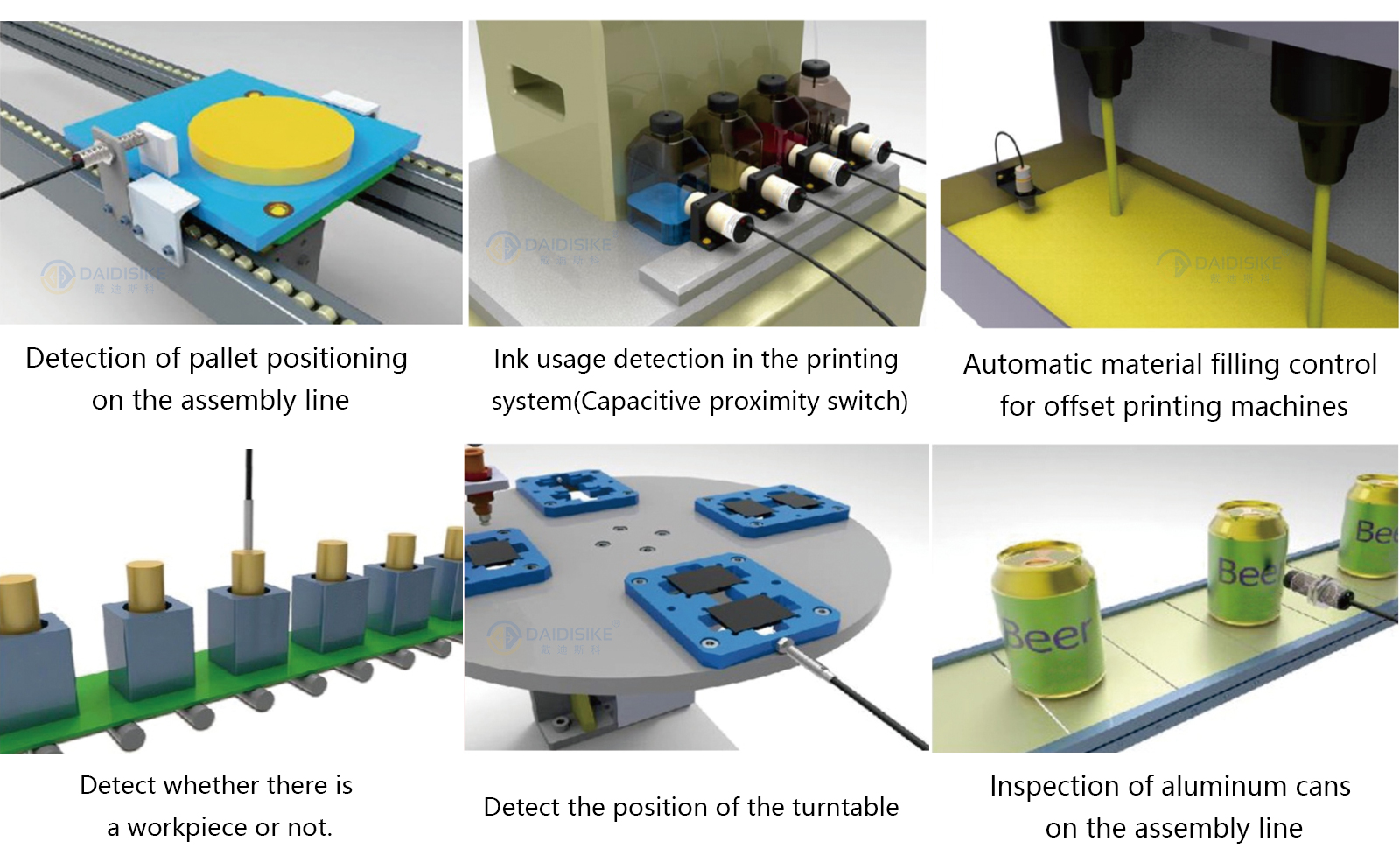
The DAIDISIKE AC two-wire inductive proximity sensor series is a non-contact metal detection device for industrial automation, including M12, M18, and M30 models. It supports AC two-wire power supply and detects metals like iron, steel, and aluminum. The brand is known for high reliability, durability, and cost-effectiveness, widely used in mechanical manufacturing, assembly lines, robotic arms, and conveyor systems. Sensors feature nickel-plated brass housing with IP67 protection for stable operation in harsh environments like humidity, dust, or vibration. Outputs include NO/NC for easy PLC integration. Two-wire design simplifies wiring and reduces costs while maintaining precision. Key advantages: 2-15mm sensing range, LED indicators, short-circuit and reverse polarity protection. Compliant with CE and RoHS standards, offering 2-meter cable or M12 connector options, with flush/non-flush mounting for optimized performance. This series is waterproof, ensuring reliable operation in moist environments.
Specifications Table
The following is a detailed specifications table for the DAIDISIKE AC two-wire inductive proximity sensor series, organized by size:
Parameter
M12
M18
M30
Model Size
M12
M18
M30
Housing Material
Nickel-plated brass
Nickel-plated brass
Nickel-plated brass
Sensing Distance (Flush)
2mm
5mm
10mm
Sensing Distance (Non-Flush)
4mm
8mm
15mm
Supply Voltage
20-250V AC
20-250V AC
20-250V AC
Current Consumption
≤1.7mA (leakage)
≤1.7mA (leakage)
≤1.7mA (leakage)
Load Current
5-500mA
5-500mA
5-500mA
Switching Frequency
25Hz
25Hz
25Hz
Output Type
NO/NC (optional)
NO/NC (optional)
NO/NC (optional)
Protection Rating
IP67
IP67
IP67
Operating Temperature
-25°C to +70°C
-25°C to +70°C
-25°C to +70°C
Connection Method
2m cable / M12 connector
2m cable / M12 connector
2m cable / M12 connector
Repeat Accuracy
≤5%
≤5%
≤5%
Dimensions (Length)
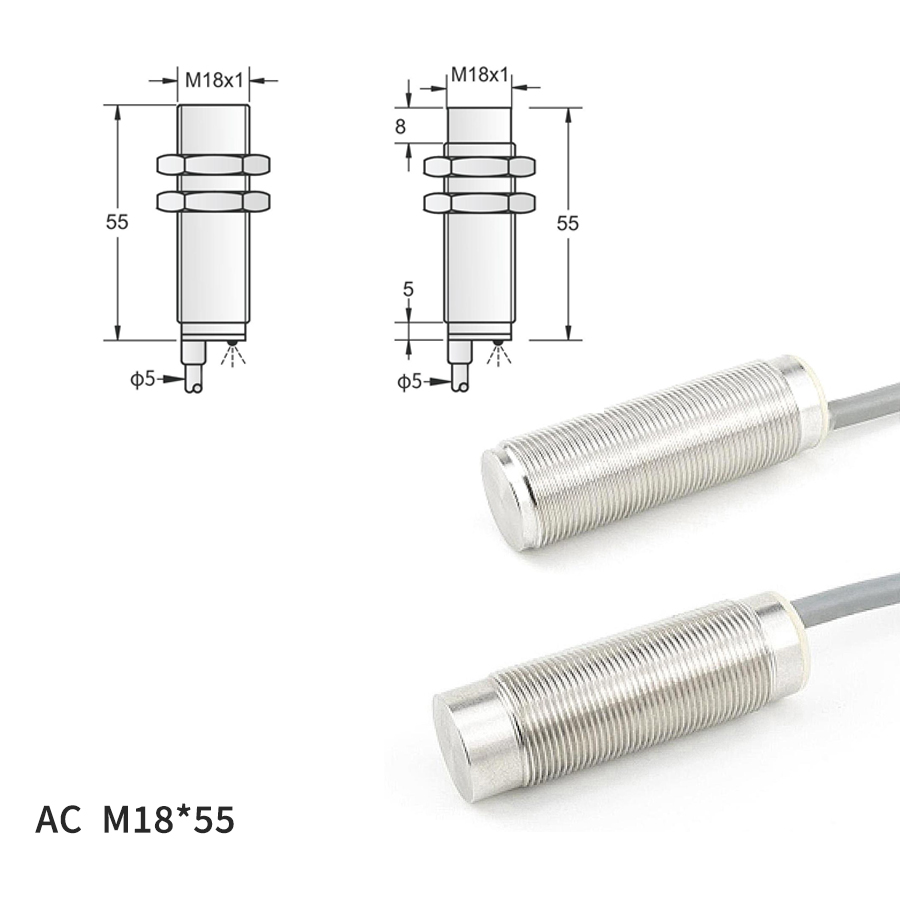
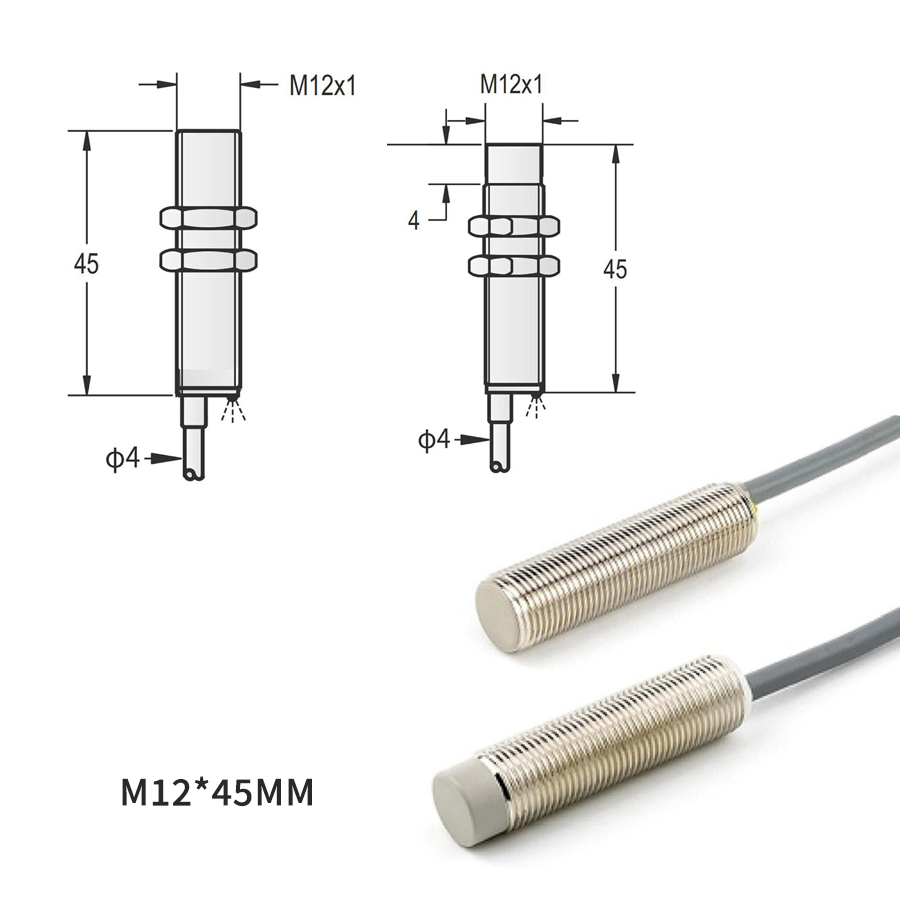
50-60mm
55mm
55mm
Weight
Approx. 50g
Approx. 100g
Approx. 150g
Certifications
CE, RoHS
CE, RoHS
CE, RoHS
Note: Specifications may vary slightly by specific model; please refer to the product manual for exact values. Sensing distance is for standard iron targets (size twice the sensing distance). This series features waterproof design.
Technical Parameters
The technical parameters of the DAIDISIKE AC two-wire inductive proximity sensors are as follows, ensuring high performance and reliability in industrial environments:
Supply Voltage Range: 20-250V AC, 50/60Hz, supporting wide voltage input for most industrial AC power systems.
Leakage Current: ≤1.7mA, ensuring low power consumption and efficiency.
Voltage Drop: ≤7V, ensuring stable output under load.
Hysteresis: 3-20% of sensing distance, preventing false triggers and improving detection accuracy.
Temperature Drift: ≤±10% (within -25°C to +70°C range), adapting to temperature variations.
Shock and Vibration Resistance: Compliant with IEC 60947-5-2, vibration 10-55Hz, shock 30g.
Electromagnetic Compatibility: Anti-EMI, compliant with EN 61000 standards.
Sensing Head Material: PBT plastic, resistant to corrosion and mechanical damage.
LED Indication: Yellow LED for output status display, convenient for on-site debugging.
Reverse Polarity Protection: Yes (adapted for AC), ensuring installation errors do not damage the sensor.
Response Time: ≤20ms, suitable for medium-speed applications.
Target Material: Ferromagnetic and non-ferromagnetic metals, with correction factors for different materials (e.g., stainless steel 0.7, aluminum 0.4).
Protection Features: Waterproof (IP67), suitable for humid and dusty environments.
Lifespan: Over 10^7 operations, with no mechanical wear.
These parameters are based on industry standards and verified through rigorous testing, ensuring long-term stable operation of DAIDISIKE sensors in automated production lines.
Working Principle
The working principle of the DAIDISIKE AC two-wire inductive proximity sensor is based on electromagnetic induction. Specifically, the sensor contains a high-frequency oscillation circuit internally, which generates an alternating magnetic field. When a metal object (target) enters the sensor's sensing area, eddy currents are induced in the target, altering the impedance and amplitude of the oscillation circuit. The sensor detects this change and, through an internal amplifier and comparator circuit, converts the signal into a switch output.
Detailed process:
1. Oscillator Generates Magnetic Field: The front-end coil of the sensor produces a high-frequency magnetic field (typically several hundred kHz).
2. Target Approaches: The metal object enters the magnetic field, absorbs energy, and generates eddy currents, causing field attenuation.
3. Detects Change: The oscillator's amplitude or frequency change is captured by the detection circuit.
4. Signal Processing: Through threshold comparison, outputs a switch signal (NO or NC).
5. Two-Wire Design: Power and signal are transmitted via the same pair of wires, simplifying the circuit; the load is connected in series in the power loop, and when the sensor activates, current changes drive the load. Since it is AC-powered, the sensor accommodates alternating current supply, with output directly switching the AC load.
This non-contact detection avoids mechanical wear, enhancing lifespan (typically over 10^7 operations). In professional terms, this is an "Inductive Proximity Sensor," compliant with IEC 60947-5-2 standards, commonly used for "Position Sensing" and "Presence Detection." Compared to DC versions, AC two-wire sensors are better suited for high-voltage environments and offer stronger resistance to electrical noise, though with lower switching frequencies. The core of detection is energy transfer via eddy current losses, applicable to ferromagnetic and non-ferromagnetic metals.
Frequently Asked Questions
What is an AC two-wire inductive proximity sensor and how is it wired?
It is a non-contact metal-detection switch powered directly from a 20–250 V AC supply using just two wires. The load is connected in series in the AC loop, so wiring is simple and there is no separate NPN/PNP sourcing/sinking decision. A small leakage current (≤1.7 mA) flows even when off, so check your AC load tolerates it.
How do I choose between M12, M18, and M30 sizes?
Pick the size by required sensing distance and mounting space. The DAIDISIKE M12 senses 2 mm flush / 4 mm non-flush, M18 senses 5 mm / 8 mm, and M30 senses 10 mm / 15 mm. Larger bodies give longer range and easier targeting on conveyors and presses; smaller M12 fits tight fixtures and robotic arms.
What is the difference between flush and non-flush mounting?
Flush (shielded) sensors mount level with surrounding metal and resist side interference but have shorter range. Non-flush (unshielded) sensors need a clear zone around the face and deliver longer sensing distance. Each DAIDISIKE size offers both, with non-flush roughly doubling the flush sensing distance.
Can it replace an Omron, Balluff, or Autonics AC proximity switch?
Usually yes. It shares the standard M12/M18/M30 thread, IP67 rating, 20–250 V AC two-wire operation, and NO/NC output, so it fits the same bracket and AC load circuit. Match the size, flush/non-flush type, sensing distance, and 2 m cable or M12 connector to the unit being replaced.
Does the Sn sensing distance change for stainless steel or aluminum?
Yes. The rated Sn is specified for standard mild-steel targets at least twice the sensing distance in size. Non-ferrous metals reduce range via correction factors — about 0.7 for stainless steel and 0.4 for aluminum. Size your target and mounting gap accordingly to keep reliable IP67 detection.