Safety Light Curtain Certifications & Standards — A Global Buyer's Guide
What every engineer and buyer should verify before specifying a light curtain: performance “Type”, functional safety, positioning rules, EMC & environmental tests, and the regional route-to-market marks (CE, UKCA, UL, CSA, EAC, KC, CCC and more).
1) Core Standards You'll See on Data Sheets
Product Family (ESPE)
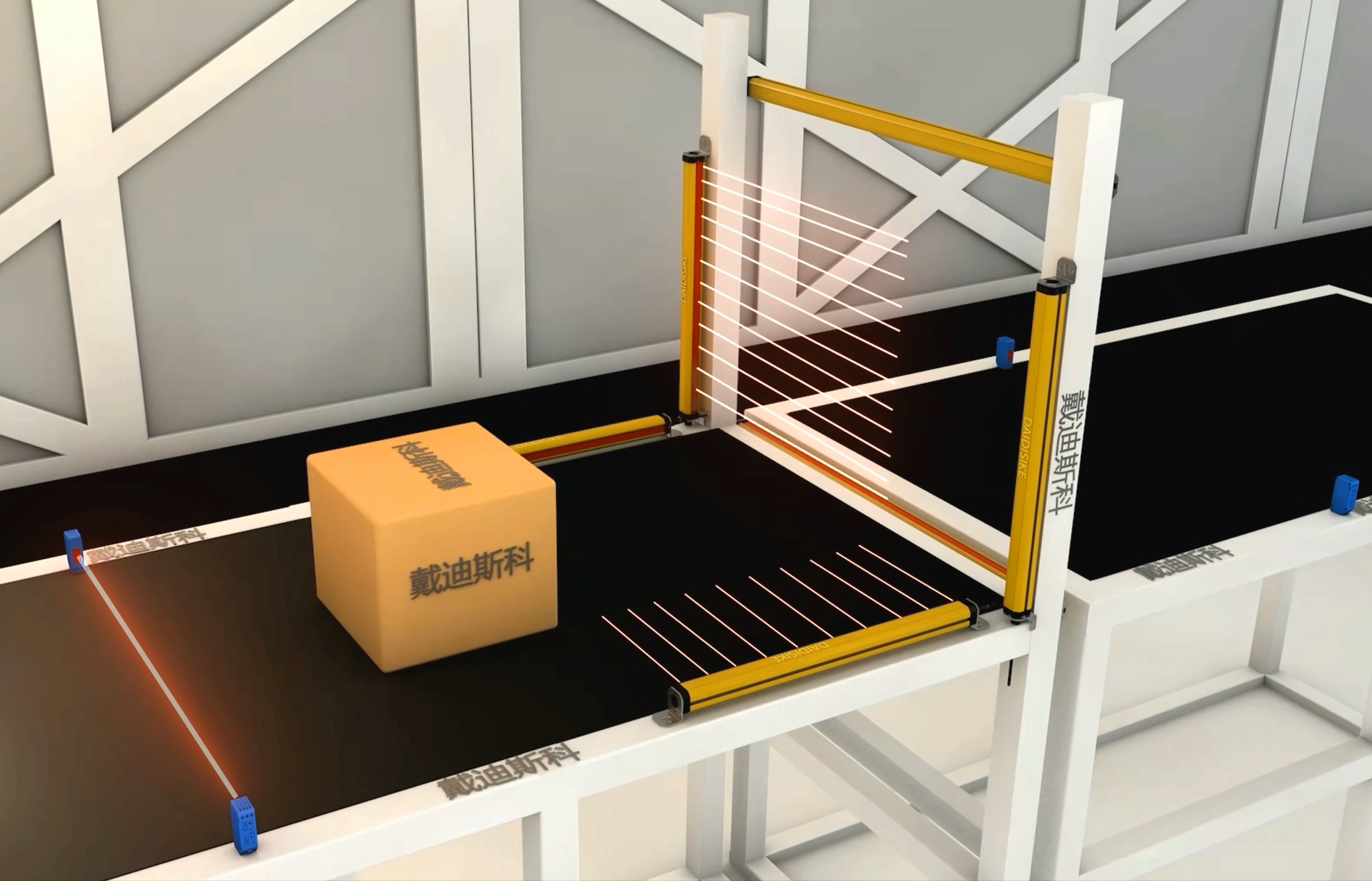
IEC 61496 (series) Defines electro-sensitive protective equipment (ESPE) and particular requirements for active opto-electronic protective devices (light curtains and related variants). Regional adoptions appear as EN / BS EN / UL / CSA or other equivalents.
Tip: look for the specific part used (e.g. general requirements + particular requirements for AOPDs).
Functional Safety
ISO 13849-1/-2 (PL a–e; categories B / 1 / 2 / 3 / 4) and/or IEC 62061 (SIL approach). The light curtain is one element; the whole stop function (sensor → logic → actuator) must meet the target PL / SIL.
Positioning
ISO 13855 — rules and formulas (e.g. S = K × T + C) for placing guards relative to approach speed and stop time.
EMC & Emissions
IEC/EN 61000-6-2 immunity (industrial); IEC/EN 61000-6-4 emissions. Product-level tests often reference specific parts like 61000-4-2 (ESD), -4 (EFT/burst), -5 (surge).
Electrical / Environmental
IEC 60529 (IP rating), IEC 60068 (environmental tests). If applicable, IEC 61010-1 or control-gear standards may be used by certifiers for electrical safety.
Related Machine Safety
ISO 14119 (interlocking), ISO 12100 (risk assessment). These govern the overall safeguarding strategy around a light curtain.
2) “Type 2 vs Type 4” — What It Actually Means
Light curtains are commonly classified as Type 2 or Type 4 in the ESPE standard. Type 4 devices have higher diagnostic capability and are intended for higher-risk applications. However, Type ≠ final performance level — the achieved PL / SIL depends on the entire stop function (including logic and actuators).
| Aspect | Type 2 | Type 4 |
|---|---|---|
| Typical use | Moderate risk tasks | Higher risk tasks / critical operations |
| Diagnostics | Basic fault detection | Enhanced fault tolerance & diagnostics |
| Common target | Often used in functions targeting PL c–d | Often used in functions targeting PL d–e |
| Notes | Final PL / SIL is verified for the complete function per ISO 13849 or IEC 62061; positioning still follows ISO 13855. | |
3) Regional Certification Routes
European Union / EEA — CE marking
Route: Conformity with the Machinery Directive (transitioning to the Machinery Regulation), plus applicable directives (EMC, RoHS, etc.). Use harmonized EN versions of IEC/ISO standards (e.g. EN 61496, EN ISO 13849, EN 62061, EN ISO 13855, EN 61000-6-2 / -6-4). A Notified Body is not always mandatory for components, but many suppliers use third-party testing for credibility.
What to ask: EU Declaration of Conformity, notified-body report (if any), EN standard list with dates / editions, and a technical file statement.
United Kingdom — UKCA
Route: Supply of Machinery (Safety) Regulations with UK designated standards (BS EN). Marks and documentation parallel CE; many products carry both CE and UKCA.
What to ask: UK Declaration of Conformity and the BS EN list mirroring your use case.
United States — UL / NRTL Listing
Route: Third-party certification by a Nationally Recognized Testing Laboratory (UL, TÜV, Intertek/ETL, etc.) to US adoptions of IEC 61496 and relevant electrical / EMC standards. Application integration references OSHA / ANSI (e.g. ANSI B11.19 for performance criteria), and NFPA 79 for electrical equipment of machinery.
What to ask: NRTL certificate number, standard editions (UL / ANSI harmonized), and any conditions of acceptability.
Canada — cULus / CSA
Route: Certification to Canadian adoptions of the same IEC / ISO base (CSA / group standards). Look for cULus or CSA marks.
What to ask: Certificate number, applicable CSA standards, and installation notes for control panels.
EAEU (EAC) — TR CU / EAC mark
Route: Technical Regulations of the Eurasian Economic Union (e.g. TR CU 010/2011 for machinery). Test reports typically reference IEC / ISO adoptions.
What to ask: EAC certificate / Declaration and test protocol list.
Australia & New Zealand — AS / NZS 4024 series
Route: Compliance to AS / NZS 4024 (machinery safety), which aligns closely with ISO / IEC. EMC / RCM requirements may apply depending on configuration.
What to ask: Standards list (AS / NZS equivalence) and RCM / EMC statement if applicable.
Korea — KC / KCs
Route: Industrial safety products may require KC / KCs depending on category and installation; machine safety guidance is issued by KOSHA. Product tests commonly mirror IEC / ISO (e.g. 61496, 13849) and EMC to Korean adoptions.
What to ask: KC certificate number, EMC test summary, and installation notes.
Japan — JIS adoptions
Route: JIS adoptions of ISO / IEC for ESPE and functional safety; risk reduction follows JIS versions of ISO 12100 / 13849 / 13855. PSE is generally unrelated to this class of industrial sensors.
What to ask: JIS / IEC cross-reference list and report excerpts.
China — GB / GB/T adoptions
Route: Chinese national / adopted standards (GB / GB/T) corresponding to IEC 61496, ISO 13849 / 13855, etc. For most industrial light curtains, CCC is typically not mandatory; compliance relies on GB / GB/T and EMC per GB/T 61000 series.
What to ask: Standard list (GB / GB/T equivalents), type-test & EMC reports, and whether local registration / filing is required.
Brazil — NR-12 / ABNT NBR
Route: Regulatory Norm NR-12 plus ABNT NBR adoptions of IEC / ISO. Many buyers request third-party reports showing equivalence to IEC 61496 and ISO 13849.
What to ask: Portuguese-language report summary and NR-12 alignment statement.
India — IS / IEC & IS / ISO adoptions
Route: BIS adoptions of IEC / ISO for ESPE, functional safety, and EMC. Depending on cabinet integration, additional local rules may apply.
What to ask: IS / IEC reference numbers, full test list, and import-stage compliance documents.
4) How to Read a Certificate / Test Report
- Scope & model family: confirm the exact model codes and options (resolution, height, connectors).
- Standards & editions: look for the base ESPE standard (IEC/EN 61496), functional safety (ISO 13849 or IEC 62061), positioning reference (ISO 13855), and EMC levels.
- Type & ratings: Type 2 or Type 4; IP rating; environmental tests (temperature, vibration).
- Conditions of acceptability: any installation limits, minimum distances, diagnostic checks, or indicator requirements.
- Validity & mark: certificate number, issuing body (NRTL / Notified Body), issue date, surveillance or re-test cycle.
5) Certification & Testing Glossary (A–Z)
| Term / Mark | What it means | Where you see it |
|---|---|---|
| CE | Conformity with EU legislation (Machinery, EMC, etc.). Requires technical file and DoC. | EU / EEA |
| UKCA | UK conformity mark; mirrors CE with UK designated standards. | United Kingdom |
| UL / ETL / TÜV (NRTL) | Independent third-party certification to US standards. | United States |
| cULus / CSA | US / Canada combined listing or Canadian certification. | North America |
| EAC | Compliance with EAEU Technical Regulations (TR CU). | Eurasian Economic Union |
| KCs / KC | Korean conformity for safety / EMC categories; often with KOSHA guidance. | Korea |
| CCC | China Compulsory Certification (not typical for most light curtains; check current catalogue). | China |
| Type 2 / Type 4 | Device classification per ESPE standard; Type 4 has higher diagnostic coverage. | Data sheets, certificates |
| PL (a–e) | Performance Level per ISO 13849 for the complete safety function. | Functional safety reports |
| SIL (1–3) | Safety Integrity Level per IEC 62061 / 61508. | Functional safety reports |
| ISO 13855 | Guard positioning formula and tables. | Layout / installation docs |
| IEC 61000-6-2 / 6-4 | Immunity / emissions standards for industrial environments. | EMC reports |
| ESD / EFT / Surge | Specific EMC tests (-4-2 / -4 / -5) with level and criteria statements. | EMC test logs |
| IP rating | Ingress protection (dust / water) per IEC 60529 (e.g. IP65). | Datasheets, type tests |
6) Frequently Asked Questions
Does a Type 4 light curtain automatically give me PL e?
No. Type 4 indicates the device class. Your achieved PL / SIL depends on the entire function (sensor + logic + actuators) and validation per ISO 13849 or IEC 62061.
Is CE enough for North America?
Usually not. Buyers often require an NRTL listing (UL / ETL / TÜV) to US / Canadian standards. Many products carry both CE (EN adoptions) and UL / CSA listings.
How often should a certificate be renewed?
Certificates reference specific editions and may require surveillance or retesting when the design or base standards change. Ask for the issue date and edition levels.
Where does ISO 13855 apply in certification?
ISO 13855 guides installation positioning. A device can be certified, but your site still needs to compute and validate the distance S = K × T + C with measured stop time.