
DAIDISIKE Factory Tour
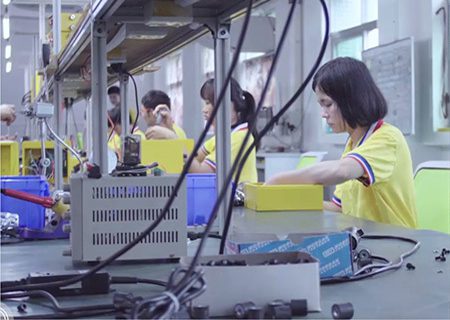
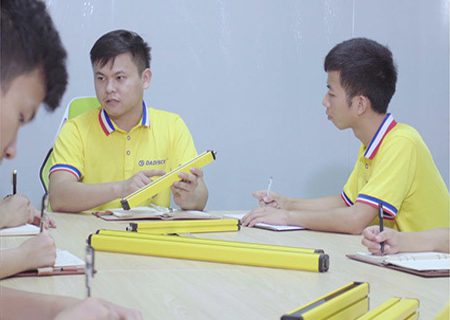
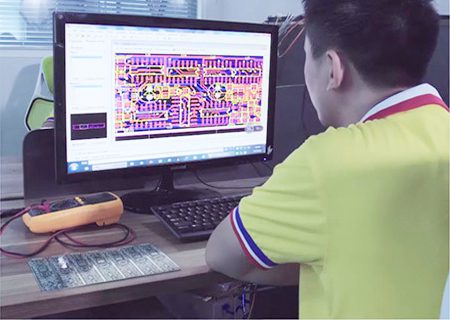
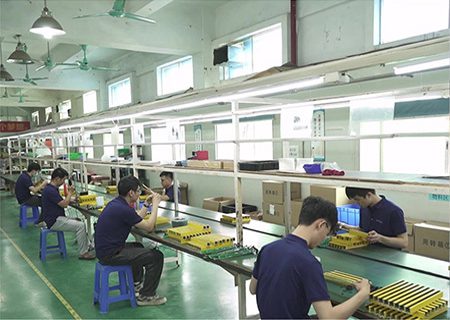
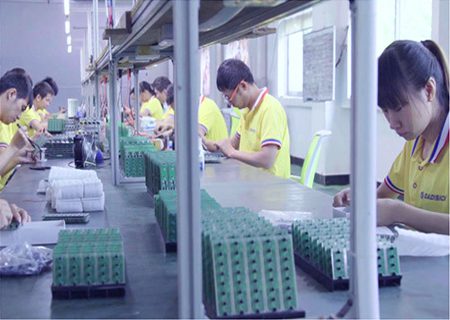
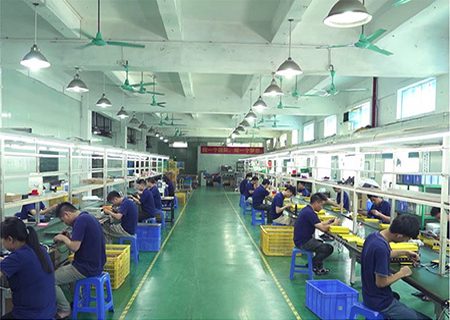
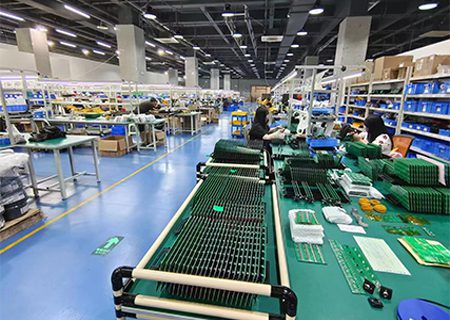
Welcome to our factory tour. The DAIDISIKE production facility sits in Beijiao Town, Foshan, Guangdong — the heart of the Pearl River Delta manufacturing belt that produces most of the world's consumer and industrial electronics. Our facility spans more than 5,000 m² across SMT assembly, optical calibration, environmental test, EMC compliance, and final functional inspection lines. A team of approximately 30 engineers, technicians, and operators run the plant on a two-shift schedule, with every product (not just samples — every product) functionally tested before it ships.
What follows is a walkthrough of the seven-stage production flow that takes raw components and turns them into the safety light curtains, laser sensors, and infrared detectors used on production lines at leading EV manufacturers, global 3C electronics OEMs, home-appliance makers, MEMS/acoustic component assemblers, connector-interconnect manufacturers and display-module producers. If you're evaluating DAIDISIKE as a supplier and want to visit in person, schedule a tour by phone or via the contact form — we're typically able to accommodate visits with two weeks of notice.
Production Flow — From Incoming Components to Shipped Units
1. Incoming Inspection
Every batch of optical components, PCB substrates, IC packages, and mechanical castings goes through dimensional, electrical, and visual inspection on arrival. Critical components are barcoded for lot traceability so a defective batch can be tracked to every shipment that contained it.
2. SMT Assembly
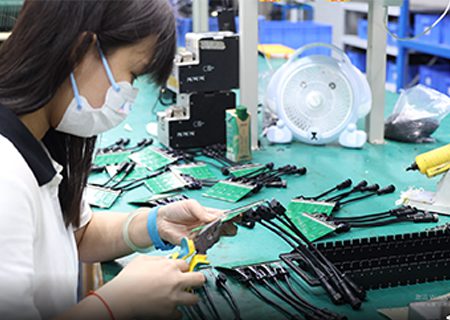
Automated surface-mount lines populate the sensor PCBs at production rates exceeding 30,000 placements per hour, with inline AOI (automated optical inspection) catching solder defects and component misalignments before the boards reach final assembly.
3. Optical Calibration
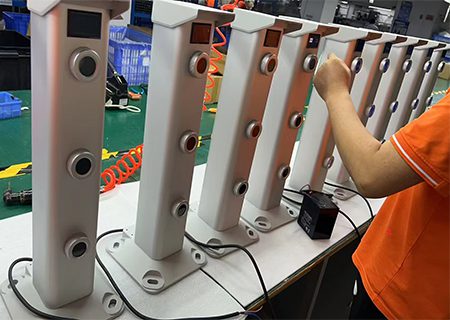
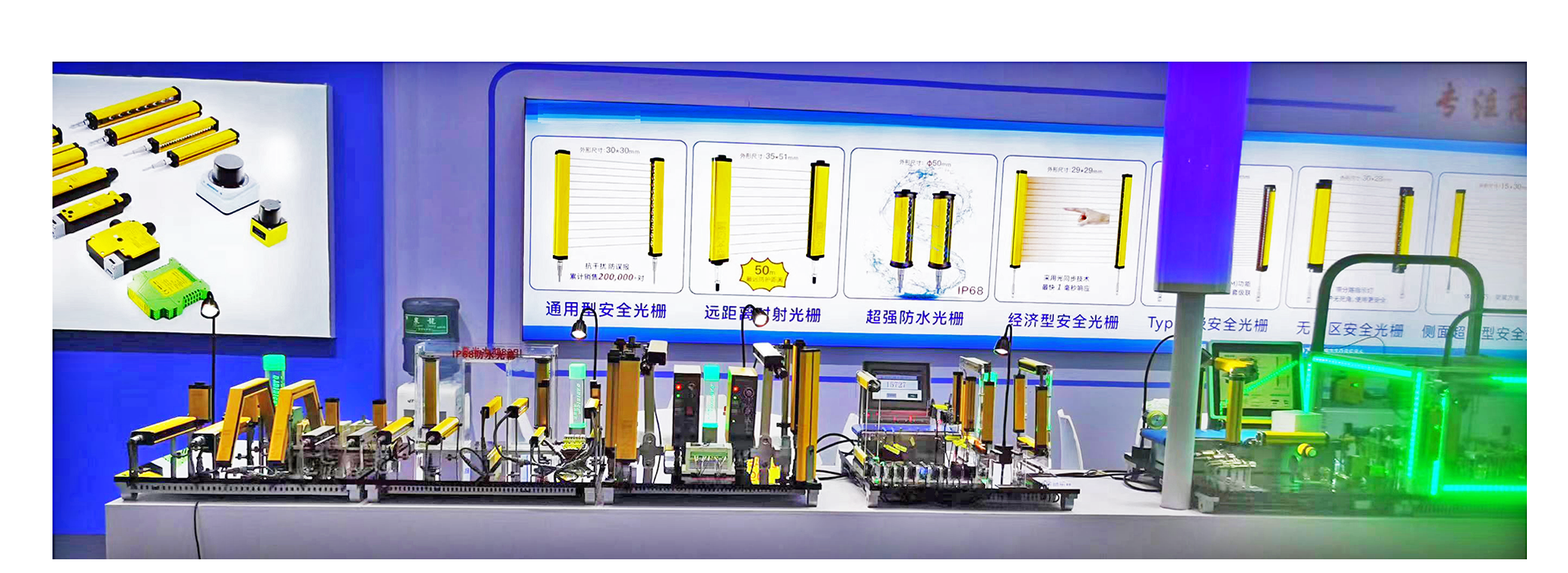
Light curtains, laser sensors, and photoelectric switches are calibrated on dedicated optical benches under controlled lighting. Each unit's sensing distance, response time, and beam alignment is measured against the catalog spec; a calibration certificate ships with every Type 4 safety product.
4. Environmental Test
Sample units from each batch run a full environmental qualification: temperature cycling from −40 °C to +85 °C, humidity soak, salt-fog corrosion, vibration profile, drop test. IP67/IP68 housings get a separate water-ingress validation. Failure rates feed back into the engineering team's reliability tracker.
5. EMC and Safety Compliance
Type 4 safety products go through EMC immunity tests to EN 61000-6-2 (electrostatic discharge, electrical fast transient, surge, conducted RF) and emissions tests to EN 61000-6-4. Laser products are wavelength-verified and power-validated against IEC 60825-1 Class 1 / Class 2 limits.
6. Final Functional Test
Every shipped unit (not a sample — every unit) runs a final functional test: applies power, exercises the full input/output range, verifies the OSSD safety outputs switch in sync with simulated beam break, confirms the analog/digital outputs read correctly against a reference. Failed units are quarantined for rework or scrap.
7. Packaging and Lot Traceability
Each unit is barcoded with its production batch and date. Packaging includes a calibration certificate (for Type 4 safety products), warranty card, quick-start guide, and the standard accessory pack. Outer cartons are weighed against the bill-of-materials to catch packing errors before shipment.
In-House Test Capabilities
Reliability claims only matter if they're measured. The following test capabilities are operated inside our facility — no outsourcing for the critical qualifications:
| Test | Capability | Purpose |
|---|---|---|
| Climate chamber | −40 °C to +85 °C, 5–95% RH | Temperature/humidity cycling and storage qualification |
| Vibration test | 10–500 Hz, 5g sweep | Mobile-installation reliability validation |
| Drop test | Free-fall up to 1.5 m | Packaging and rough-handling survival |
| IP ingress test | IPX7 (1 m submersion, 30 min) + jet-spray for IPX9K | Outdoor and washdown housing validation |
| Salt-fog corrosion | ASTM B117, up to 240 hours | Coastal and chemical-environment lifetime |
| EMC immunity | EN 61000-6-2 industrial | ESD, EFT, surge, conducted/radiated RF immunity |
| EMC emissions | EN 61000-6-4 industrial | Radiated and conducted emissions compliance |
| Laser power & wavelength | Calibrated optical-power meter + spectrometer | IEC 60825-1 Class 1/2 verification |
| Optical bench | Light-tight room, 0.1 mm-class alignment fixtures | Light-curtain sensing-distance and beam-alignment calibration |
Quality Management — ISO 9001 Lean Manufacturing
DAIDISIKE operates an ISO 9001:2015 quality management system audited annually. Lean-manufacturing discipline shapes the shop-floor layout: cell-based work stations, pull-system material flow, visual management with shift-by-shift quality tracking, and a documented corrective-action process when a defect is caught. Every batch of finished product carries lot-traceability data — if a customer reports an issue, we can trace the unit back to its production day, its component batches, and the operators on that line. That traceability is the difference between “we'll look into it” and “found it, here's root cause and corrective action” when a problem surfaces.
Certifications and Customer Base
- ISO 9001:2015 quality management system, audited annually
- CE EU-marked safety light curtains under EN 61496-1; laser products certified to IEC 60825-1 Class 1 / Class 2
- EMC tested to EN 61000-6-2 (industrial immunity) and EN 61000-6-4 (industrial emissions)
- 10+ utility and invention patents granted across photovoltaic modules, foldable light-curtain frameworks, stable grating-scale construction, and high-stability pressure sensors
- Customer roster spans leading EV manufacturers, global 3C consumer-electronics OEMs, home-appliance makers, MEMS/acoustic component assemblers (China), connector-interconnect manufacturers (USA), and display-module producers (Korea), among other Tier-1 OEMs
Photo Tour of the Production Floor
Schedule an On-Site Visit
Procurement engineers, integrators, and OEM customers are welcome to visit the facility for supplier qualification, line audits, or first-article inspection witness. We typically accommodate visits with two weeks of advance notice — the production schedule needs adjustment so we can show the specific lines and tests relevant to your project.
For travel logistics: Foshan is a 30-minute high-speed-rail ride from Guangzhou South Station, and roughly a 90-minute drive from Hong Kong via the Hong Kong-Zhuhai-Macau Bridge. Our sales team can arrange airport pickup and hotel recommendations near the facility. Use the contact form on the contact page to start the conversation.